Get Full Government Meeting Transcripts, Videos, & Alerts Forever!
Get email alerts on the City Budget topic
No spam. Unsubscribe anytime.
Bakersfield council adopts 2025–26 operating and capital budgets; two members oppose
Summary
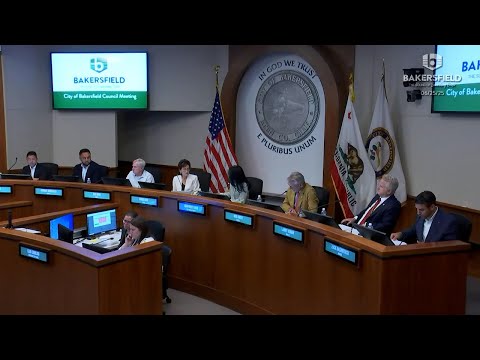
The Bakersfield City Council on June 25 adopted the fiscal year 2025–26 operating and capital budgets, set the appropriations limit and approved a master fee schedule. City manager Christian Clegg described the plan as a balanced budget; the final motion passed 6–2 with Council members Weir and Bashar Tash voting no.
The Bakersfield City Council on June 25 approved the city’s fiscal year 2025–26 operating and capital budgets, established the city’s appropriations limit and adopted a master fee schedule.
City Manager Christian Clegg told the council the proposal is balanced and aligned with council priorities. “We have a balanced budget,” Clegg said, while noting the plan includes about $6,000,000 in operating reductions, a hiring freeze on roughly 150 vacant positions for the first quarter and contingencies to protect reserves.
The budget package responds to rising costs across departments, Clegg said, citing inflationary drivers such as higher insurance, workers’ compensation, utilities and contract costs. The plan retains the city’s reserve levels and delays some capital projects; staff said a midyear review in January–February will reassess revenues and the capital-improvement program.
Public speakers urged changes in spending priorities ahead of the council vote. Several speakers urged more investment in affordable housing, mental-health services and programs often proposed as alternatives to expanding policing budgets; others supported the budget’s emphasis on public safety and infrastructure.
During debate, Council Member Komen moved to delay all capital improvement projects until midyear; that motion failed. Vice Mayor Coore moved the main budget adoption motion, which included the resolutions adopting the operating and capital budgets, establishing the appropriations limit and approving the master fee schedule. The motion passed, 6–2, with Council Members Weir and Bashar Tash recorded as voting no.
City staff outlined next steps: maintain conservative revenue assumptions, continue the hiring freeze to produce savings, and return at midyear with updated revenue performance and proposed adjustments. Clegg said the midyear window gives staff and council time to evaluate whether contingency-held capital projects should proceed.
Councilmembers and staff also discussed the Affordable Housing Trust Fund and asked staff to return at midyear with options to increase matching dollars from the state to expand housing production.
The council’s adoption allows the city to begin the new fiscal year with appropriations in place. Staff said they will publish budget documents and track performance against the projections presented to the council.
A final vote on the budget and associated resolutions was taken after public testimony and staff presentation; the council adjourned after completing the agenda.