Lifetime Citizen Portal Access — AI Briefings, Alerts & Unlimited Follows
Community Board 2 issues mixed advisory recommendations on 20 outdoor-dining applications; ADA access and raised platforms repeatedly flagged
Loading...
Summary
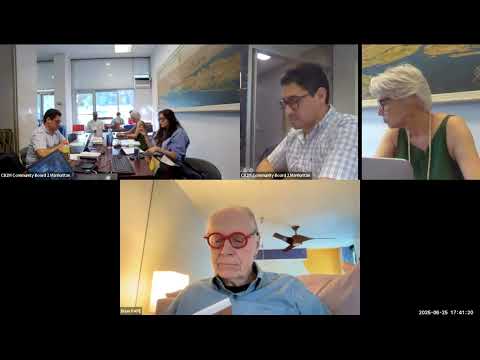
Manhattan Community Board 2’s Outdoor Dining Working Group reviewed 20 sidewalk- and roadway-cafe applications at a virtual June 25 meeting and issued advisory recommendations on each application; the group approved many applications with modifications and denied several where plans failed to meet ADA or DOT clear-path requirements.
Manhattan Community Board 2’s Outdoor Dining Working Group reviewed 20 sidewalk- and roadway-cafe applications at a virtual June 25 meeting and issued advisory recommendations on each application, approving most with modifications and denying a small number where plans could not meet program rules.
The group’s recommendations emphasized two recurring compliance items: maintaining a required 5-foot clearance from primary building entrances and ensuring a continuous ADA-accessible pedestrian clear path (typically 8–10 feet depending on corridor designation). Members repeatedly flagged raised platforms that block the clear path and asked applicants to submit stamped documentation if they planned to put seating on basement/utility hatches.
The board chair, Valerie Dela Rosa, opened the meeting and repeatedly reminded applicants that the group’s opinions are advisory and that changes that resolve DOT concerns can shorten the remainder of the city approval process. “It is optional for applicants to be here,” she said, adding that agreeing to recommended modifications can remove a public DOT hearing from the process.
Why it matters: the City’s Dining Out NYC program (DOT) and the working group’s advisory reviews determine whether sidewalk- and roadway-cafe proposals proceed smoothly. Where applicants cannot show a clear pedestrian zone, or where seating would rely on unapproved raised platforms or block required residential-access clearances, the board recommended denial or asked for revised drawings and engineering documentation.
Key examples and program issues
- Raised platforms and ADA access: Multiple applicants either proposed seating on an existing raised platform or had a platform present at the site (examples raised in the meeting included applications for Kiko (307 Spring St.), The Dutch (131 Sullivan St.) and others). Staff and members said the Dining Out NYC rules prohibit new sidewalk cafes on raised platforms unless there is a documented, preexisting approved easement and the applicant supplies DOB/DOT easement or permit documentation plus an engineer’s certification for any hatch or platform to carry seating loads. Members asked applicants to supply the signed/stamped “basement/street hatch” certification if they want seating on a hatch; otherwise seating must be placed on the sidewalk within the permitted perimeter.
- Primary building entrance clearances: The working group repeatedly required applicants to show or mark 5 feet of clear space from any primary building (residential) entrance. Where site plans failed to draw that 5-foot buffer (examples discussed included several Mulberry and Hudson Street applications), members asked architects to relabel plans and remeasure on-site.
- Obstructions and clear path width: On regional corridors the working group expects a 10-foot pedestrian clear path (or the corridor width specified by DOT); on neighborhood corridors the group expects the posted clear-path width. Bike racks, tree beds, manholes, gas or electrical covers and scaffolding were repeatedly called out as items that must be shown and accommodated on the site plan. At Hudson Hound (575 Hudson St.) public testimony highlighted a bike rack that could force the applicant to drop a table to preserve a clear 10‑foot path.
- Noise and nuisance concerns: Neighbors testified about noise and late-night crowding near West Fourth/Barrow Street (The Spaniard) and Hudson Street locations; staff and applicants discussed ways to reduce impacts and to mark service aisles and perimeter barriers so servers do not carry food through the pedestrian clear path.
Votes at a glance (working-group advisory recommendations)
The working group’s advisory recommendations (not binding DOT approvals) covered all 20 applications on the agenda. The group voted or recorded advisory outcomes for each application; the working group’s office will circulate the exact modified site plans it needs to receive to convert advisory approvals into recommendations for DOT action. The working group’s advisory actions recorded in business session were:
- Kolkata Chai Co., 60 Kenmare St. — approved with required modifications (label 5-foot building entrance clearance; check furnishing/form boxes; show tree bed and regional-corridor box). - Hudson Hound (Cobra Caters Inc.), 575 Hudson St. — approved with modifications (resolve bike‑rack/10‑ft clear path; label service aisle; consider removing one table if rack cannot be moved). - The Spaniard, 190 W. 4th St. (Barrow/West Fourth) — approved with modifications (remove sidewalk seating on Barrow Street; reduce tables on West Fourth to preserve pedestrian clear path and ADA access). - The Dutch, 131 Sullivan St. — denied (raised platform/ADA concerns and missing approvals for platform use). - Box Hill LLC (King St./Sixth Ave. configurations) — approved with modifications, subject to updated, consistent site plans (applicant must submit latest DOT-referral plan and confirm which version the working group should consider). - La Nona (134 Mulberry St.) — denied as submitted; plan left less than 3 feet in the sidewalk zone and is not ADA‑compliant as drawn. Applicant directed to resubmit if they can show a compliant configuration. - Tapestry Management (60 Greenwich Ave.) — approved with modifications (confirm service aisle and mark primary entrance; remove furnishing in furnishing zone; scale plan). - Hero / Pearl Box (357 W. Broadway) — approved with modifications (site plan: label entrances and ensure alcohol‑license stipulations are amended when outdoor seating is added). - Box Hill (King St./6th Ave. mix) — conditional approval pending clarified DOT-submitted plans and checkboxes. - Figlio Gelato (189 Bleecker St./application for roadway/sidewalk elements) — moved to business/administrative follow-up (referral documentation needed). - Peasant (194 Elizabeth St., roadway) — moved to business session for additional DOT documentation and any SLA change-of-method-of-operation (liquor) filings. - Kihee Cha (42 University Pl., roadway) — conditional approval pending site plan edit (add manhole location; confirm 3‑foot service clearances where indicated). - Kiko (307 Spring St.) — denied as submitted (raised platform and ADA ramp issues; applicants asked to provide DOB/DOT easement/permit documentation and ADA routing showing how outdoor seating would be made accessible). - White Horse Tavern / Made in New York Pizza (Hudson St. addresses) — White Horse: conditional approval pending documented 5‑ft residential clearances and removal of planned seating on Eleventh Street; Made in NY Pizza: conditional approval pending plan that shows 5‑ft clearance or reinforced cellar‑hatch certification if seating placed on a hatch. - Nami Nori (33 Carmine St.) — conditional approval if applicant submits a revised site plan showing the required 5‑ft clearance from the neighboring residential entrance and confirms that service will take place inside the perimeter (not via the public clear path); if seating will use a hatch, submit hatch certification. - Sedells (463 Broadway) — conditional approval pending addition of barriers and utility features to the site plan. - Cirelli / Mole (57 Jane St.) — advisory: remove sidewalk seating that would block the required clear path near the hydrant; applicant may retain seating inside the private property footprint only if access is not routed through the public clear path. - Mercer / Sartianos (147 Mercer St.) — conditional approval only if the applicant removes sidewalk seating and uses the licensed sidewalk area solely to access tables that sit inside the property line (or alternately reconfigure to show an internal service aisle that does not require staff to carry trays through the public pedestrian clear path).
What the board asked applicants to deliver: - Revised, to-scale site plans with north arrow and all utilities/manholes/tree beds indicated. - Marked 5‑foot residential clearances and the corridor clear-path width used for calculations (neighborhood vs. regional). - If an application depends on seating on a cellar door or hatch, a signed/stamped engineer’s certification (basement/street‑hatch certification) that the hatch can carry seating loads and is permitted by DOB/DOT. - Where the liquor-license stipulations restrict outdoor service, applicants were reminded to file a change of method of operation/alteration with SLA if they plan alcohol service outdoors.
Ending: The working group closed the public session after hearing 20 applications and moved to business session to record its advisory recommendations. Applicants that receive a conditional approval were told the quickest path to DOT approval is to submit the revised site plan and any requested engineering or DOB/DOT evidence by the board’s deadline so the committee can confirm the modifications; applicants that received denials were advised to rework plans before resubmitting. The working group emphasized that its recommendations are advisory and that DOT issues the final street‑use permit.
Sources: June 25, 2024 Manhattan Community Board 2 Outdoor Dining Working Group meeting transcript and site-plan packages submitted to the CB2 office.