Get Full Government Meeting Transcripts, Videos, & Alerts Forever!
Get email alerts on the Public Safety topic
No spam. Unsubscribe anytime.
Sheriff outlines jail operating costs, staffing needs and federal inmate revenue plan
Summary
The sheriff presented the jail budget, said the new facility's operating costs will approach the bond/service needs and described plans to host federal detainees as a revenue source to offset jail expenses.
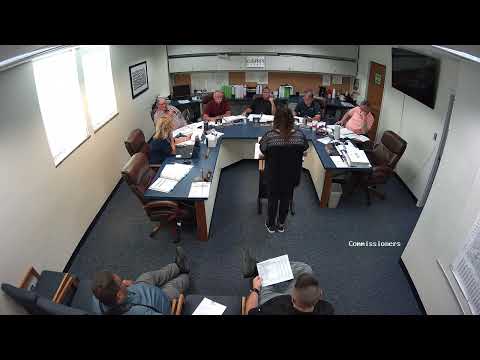
Sheriff Tom told the commission the county's new jail and associated equipment are driving higher personnel and contractual costs in his department's proposed budget.
Tom described new systems and service contracts that come with the facility, including a consolidated records/dispatch server, upgraded consoles, a body scanner and IT maintenance agreements. "If the Spillman servers go down, the sheriff's office shuts down," he said, explaining why yearly service contracts are budgeted.
Personnel was the principal driver of the requested increase, Tom said, noting the jail needed additional deputies and security posts to operate the new courthouse and jail layout: "I've got 3 more kitchen staff, you know, that I hired 2 full time and a part time. And then I've got my 16 dealers that we needed and, you know ... I'm full staffed."
Tom also outlined a plan to house up to 30 federal inmates as a revenue source and gave a per-detainee figure: "68 50 is what the feds are paying. $68.50 for 30 inmates for 365 days a year is 1,370,000.00." He said the federal per-detainee rate can increase above that minimum depending on services provided, and he described talks with the U.S. Marshals and federal inspectors about contracting and inspections.
The sheriff said federal inmate revenue could be used to cover annual jail operating costs or to make bond payments on the facility, but he emphasized choices for commissioners: either the county covers the shortfall in the jail budget or the facility operates with revenue that offsets bond payments.
Tom described operational constraints that affect how many beds can be filled at once (for example, separate pods for men and women) and operationally significant one-time and recurring equipment costs, such as a LifeScan fingerprint cabinet and body scanner maintenance contracts.
On readiness, Tom said the state fire marshal had provided partial occupancy for the administration/dispatch building and that testing of the jail smoke-exhaust system was scheduled; he also presented an insurance binder and asked commissioners to authorize transitioning builders-risk coverage off the construction firm once the county's policies take effect.
Commissioners pressed for clarity on operating assumptions and asked staff to return with more detailed tallies and bond-payment options; Tom said he would continue coordinating with federal partners and county finance staff on revenue projections and accounting for inmate-related receipts.