Get Full Government Meeting Transcripts, Videos, & Alerts Forever!
Get email alerts on the Labor And Benefits topic
No spam. Unsubscribe anytime.
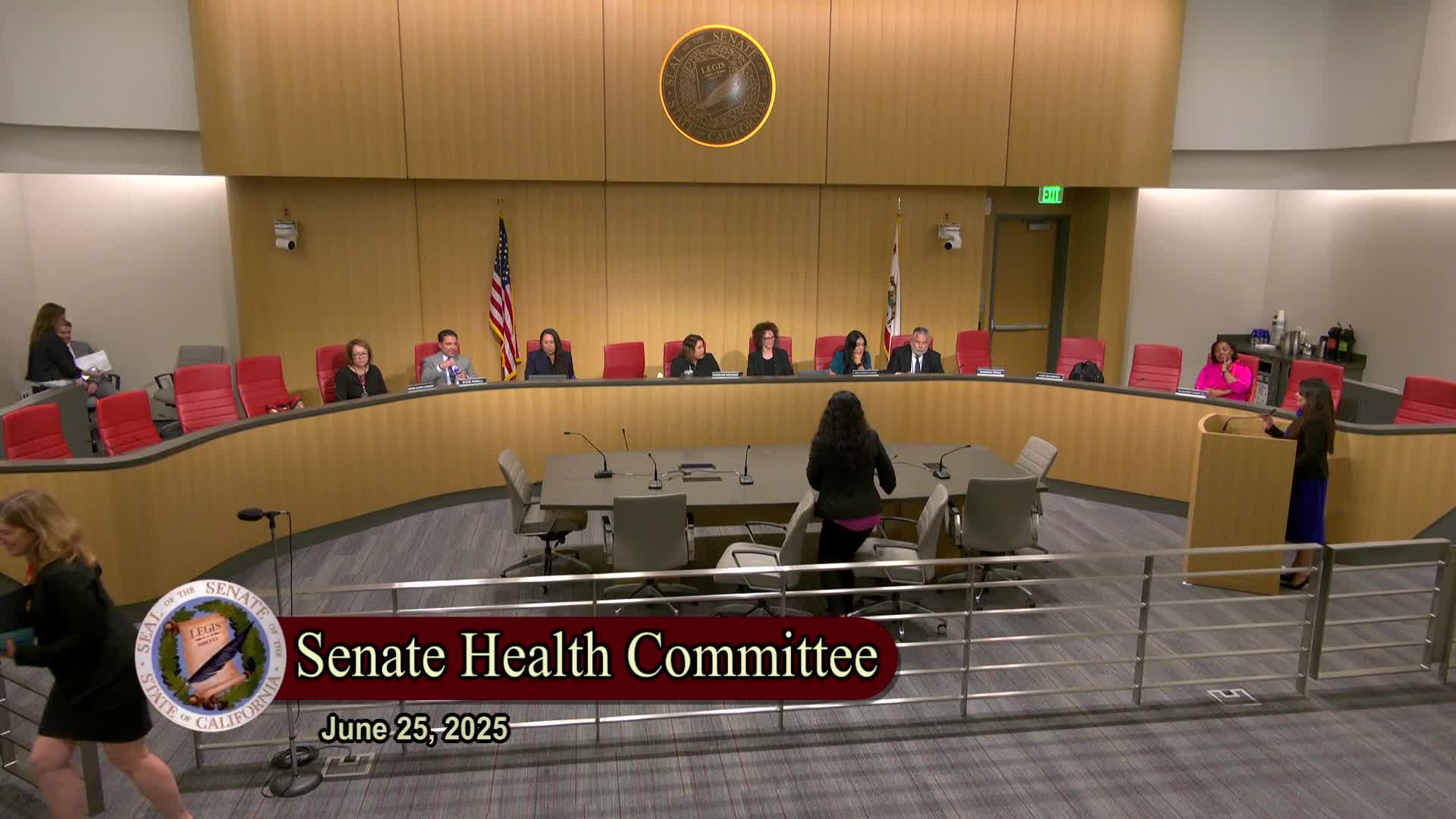
Committee backs AB 499 to lower state reimbursement trigger for RFK farmworkers medical plan
Summary
AB 499 would reduce the state reimbursement trigger for the Robert F. Kennedy Farm Workers Medical Plan from $70,000 to $50,000 per claim, keeping the plan’s existing $3 million annual cap intact. Sponsors said the change helps the plan remain solvent after recent high-cost episodes; labor and plan administrators testified in support.
Assembly Bill 499: The Senate Committee on Health considered AB 499, which would lower the threshold at which the state reimburses the Robert F. Kennedy (RFK) Farm Workers Medical Plan for high-cost claims from $70,000 to $50,000 while keeping the existing $3,000,000 annual cap on state reimbursements.
Why it matters: The RFK plan is a Taft‑Hartley joint labor‑management plan that serves about 6,000 farmworkers and their families, according to the author. Supporters told the committee the plan keeps administrative overhead low and saves the state an estimated $11 million annually in Medi‑Cal expenditures; lowering the reimbursement trigger would help the plan absorb infrequent but very high-cost cases without jeopardizing solvency.
Testimony: Assemblymember Ortega presented the bill and accepted committee amendments. Mercedes Martinez, RFK plan administrator, testified that the plan had to deplete reserves to cover a recent rare and very expensive stem-cell transplant for a plan beneficiary’s child and that lowering the reimbursement trigger from $70,000 to $50,000 would help keep the plan solvent while preserving the $3,000,000 annual state cap. United Farm Workers and physician‐association witnesses recorded support. No formal opposition was recorded during the hearing.
Committee action and status: The author requested an aye vote; the committee moved AB 499 and passed it as amended, referring it to Appropriations. The roll-call recorded in the hearing shows the measure advanced; the hearing record later indicates AB 499 was out with a vote count recorded as 9 ayes, 0 noes.
Next steps: AB 499 was advanced to the Senate Appropriations Committee.