Miami‑Dade adopts permit fee overhaul to speed review for homeowners and developers
Loading...
Summary
The Miami‑Dade Board of County Commissioners on May 14 approved item 8‑03, a package of permit‑fee and review‑process reforms that preserves no‑fee increases for designated residential permits under a pilot while creating a two‑track review to speed approvals.
The Miami‑Dade Board of County Commissioners on May 14 approved item 8‑03, a package of changes to building permit fees and permit‑review procedures intended to shorten review times and avoid shifting costs to the county general fund.
The ordinance — passed with amendments proposed at the dais — freezes fees for identified residential permit types under a new pilot program and establishes two optional review tracks for single‑family detached and duplex permits: an owner‑builder option with a standard review of about 20 business days at no fee increase, and a fast‑track option with an approximately five business‑day review that carries the higher, market‑based fee applied to developers.
Why it matters: department officials and commissioners said the fee and procedure changes are meant to correct a backlog, reflect current staff costs, and preserve service levels without needing general‑fund subsidies. The measure was presented as a targeted modernization after more than a decade without a comprehensive fee review.
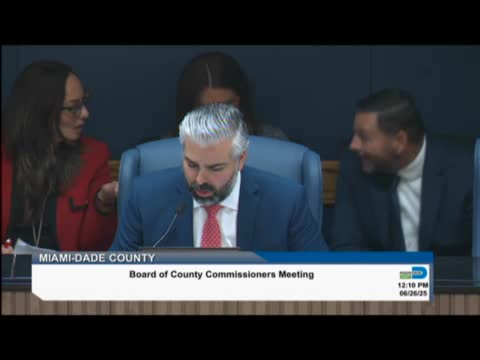
Commissioner Raquel Regalado (mover) framed the package as preserving no‑increase protections for homeowners while improving turnaround for commercial work. She described the final package as “a very comprehensive item” reached after committee negotiations. The amendments include direction that the county mayor’s office remove Department of Health septic reviews from the concurrent initial review cycle until the county can take delegated authority or otherwise staff that function; that change is intended to avoid holding up permit applications while health reviews proceed.
Industry and municipal stakeholders who testified in committee supported the change as long overdue. Staff said the district‑level pilot will be tracked and reported back to the commission; the department committed to performance monitoring and to returning with adjustments if metrics show the pilot is not meeting targets.
Board action: Commissioners approved the ordinance as amended. Several commissioners praised the department for preserving homeowner protections in the final language and for committing to automated and concurrent review changes already in progress.
What to watch: The county will implement the pilot, track application processing times and customer impacts, and report back. If metrics show the pilot is not meeting goals, commissioners said they would revisit fees or procedures.
Votes: The amended ordinance was approved by the commission after recorded and voice votes during the meeting.