Get Full Government Meeting Transcripts, Videos, & Alerts Forever!
Get email alerts on the Reproductive Rights topic
No spam. Unsubscribe anytime.
Senate committee advances bill shielding medication-abortion providers and patients from enforcement actions
Summary
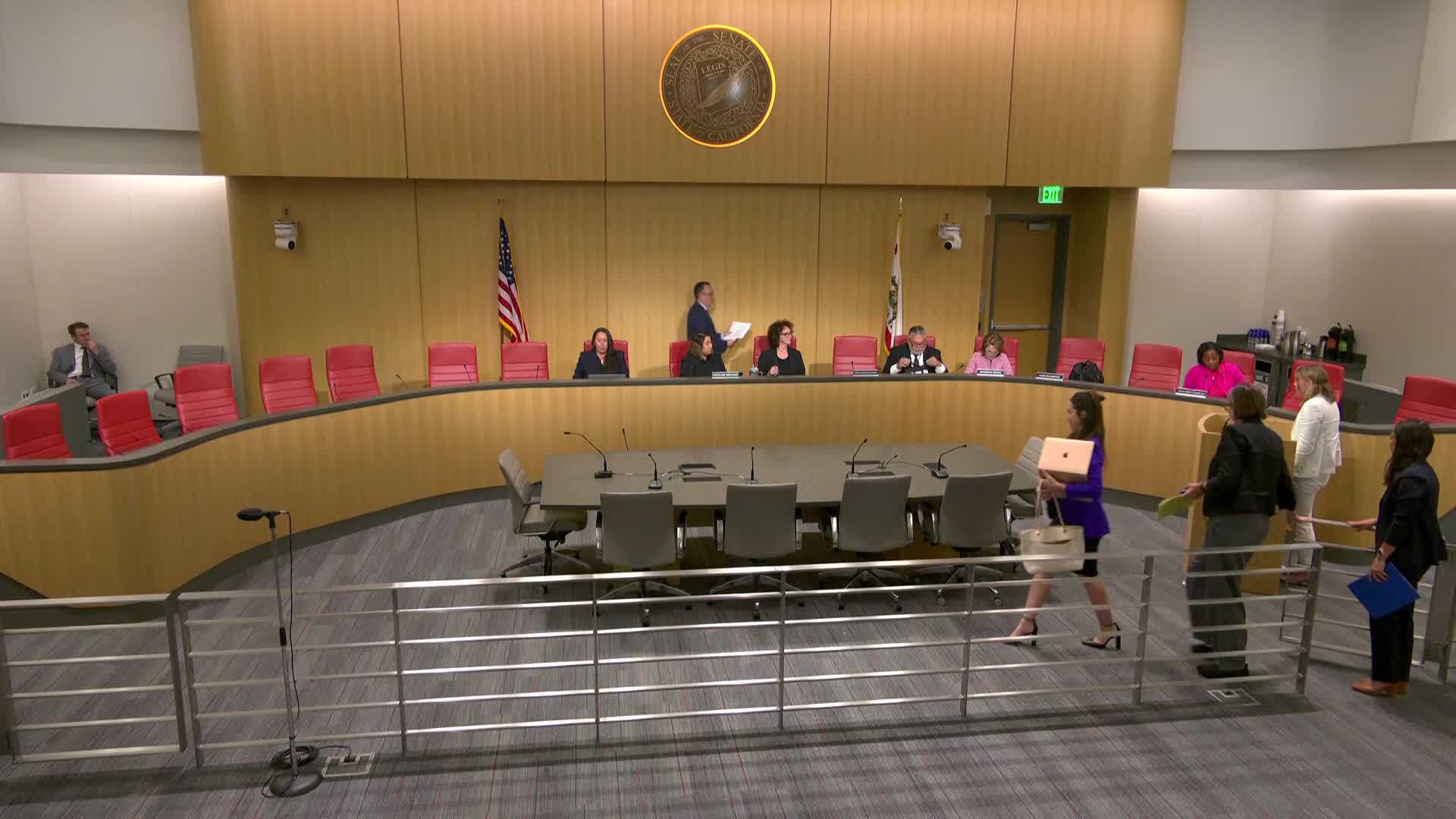
Assembly Bill 54 was advanced by the California Senate Committee on Health after proponents said it would protect access to medication abortion and opponents raised safety and liability concerns.
Assembly Bill 54: The California Senate Committee on Health heard Assemblymember Krau present AB 54, a measure to clarify that distributing, transporting, manufacturing and using medication-abortion drugs (mifepristone and misoprostol) is legal in California and that providers and others should be shielded from civil and criminal penalties.
Why it matters: Supporters said AB 54 responds to national threats to abortion access since the U.S. Supreme Court’s 2022 decision overturning Roe v. Wade and would protect existing access in California. Opponents said the bill would shield providers from liability and raised concerns about safety and complication rates claimed by some studies.
What supporters said: Tiffany Brokaw of the California Department of Justice, speaking for Attorney General Rob Bonta (a cosponsor), told the committee the bill “would ensure continued access to medication abortion by enshrining in California law that it is legal to transport and deliver this medication throughout the state” and would “shield providers, distributors, manufacturers, pharmacists, and individuals from doing so.” Angela Pontes of Planned Parenthood Affiliates of California, a cosponsor, described medication abortion as safe and effective in decades of research and said AB 54 would reassure Californians that “their right to essential health care is and will remain protected.” Other health and reproductive-rights organizations recorded support.
What opponents said: Greg Burr of the California Family Council urged rejection, saying AB 54 “is not about safety” and arguing certain studies show higher complication rates for chemical abortion than labels indicate. He told the committee that the bill would protect providers “even retroactively to January 2020” and that emergency-room data may misclassify complications.
Committee action and status: Committee staff noted committee technical amendments; the author accepted those amendments during the hearing. The committee moved the bill and ordered it passed as amended and referred to the committee on Judiciary. The final roll-call outcome recorded in the hearing was: yes 9, no 2, absent/other 1; the committee put the measure out of committee with that count and referred it as stated.
Next steps: AB 54 was passed as amended by the Senate Committee on Health and referred to the Committee on Judiciary for further consideration.
Sources and context: Statements in the hearing referenced the U.S. Supreme Court decision overturning Roe v. Wade, and witnesses repeatedly cited mifepristone and misoprostol as the medications at issue.