Get Full Government Meeting Transcripts, Videos, & Alerts Forever!
Get email alerts on the Academic Performance topic
No spam. Unsubscribe anytime.
Highlands County reviews academic success data; officials highlight K‑2 reading work, math gains and growth in industry certifications
Summary
District leaders at a workshop reviewed state assessment data for every tested student, credited early‑grades foundational instruction and coaching for gains in reading and math, flagged gaps in K‑2 summer programming and called for more on‑site support for subpopulations and virtual students.
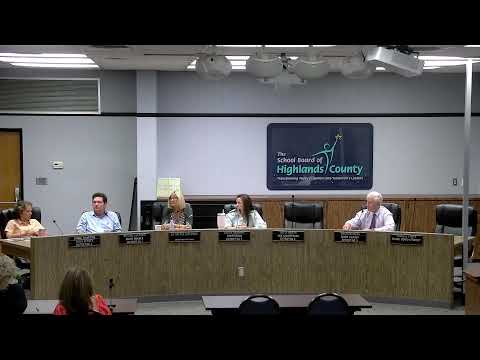
Highlands County School District officials on Wednesday convened a workshop to review Goal 1 — academic success — and presented state assessment results for every student who tested in the district this year.
The session set out how the district is using multiple measures — proficiency and rate of growth relative to state averages — to guide instruction. “The data that we'll be looking at today is the data from every student that tested within our district,” said Dr. Longshore, who opened the review and framed the presentation around both meeting state proficiency and exceeding the state’s rate of growth.
Why it matters: district leaders and principals said the patterns of growth and proficiency will shape curriculum choices, staffing and intervention priorities for the coming school year. Officials repeatedly credited sustained coaching, professional learning communities and collaborative “triads” of schools with helping teachers use frequent formative checks to adjust instruction.
District presentation and staff priorities District staff walked the board through performance by grade band and subject, emphasizing two measures: whether schools met or exceeded state proficiency (green in the district slides) and whether they exceeded the state’s rate of growth (purple). Officials said that metric pair helps identify where rapid acceleration is closing gaps even if absolute proficiency remains below state averages.
For K–2 reading, staff described a push toward evidence‑based foundational instruction and a move in some schools from Heggerty (practice‑focused phonemic work) to 95 Percent Group materials, which district staff said include explicit instruction plus embedded intervention. Tia (district trainer) ran summer trainings for schools that elected to pilot or adopt the program. District staff said adoption was voluntary: “If administrators feel that they have success with what they're using, that was sort of their decision,” an administrator said.
Officials noted they did not run K–2 summer school this year because prior programs had been funded with ESSER dollars that were not available this year; staff said that gap reduced the district’s ability to provide that targeted summer support.
Math and middle/high school trends District leaders reported relatively strong math gains in several elementary grades and showed third‑through‑fifth‑grade math averages above the state in 2025. Middle and high school staff described notable year‑to‑year growth in several subjects — in some schools increases of 10–25 percentage points — and said those gains reflected curricular alignment, coaching cycles and targeted interventions.
Several speakers emphasized cohort tracking (following the same students year to year) as a clearer measure of progress than single‑year snapshots. Board members asked for more cohort‑level analysis; staff said middle schools and high schools already examine individual student histories when placing students.
Secondary issues: civics testing, virtual school and assessments The district explained a change this year that affected seventh‑grade math (advanced seventh‑grade courses were aligned to eighth‑grade standards), and noted the district shifted the statewide civics assessment to eighth grade to give students more time on related social studies content. Staff said they will require students who missed the civics test during the school year to take a summer make‑up so those students are not retained.
Highlands Virtual School (HVS) appeared intermittently in the results; staff said small grade‑level enrollments (fewer than 10 students) affect whether a campus appears in some grade‑level tables, but the virtual program is included in district totals when counts exceed the reporting threshold. District staff said they plan an academy and targeted walkthroughs with a vendor, specialists and district leaders to strengthen virtual instruction.
Career and technical education and industry certifications District officials highlighted a sizable gain in industry certifications, reporting an increase from roughly 606 to 1,362 students earning certifications (figures reported by district staff). Officials said more CTE offerings, changes to master schedules and partnerships with colleges and employers have driven growth. They noted Perkins funding and state per‑student funding tied to CTE concentrators as sources that support programs, and that some proposed state funding changes under discussion were not implemented.
Support systems and professional learning Principals and the district credited the district’s system of monthly district‑level meetings, triads (three schools working together), PLCs, coaching cycles and classroom‑level look‑fors for producing steady improvement. Kim Riley, Avon Park Middle School principal, told the board the combination of district support, specialist visits and the triads has been “crucial” to the school’s progress. Shane Ward, Hill Gustat principal, said stability in staffing and a long‑standing science team were major contributors to that school’s science gains.
State partnership Katie Pearson, regional executive director with the Florida Department of Education’s Bureau of School Improvement, spoke to the board and called Highlands County’s work “encouraging,” noting the bureau provides no‑cost supports. “Over the past few years, the Bureau of School Improvement has had the privilege of partnering with Highlands County and building strong sustainable systems,” Pearson said.
Concerns and next steps Board members and administrators raised persistent needs for more on‑site support personnel (support facilitators) to help underperforming subpopulations, noted the loss of K–2 summer programming because of exhausted ESSER funding, and asked the district to return with school grades and additional cohort analyses once the state releases final files. Staff said they will continue curriculum adoption work (the district plans to move off CKLA next year and complete a formal adoption and teacher involvement process), continue training around explicit instruction, monitor fluency, and track students who need summer civics testing.
District staff closed by saying they will return with more detailed school‑level grade and cohort data when the state releases official school grades and accountability details.
Ending The workshop concluded with board members praising teachers, principals and district specialists and calling for continued support for teacher retention, targeted interventions and the expansion of CTE pathways.