Get Full Government Meeting Transcripts, Videos, & Alerts Forever!
Get email alerts on the Energy Land Use topic
No spam. Unsubscribe anytime.
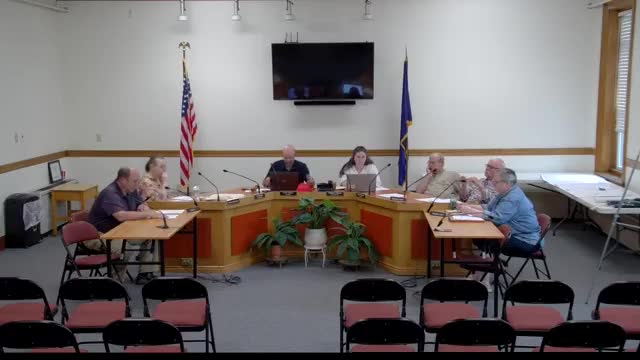
Planning Board continues debate on utility‑scale solar ordinance, setbacks and impact fees; seeks developer feedback
Summary
Skowhegan planners reviewed revisions to a proposed utility‑scale solar ordinance including setbacks, waiver language, erosion controls, emergency services and the possible use of impact fees; the board agreed to seek developer and stakeholder feedback and to host a community conversation.
The Skowhegan Planning Board continued review of proposed edits to a utility‑scale solar ordinance, discussing setback distances, waiver language, erosion control, emergency response measures and the potential for impact fees to cover local infrastructure needs.
Planning staff presented a revised draft that reduced a previously discussed 400‑foot setback to 250 feet from property lines, while retaining a waiver process that could reduce the effective setback to a 100‑foot minimum from a dwelling where abutters submit written waivers. Board members debated whether setback language should reference property lines or dwellings and whether waivers signed by abutting landowners should allow arrays to be placed closer to neighboring properties.
Members discussed environmental and land‑use protections: the draft calls for developers to avoid impaired streams (staff proposed replacing a specific stream name with the generic category “impaired stream”), and it increases topsoil and erosion‑control protections. The draft also limits foundation methods to pile‑driven or ballast‑block footings to minimize soil disturbance where appropriate.
Board members and staff discussed emergency services and fire suppression. The draft adds the fire chief (or designee) to review and requires either on‑site water for suppression or a dedicated fire‑protection impact fee held in a restricted town account to improve nearby suppression capacity. Members raised concerns about foam‑based suppression agents (shelf life, environmental contamination risk) and asked staff to seek alternatives and guidance.
The board debated whether to treat impact fees as a separate ordinance or as fees in the town fee schedule. Staff reminded the board that Maine law requires a capital improvements plan, a dedicated fund and refund provisions if impact fees are collected; several members said impact fees should be narrowly targeted to identified infrastructure needs (sewer, roads, fire protection) and cautioned against creating barriers to development.
Members asked staff to circulate the draft to developers and to organizations including Maine Farmland Trust and to convene a panel discussion with developers, engineers and state representatives later this summer or early fall; staff said she had received commitments from one developer and some technical experts to participate. The board did not adopt the ordinance at this meeting and requested more stakeholder feedback before scheduling a public hearing.