Get Full Government Meeting Transcripts, Videos, & Alerts Forever!
Get email alerts on the Vacancy Ordinance topic
No spam. Unsubscribe anytime.
Committee advances vacancy ordinance for Congress Street Arts District, adds artist funding and activation tools
Summary
The committee voted to send a revised commercial vacancy ordinance to the full council after narrowing language, adding a registry, clarifying activation and permitting processes, and setting aside a $25,000 fiscal note for artist activation.
The Housing and Economic Development Committee voted June 11 to forward a revised commercial vacancy ordinance covering the Congress Street Arts District to the City Council, with staff and Creative Portland to develop implementation details on artist selection and activation.
Councilor Pete Sykes, sponsor of the ordinance, said the measure is a targeted tool to keep storefronts visibly active: the ordinance requires registration of vacant commercial spaces in the district, allows temporary activations and creates an administrative fee structure for persistently vacant properties. Committee discussion focused on the balance between incentives and penalties, the registry as a tool to match property owners with temporary activation partners, and how to treat performance art and non-static activations.
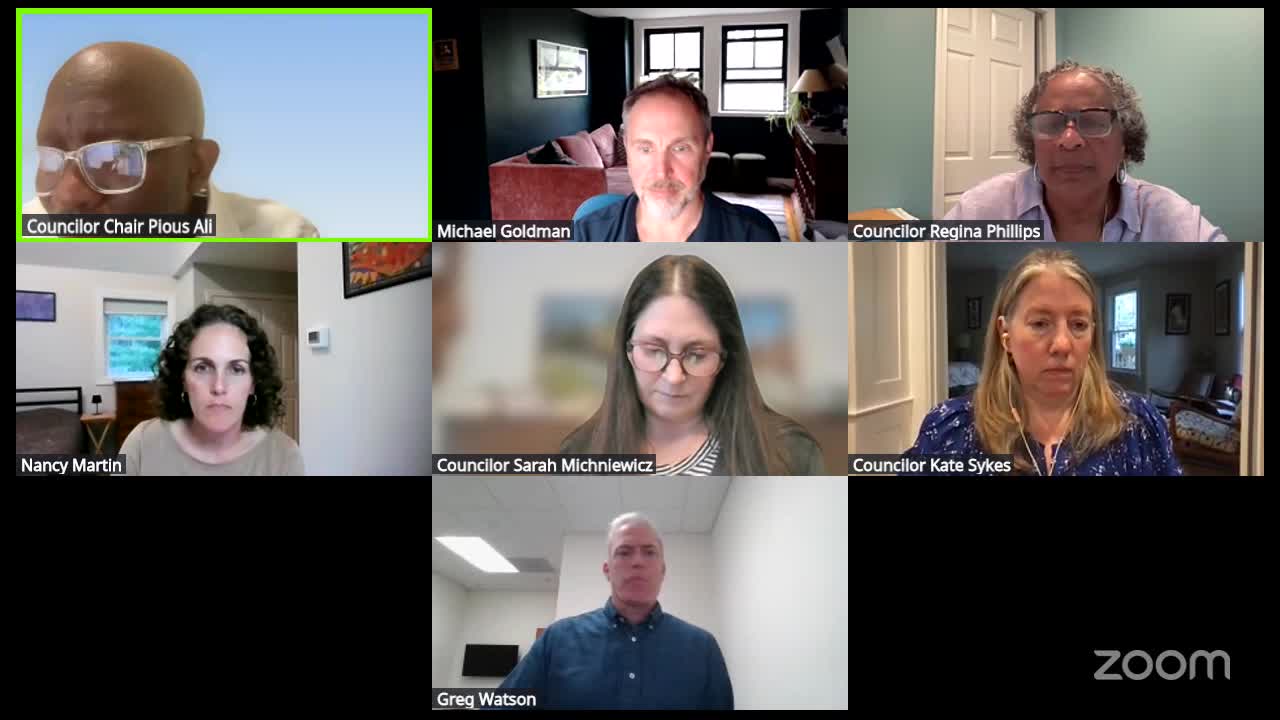
Staff and Creative Portland representatives told the committee they will develop operational rules — including a juried selection process for temporary art, potential compensation for artists and an approach to waivers when spaces are activated by performances. Nancy Martin (business programs manager) and Greg Watson said staff will continue meeting with Creative Portland to design the registry and selection mechanisms. A fiscal note attached to the ordinance contemplates an initial $25,000 set-aside to support artist engagement, production and compensation for temporary activations.
Committee members emphasized that temporary art is intended as a last-resort activation: property owners are expected first to attempt tenant recruitment and other activations; if spaces remain vacant, temporary two-dimensional art or permitted temporary uses could fulfill activation requirements and avoid fee assessments. Members discussed the need to compensate artists rather than relying on unpaid labor.
Motion and vote: A motion to forward the vacancy ordinance to the full council passed on a roll call vote (Councilor Pete Sykes — yes; Councilor Sara McNevich — yes; Councilor Regina Phillips — yes; Chair Bridal Ali — yes). The committee directed staff to finalize implementation details, including Creative Portland’s role in selection and the $25,000 activation fund.