Get Full Government Meeting Transcripts, Videos, & Alerts Forever!
Get email alerts on the Board Governance topic
No spam. Unsubscribe anytime.
Washoe County review recommends clearer board roles, new communications and structural changes
Summary
A Raftelis organizational assessment delivered to the Washoe County Board of County Commissioners on June 25 recommended 12 actions to improve board‑staff relations, communication, agenda management and organizational structure, and included an implementation timetable for several changes to begin this fall.
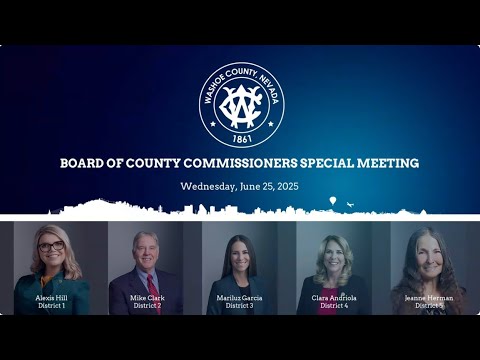
The Washoe County Board of County Commissioners on June 25 received an organizational assessment from consultant Raftelis that recommended clarifying the board’s governance role, strengthening staff‑to‑board communications and reorganizing several county manager office functions to improve delivery of services.
The report, requested during the county manager’s 2024 performance review and begun in February 2025, surveyed elected officials and staff and produced 12 recommendations intended to improve daily management systems, board effectiveness and board support functions. Consultant Jonathan Ingram told the commission the work combined interviews, document review and best‑practice research and included interviews with more than three dozen staff and elected officials.
“The thing that is really clear after this engagement is that both the board and staff have the same interest in mind. And that interest is to serve the citizens of Washoe County,” Ingram said during the presentation. He recommended changes the board can adopt and a set of staff actions to be phased in under a new county manager.
Key recommendations highlighted in the report include: instituting regular weekly one‑on‑one meetings between each commissioner and the county manager; producing a consistent weekly memo to the full commission (a working “Thursday memo”); reorganizing board support and agenda development under a single assistant county manager responsible for cross‑departmental projects and commissioner support; expanding commissioner orientation; adopting a five‑year strategic planning process tied to measurable work plans; and converting the commission’s meeting cycle from three regular BCC meetings to two regular meetings plus a monthly caucus or work session for deeper briefings and strategic discussion.
The report also recommends governance retreats to clarify roles, that the board reaffirm the distinction between policy (board) and administration (manager/staff), and that the board adopt clearer procedures for large project requests so staff can scope work, estimate costs and prioritize tasks. Ingram said staff and commissioners must both commit to many of the changes for them to work.
Commissioner reactions were largely supportive. “I didn’t expect much and I think we got a lot. So good work,” said Commissioner Michael Clark. Vice Chair Jeanne Herman asked about the consultant fee; she said she had heard the study cost about $30,000 and asked staff to confirm the amount. Commissioner Mary Louise Garcia emphasized the report’s finding that most problems were behavioral and process‑based rather than purely structural and urged commissioners to take responsibility for role clarity.
Staff described an implementation plan with target milestones through the fall and into December, and Ingram said some items — notably a full strategic‑plan redesign — are best launched after a permanent county manager is in place, while many administrative changes can begin immediately. The consultant provided a Gantt‑style implementation timeline in the report and discussed near‑term items staff had already begun addressing.
There was no formal vote on the report itself; commissioners received the presentation, asked questions, and directed staff to proceed with planning and scheduling the first implementation steps. The board discussed scheduling follow‑up briefings and requested regular status updates to keep the public and commissioners informed of progress.
Next steps noted during the meeting include staff work to implement immediate process items (weekly memos, agenda timing changes, and clarifying commissioner request procedures), scheduling of governance retreats and development of a commissioner orientation package, and preparation of a strategic‑plan timeline to begin when a permanent county manager is hired. Consultant materials and the implementation plan were left on file as documentation for future status updates.