Get Full Government Meeting Transcripts, Videos, & Alerts Forever!
Get email alerts on the School Transportation topic
No spam. Unsubscribe anytime.
Lincoln Public Schools presents 2025–26 transportation plan; cites driver shortage, longer ride times and new buses
Summary
District transportation officials told the board on June 24 that peak daily ridership reached 4,366 in 2024–25, special education ridership rose, and ongoing driver shortages have forced route consolidations that lengthen some student commutes. The presentation outlined staffing, fleet changes, contractor use and communications protocols.
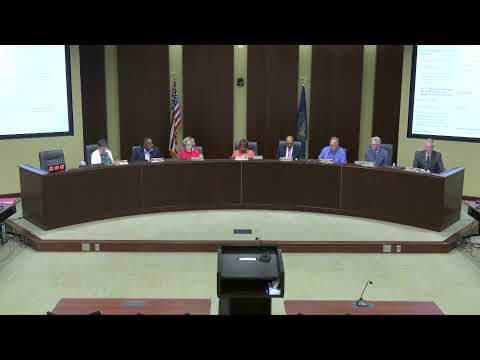
Lincoln Public Schools transportation staff presented the district's draft transportation plan for the 2025–26 school year at the Board of Education meeting on June 24, 2025, detailing ridership numbers, a continuing driver shortage and plans to add vehicles and equipment.
The presentation, led by Phil Scrupa, director of transportation, said the district transported a peak of 4,366 students per day in 2024–25. Scrupa said 26% (about 1,145) of those riders were regular-education students, 42% were special-education students, and English-language-learner ridership peaked at about 478 students.
Scrupa said the department currently staffs 149 drivers (about 121 regular-route drivers), seven activity/field-trip drivers, nine substitute drivers and 12 shared-route drivers. He said the district is about 23 drivers short of the ideal staffing level for 150 routes but is at the current consolidated-route staffing target going into the coming school year. "We are 23 drivers short for our ideal staffing of 150 drivers or 150 routes. We're currently 0 drivers short for the consolidated route staffing plan," Scrupa said.
Why it matters: the shortage and prior consolidations have increased some students' ride times, in some cases to near or over an hour, Scrupa said. That can increase late buses, overtime costs and operational risk on inclement-weather days.
Key details from the presentation: - Peak daily ridership 2024–25: 4,366 students. - Rider breakdown cited by Scrupa: 26% regular education (about 1,145), 42% special education, and ELL peak about 478. - Current driver and paraprofessional staffing: 149 drivers (121 regular-route); nine substitutes; 85 paraprofessionals (69 regular route pairs). - Fleet and equipment: district fleet average age ~12 years; 3 new electric Type A buses recently received; district expects a total of about 25 new pieces of equipment arriving soon, including five wheelchair buses and five transit buses on improved lead times. - Contractor use: the district contracts with First Student for supplemental drivers and equipment. Scrupa said First Student was more costly than in-house operations and historically has provided fewer drivers/equipment than the district needs; in one recent year First Student supplied 11 drivers and six buses. - Alternative providers: the district has a partnership with EverDriven to transport students not eligible for traditional routes (for example, some McKinney-Vento/hardship cases). EverDriven provided transportation for 134 students last year; the district plans to continue the partnership but noted EverDriven's capacity limits.
Officials also described eligibility rules under state law: regular-education students who live more than four miles from their assigned school qualify for transportation; special-education students receive transportation when their individualized education program specifies it; the board retains discretion in unique circumstances to provide transportation for other district needs.
Board discussion and next steps: board members asked about the contractor's role, vehicle availability and parent notification when routes run late. Scrupa said the district notifies its communications team (Mind y Burbach) with route-delay estimates so schools and families can be informed. He said the district submitted a budget request for increased parts costs and will continue to seek to rebuild staffing toward an optimum of about 150 routes as drivers and equipment allow. The item was presented as first reading and will return to the board at the next meeting for further consideration.
Quotes (attributed to meeting speakers): "We transported at a peak of 4,366 students per day in the 24–25 school year," Phil Scrupa said. "That consolidation we were forced to undergo does mean that student ride times in some cases can exceed an hour."
"We notify our communications department, Mindy Burbach and her team, which route we know is going to be potentially late," Scrupa said describing the parent-notification process.
Ending: The board received the transportation plan as a first reading; staff said they will continue to update routes, staffing and equipment availability and will bring a follow-up item to the next meeting.