Get Full Government Meeting Transcripts, Videos, & Alerts Forever!
Get email alerts on the Parks Enforcement Staffing topic
No spam. Unsubscribe anytime.
Council hearing spots gaps in Parks Enforcement Patrol staffing as agencies tout interagency efforts
Summary
At a New York City Council oversight hearing, Parks and NYPD officials described coordinated responses to crime and quality-of-life concerns in city parks while acknowledging persistent staffing shortfalls in the Parks Enforcement Patrol (PEP); advocates urged full restoration of budget cuts and hiring of additional PEP officers.
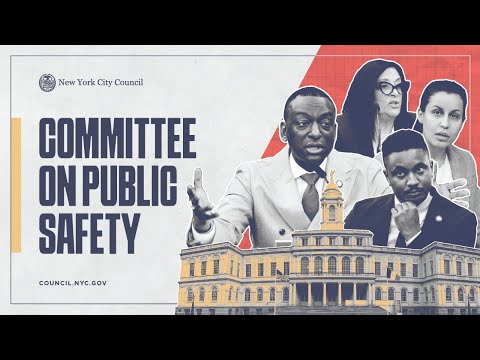
The New York City Council’s Committee on Public Safety convened an oversight hearing to examine the role of the NYPD and New York City Department of Parks & Recreation (DPR) in keeping parks safe and accessible, with committee members and witnesses focusing on staffing levels in the Parks Enforcement Patrol (PEP) and how parks coordinate with NYPD on enforcement and outreach.
Chair Yousef Salam opened the hearing by saying the committee would “examine the role of the NYPD, the Department of Park and Recreations, Park Enforcement’s Patrol officers, and other partners in keeping our parks safe and welcoming.”
In testimony, DPR Commissioner Iris Rodriguez Rosa described PEP’s duties and authorities, saying PEP officers are designated “special patrolmen and New York State peace officers” charged primarily with enforcing park rules, educating the public and addressing quality-of-life offenses. She described PEP patrol methods — bicycle, horseback, car and foot — and support functions including a 24/7 central communications unit, an emergency management team and an academy for training.
Deputy Chief Thomas Alps of the NYPD (testifying for the department) described annual joint planning with parks and precincts. “Typically around the month of May, we ask the boroughs and the local precincts to develop a strategy and a plan based on last year’s data,” Alps said, describing shared reviews of index crimes and quality-of-life conditions and the use of joint patrols and targeted operations.
Both agencies and nonprofit witnesses emphasized interagency programs. DPR pointed to the Community Link initiative, Every Block Counts, and a Central Park partnership involving the Central Park Conservancy and multiple city agencies. David Saltonstall of the Central Park Conservancy said those multiagency coordination calls — sometimes weekly — assign tasks and timelines to address issues ranging from broken lights to individuals in crisis, and he cited year-to-date decreases in Central Park crime.
Advocates and witnesses pushed for restoring Parks’ staffing. Adam Ganzer, executive director of New Yorkers for Parks, said the agency has lost staff in recent years and urged restoration of roughly $79.7 million in budget cuts that he said would fund about 60 additional PEP officers. Union testimony from a park ranger sergeant reiterated that a visible uniformed presence deters wrongdoing and urged more permanent staffing.
DPR and NYPD also described other staff who supplement PEP: park security staff employed seasonally (who are uniformed but cannot issue summonses or make arrests), and about 80 urban park rangers who focus on education and natural-area enforcement. DPR testified that private funding provides additional PEP-like presence in some high-traffic parks such as Washington Square Park and the High Line.
Clarifying details presented at the hearing included several staffing figures that speakers used interchangeably. DPR testified that the agency “has 250 [PEP] officers” citywide and stated additional numbers for rangers and park security staff; witnesses and advocates highlighted long-term cuts and that many parks receive limited PEP coverage. DPR also described training for maintenance staff (blood-borne pathogen training) to pick up drug paraphernalia safely.
Council members repeatedly asked for more granular deployment data — for example, how many PEP officers are assigned per borough and how many parks get fixed-post coverage versus mobile patrols — and DPR said it would provide follow-up analysis. Several council members said that while they support broader preventive and social-service efforts, visible enforcement presence matters to residents and event organizers.
The hearing closed with committee members asking DPR and NYPD for more detailed breakdowns of PEP stationing and of restoration needs for the FY26 budget cycle.
Ending: The hearing produced few new policy directives but documented existing multiagency efforts and underscored continuing calls from advocates and council members for restored Parks staffing and clearer, park-by-park deployment data.