Get Full Government Meeting Transcripts, Videos, & Alerts Forever!
Get email alerts on the Municipal Finance Tax Policy topic
No spam. Unsubscribe anytime.
League of Cities and Towns defends limited tax-cap exception for affordable housing; residents raise alarm in Portsmouth
Summary
Rhode Island League of Cities and Towns representatives presented a state-level legislative change that would allow limited exceptions to the 4% property-tax cap for large developments with at least 10% affordable units and fielded questions and strong public comment from Portsmouth residents.
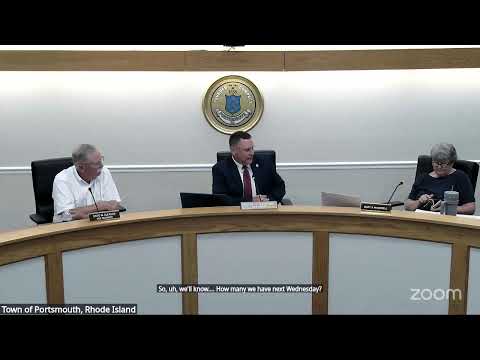
The Rhode Island League of Cities and Towns briefed the Portsmouth Town Council June 23 on its work at the State House and on a legislative change that would allow targeted exceptions to the state's 4% property-tax cap for communities that welcome large-scale developments that include affordable housing.
Randy Rossi, the league's executive director, said the legislative change is not a repeal of the 4% cap but would permit a local governing body to exceed the cap in narrowly defined circumstances for up to three years. "We are not we did not propose getting rid of the 4% cap," Rossi said, adding the proposed change would require that the new development be at least 10 units with 10% of units designated affordable.
Council members and several residents raised concerns about the proposal's precedent and fiscal impact on long-term taxpayers. Resident Larry Fitzmaur told the council he objected to towns paying dues to an organization that he said was now supporting legislation that could increase local taxes. "I think the basic objection that I have is paying as a taxpayer, is paying the League of Cities and Towns to go around advocate for raising our taxes," Fitzmaur said.
Rossi and CJ Donovan, the league's associate director, responded that the change is meant to give municipalities a voluntary tool to address the costs of growth and associated service needs — such as added public safety or school capacity — and that the measure is enabling rather than mandatory. Rossi said the executive board of the league voted to support the legislation and emphasized it was intended to be narrowly applied.
Council members pressed for procedural clarity, asking whether towns would still need local approvals to exceed the cap. Rossi said certification by local assessors and approval by the town or city council would be required for any exception; it would not automatically raise taxes without local action.
Public comment at the meeting included multiple speakers who asked the council to weigh the longer-term implications of loosening the cap, while others urged the council to consider tools that could support managed growth. No council action was taken at the meeting; the topic was presented for information and to solicit questions from the council.
The league also highlighted recent municipal trainings, workforce development programs, and a modest increase in state motor-vehicle excise tax reimbursement that Portsmouth officials had noted earlier in the meeting.