Get Full Government Meeting Transcripts, Videos, & Alerts Forever!
Get email alerts on the Mental Health And Crisis Response topic
No spam. Unsubscribe anytime.
Community pushes council to restore and stabilize Cahoots-style crisis response funding
Summary
Multiple speakers at the June 23 meeting urged the council to restore funding or secure ongoing revenue for Cahoots-style crisis response. Advocates described organizational steps toward a successor (Willamette Valley Scribe Care) and asked for one-time and dedicated funds while longer-term funding is established.
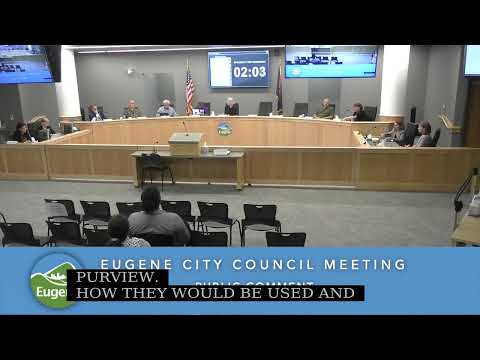
EUGENE, Ore. — Several residents and advocacy groups used the City Council’s June 23 public hearings to urge restoration of Cahoots-style non‑police crisis response and to press the council for a stable funding approach.
Speakers described an immediate gap in mobile crisis and transport services since Cahoots’ program ceased operations and urged the council to move rapidly to fund a successor model. Laurel Lizovskis, involved in organizing Willamette Valley Scribe Care, said the group had elected a board and begun organizational work, and several speakers asked for bridge funding while fiscal sponsorship and Medicaid reimbursement paths are secured.
Notable comments - Laurel Lizovskis said Willamette Valley Scribe Care has “elected our board and had our first meeting, building out organizational structure” and described the program’s mission to connect people to supports and provide trauma‑informed, non‑coercive crisis response. - Jacob True (Ward 1) urged the council to allocate $2,200,000 in one‑time funds to ensure approximately one year of non‑police alternative response while a dedicated funding mechanism is established; he said the council’s interim restoration of $500,000 was a “good first step” but insufficient for continuity. - Nick Bole and other former Cahoots workers and supporters urged faster implementation and criticized early communications and delays, saying essential emergency calls have gone unmet.
Council and staff context Councilors repeatedly acknowledged the loss of Cahoots as a significant gap and expressed support for exploring a path to restore services; staff and council did not adopt a permanent funding mechanism at the meeting. A mix of one‑time budget allocations (approved in the adopted budgets) and the proposed creation of a stabilization process were discussed as options.
Next steps Advocates urged the council to provide bridge funding, to support fiscal sponsorship for the successor organization and to prioritize actions that preserve workforce records needed for Medicaid and sustainable reimbursement. Council members signaled continued work with staff to identify options for durable funding.