Get Full Government Meeting Transcripts, Videos, & Alerts Forever!
Get email alerts on the Public Comment topic
No spam. Unsubscribe anytime.
Public comments stress addiction response, opposition to new county jail and property tax hardship for seniors
Summary
During the public comment period, residents urged the council to consider overdose prevention centers (safe injection sites), raised concerns about a proposed new Penobscot County jail, and asked the council to mitigate property tax increases affecting seniors and low‑income residents.
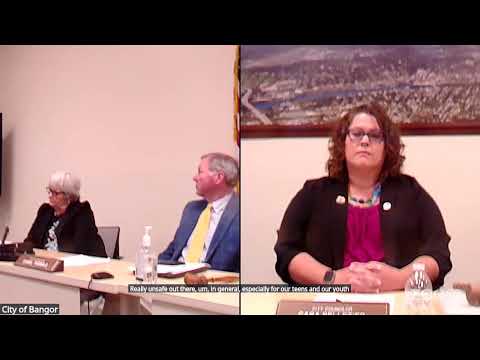
Multiple residents used the council’s public comment period to press officials on matters ranging from addiction response and safe injection sites to concerns about a proposed new county jail and the burden of rising property taxes.
Scott Parni, a Bangor resident, said public outhouses had become unsafe injection sites and urged the council to study overdose prevention centers—controlled, hygienic facilities where people can use pre‑obtained drugs under medical supervision—to reduce public needle litter, prevent overdose deaths and connect people to services. Parni told the council he would supply photographic evidence to staff showing discarded needles and broken sharps containers.
Aaron Pyle, another resident, asked the council to oppose any measures supporting construction of a new Penobscot County jail, characterizing incarceration for low‑level offenses as counterproductive and urging investment instead in community‑based alternatives, mental‑health and addiction services. Pyle said he believed a jail would divert resources from service providers and described projected costs as “exorbitant in the tens of millions.”
Multiple residents, including Scott Carney and Justin Cartier, described personal and neighbor experiences with rising property taxes and urged councilors to find alternatives to a general tax increase—suggesting carve‑outs for seniors, better use of special reserve accounts, or a targeted relief program. Residents asked the council to instruct staff to identify additional cuts or offsets before finalizing the budget.
Councilors responded during the budget discussion by explaining statutory deadlines, fiscal constraints and differing views about when and how to use reserves. Several councilors said reserve balances are governed by municipal policy and state guidance and cautioned that repeated drawdowns could create larger future gaps; others said targeted programs or a special meeting to review reserves might be warranted.
Ending: The council did not take immediate action on proposals to study overdose prevention centers or to block a county jail project; public commenters asked the city to continue examining alternatives and to make reserve accounting transparent.