Get Full Government Meeting Transcripts, Videos, & Alerts Forever!
Get email alerts on the Municipal Budget topic
No spam. Unsubscribe anytime.
Bangor council approves FY2026 municipal budget after split vote; debate centers on reserves and one-time debt payment
Summary
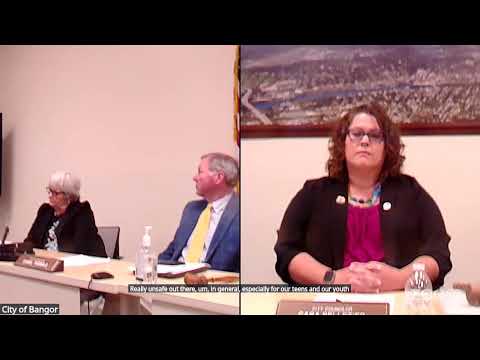
The Bangor City Council voted 5–4 to adopt the fiscal year 2026 municipal budget, advancing a budget that council supporters say balances services and personnel costs while opponents criticized use of reserves and a $2.38 million one‑time debt payment.
The Bangor City Council on Monday adopted a FY2026 municipal budget after a 5–4 roll call vote, advancing a package supporters said keeps services intact while addressing rising costs for personnel and materials.
Council supporters said the adopted budget limits the citywide increase to about 3.61 percent and would reduce the mill rate from $18.55 to $17.70 — a change the council described as lowering the tax rate despite some homeowners seeing higher bills because of property value changes. Opponents urged using reserves or postponing a $2.38 million final debt payment to reduce immediate tax pressure on seniors and other residents on fixed incomes.
The budget measure (council resolve 25‑203) was debated for more than an hour, with council members and members of the public raising concerns about the city’s reserve balances, the timing and source of a one‑time final payment on a long‑running debt obligation (described during the meeting as the last payment on an MPRS debt), and the prospect of calling a special meeting to reconsider how available reserves might be applied to the FY2026 gap.
“We have to be cognizant of when we hit a recession,” Councilor Leonard said in explaining a no vote, arguing that the council should not make a large one‑time payment now and should instead preserve funds for city services and for taxpayer relief. “That’s north of $2.5 million that we could either use for city services, expanded services, or we could actually throw to the taxpayer right now immediately to reduce those burdens.”
Other councilors defended the adopted budget as the result of a months‑long review process. A councilor who supported the package noted the city sought no new positions and asked the school department to make reductions; the speaker said that—even with the vote—the city will still be able to fund core services and that many peer Maine cities adopted higher percentage increases this year.
Several residents addressed the council during public comment asking for relief for seniors and lower‑income homeowners, saying even modest increases in property tax bills can force difficult choices. Residents urged the council to explore targeted aid programs or to instruct staff to identify further savings before approving tax increases. Councilors who opposed the budget cited such comments as a reason to pause and examine alternatives.
The budget package approved by the council included related capital and reserve appropriations reviewed separately (see related actions) and drew majority support from members who argued reserves cannot be sustainably drawn down every year to avoid tax increases. Opponents cautioned that using reserves to cover recurring costs risks sharper increases in future years.
The council vote on the amended municipal budget recorded 5 yes and 4 no. The council proceeded afterward to vote on a series of related capital appropriations and dedicated fund appropriations recommended as part of the FY2026 process.
Ending: With passage, the city’s FY2026 appropriations will take effect as adopted; councilors who opposed the budget said they may press for additional review or a special meeting to revisit the treatment of the one‑time debt payment and the distribution of reserves.