Get Full Government Meeting Transcripts, Videos, & Alerts Forever!
Get email alerts on the Gaza Humanitarian Crisis topic
No spam. Unsubscribe anytime.
UN warns Gaza aid lifelines at risk as fuel, access shortages curtail deliveries
Summary
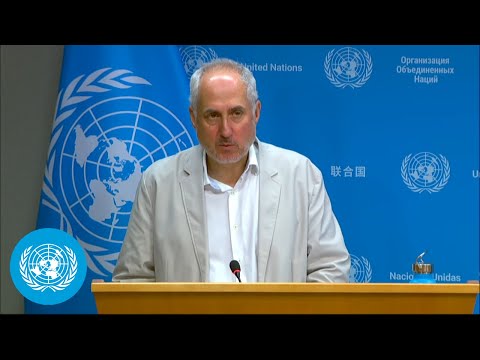
United Nations officials told reporters that fuel shortages and restricted access in the Gaza Strip are forcing health facilities to scale back services, cutting meal distributions and impeding humanitarian convoys. The secretary-general said the UN uses only routes approved by Israeli authorities and called for safer distribution methods.
The United Nations warned on Monday that fuel shortages and limits on access into the Gaza Strip are jeopardizing life-saving services, reducing daily food distributions by roughly 80 percent and placing critical care units at risk of closure.
Secretary-General António Guterres told reporters that UN agencies and partners are using only the corridors and routes “that the Israeli authorities allow us to use.” He described the situation for civilians seeking aid as dire and said humanitarian distributions must be safe for both recipients and those delivering assistance.
The UN Population Fund (UNFPA), as summarized by the UN briefing, said roughly 80 percent of Gaza’s critical care units — including some used for childbirth — risk shutting down amid rapid fuel depletion at a time when about 130 women give birth each day in the territory. The briefing said community kitchens prepared more than 200,000 meals per day this week, an 80 percent reduction from the more than 1,000,000 meals distributed daily in April.
UN humanitarian staff reported attempts this week to coordinate 15 humanitarian movements inside Gaza. Four missions were fully facilitated by Israeli authorities, seven were denied outright, four were initially approved but impeded on the ground (one of which was ultimately completed) and one was canceled by organizers. The briefing said denial or impediment of missions prevented the trucking of water, retrieval of broken trucks and road repairs.
Speaking to a question about criticism from the Gaza Humanitarian Foundation and a U.S. administration grant to that foundation, the secretary-general declined to advise on how the U.S. should use a separate $30 million grant and reiterated the UN’s position that aid distribution must follow international humanitarian principles and prioritize safety.
The UN briefing said that, in the absence of fuel, cooking gas and electricity, some people are burning plastic waste in makeshift shelters, a practice that carries serious health risks. The spokesperson called for increased volumes and variety of supplies, including cooking fuel and shelter items, and for aid to be channeled daily through multiple crossings and land routes so deliveries are steady, sufficient and reliable.
Ending: UN officials did not announce new deliveries or a change in access arrangements at the briefing. They said coordination with Israeli authorities and partner organizations will continue and that further details on aid movements and facility status will be released as available.