Get Full Government Meeting Transcripts, Videos, & Alerts Forever!
Get email alerts on the City Budget topic
No spam. Unsubscribe anytime.
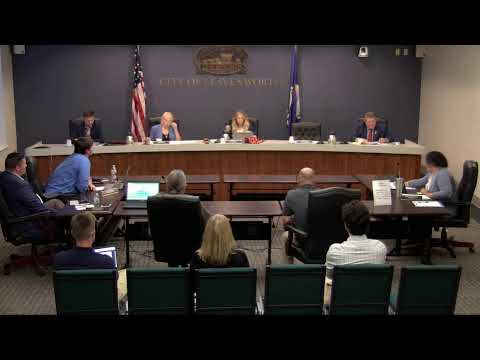
Leavenworth staff unveils 2026 budget plan, warns of falling reserves and proposes mill levy increase
Summary
City staff presented a proposed 2026 operating budget and five‑year capital plan at the Leavenworth City Commission meeting on June 24, laying out options to address declining sales‑tax revenue, reduced reserves and rising insurance costs.
City staff presented a proposed operating budget and five‑year capital plan at the Leavenworth City Commission meeting on June 24, laying out options to address declining sales‑tax revenue, reduced reserves and rising insurance costs.
Scott Show, city staff and the meeting’s budget presenter, told commissioners the city expects to finish 2024 about $1.5 million under budget and 2025 roughly $876,000 under, producing a two‑year negative impact to reserves of about $2.4 million. Show said staff revised sales‑tax estimates downward and examined every departmental line item to reduce spending without cutting services.
Show said staff propose a 2.3457‑mill increase that would raise about $1,140,000 for the general fund under the current assumptions. He also described a possible alternative if the city switches to the State Employee Health Plan (SEHP): preliminary estimates show the city could save up to $1.3 million annually by joining SEHP. If approved by the state and adopted by the commission, staff said about $850,000 of those savings could be used in the proposed budget to partly fund raises and reduce the recommended mill levy to 1.3457 mills.
Why it matters: the city’s unencumbered cash position stood at about $24.6 million on June 24 after roughly $12 million in encumbrances (projects already ordered). Staff projections in the presentation showed reserves falling from about $23.3 million in 2025 to about $16 million by the end of 2026 unless the commission acts to reduce the gap.
Key proposals and assumptions - No across‑the‑board pay increases in the base proposal; staff proposed options (including a 3% raise scenario) if SEHP savings are realized. - Three positions reduced through attrition (one was a vacant code enforcement officer), and line‑item spending cuts across departments; vehicle lease spending next year is projected at roughly 60% of last year. - Enterprise fees (user charges for sewer and solid waste) will be adjusted to match service demands. - Solid waste: staff recommended short‑term capacity additions (new trucks and staff in 2026) and a near‑term plan to build a consolidation station at the old landfill site, with a long‑term transfer‑station master plan under study (referred to in the presentation as option “2.5”). - Digitization: procurement moved to a Bonfire requisition platform; parks programming will move to RecDesk; the city is researching on‑line business licensing and transitioning to Microsoft Office 365 for staff collaboration.
Capital projects and long‑term items Show described the city’s five‑year CIP and noted several projects are unscheduled but remain on the list, including a new wastewater treatment plant and a police firearms training range. He said some projects slated for replacement may be deferred if a new wastewater facility is built (for example, trickling filters that cost roughly $2 million each).
On wastewater specifically, staff noted KDHE (the Kansas Department of Health and Environment) has issued increasingly stringent nutrient‑removal expectations, and the city already has a wastewater master‑plan update on the agenda (the commission approved a contract for the study during the same meeting).
Timing and next steps Show listed target dates: budget books available July 3; an all‑day budget meeting on July 14; a final study session July 15; the city must notify the county clerk on July 20 if it intends to exceed revenue neutral (the current proposal does); public hearing to exceed revenue neutral and adopt the budget is set for Aug. 26; final adopted budget to county clerk Sep. 15.
What commissioners asked Commissioners pressed staff for details on insurance RFP timing, the assumed number of police and fire vacancies included in salary lines, and how quickly the city could realize savings from SEHP if approved by the Kansas State Employees Health Care Commission. Show said staff had submitted the SEHP application and expected an answer imminently; adoption would still require commission approval.
Ending Staff told commissioners the presentation materials would be posted on the city website after small typo fixes. The commission set an all‑day budget meeting for July to refine options and asked staff to bring scenarios that show the tradeoffs between mill levy changes and pay increases depending on whether SEHP is approved.