Get Full Government Meeting Transcripts, Videos, & Alerts Forever!
Get email alerts on the School Budget topic
No spam. Unsubscribe anytime.
Wyoming Area Board adopts $47.8 million final 2025-26 budget, sets tax rates after heated debate over cyber charter costs
Summary
The Wyoming Area School Board on June 24 adopted the final 2025-26 general fund budget of $47,834,009, approved property tax rates and related tax resolutions after a detailed presentation of revenue shortfalls, a discussion of rising cyber charter costs, and failed effort to form a merger study committee.
The Wyoming Area School District Board of Education on June 24 adopted a $47,834,009 final general fund budget for the 2025-26 school year and approved the accompanying property tax levies and administrative tax resolutions after a lengthy presentation on district finances and public comment.
The budget vote followed a detailed presentation from the district finance presenter, identified in the meeting as Mr. Mullen, who laid out a range of tax-rate options and projected revenue shortfalls depending on whether the district levied up to the Act 1 index (5.5%) and whether the Commonwealth’s proposed state funding in the governor’s budget materializes. The board adopted the final budget and related tax resolutions as printed on the agenda.
The presentation said the adopted general fund spending plan totals $47,834,009. The board approved a tax rate of 21.789 mills for the Wyoming Area parcels located in Luzerne County municipalities listed in the agenda and 108.6909 mills for parcels in Exeter Township, Wyoming County, with other local tax authorities (per-capita, local services tax, real estate transfer and wage tax) included as specified in the motion. The adoption also authorized the secretary to advertise the budget notice as required by law.
Why it matters: The district’s finance presentation showed a structural challenge — state and federal pandemic-era ESSER funds that previously paid for capital work are now exhausted, special education and health-care costs are rising, and charter cyber tuition obligations have grown substantially. The board’s decisions set tax and collection rules for the coming year and establish how the district will use its fund balance to cover projected deficits.
Most important facts - The board adopted a final 2025-26 general fund budget providing for $47,834,009 in expenditures and matching revenues. The motion passed after roll-call voting; a subset of directors registered “no” votes on the budget line and the homestead/farmstead resolution (see Votes at a glance below). - The finance presenter outlined scenarios: with no state aid and a full 5.5% index increase, the district projected an approximately $619,000 shortfall for 2025-26 to be funded from fund balance (leaving an estimated ending balance of roughly $2.4 million); lower tax increases or no increase would increase the projected use of fund balance. - The presentation highlighted three primary financial pressures: (1) a multi-year decline in assessed valuations (partially reversing only in the last two years), (2) rapidly rising charter cyber school tuition (presented at roughly $2.5–2.8 million in recent years), and (3) special-education out-of-district placements.
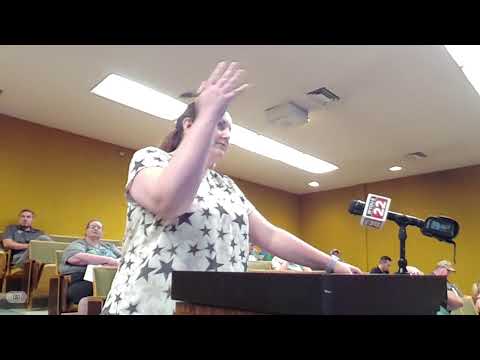
Board and public debate - Several board members and residents expressed frustration with charter cyber costs and urged state-level reform. A number of public commenters (including Steve Hoover and others) argued the board/administration should pursue deeper expense reductions — layoffs, program cuts or larger structural changes — rather than repeated tax increases. Board members noted the district has made some operational cuts, collapsed classes where practical and absorbed retirements rather than immediately refilling positions. - One board member moved to add an item creating a committee to explore a possible merger with an adjacent district; that amendment failed on the board vote. Supporters said a committee would allow fact-finding with other districts and elected officials; opponents worried about excluding the full board or running afoul of open-meetings rules. - Multiple speakers pressed the board to lobby state legislators for funding-formula changes. A board member said she had contacted state lawmakers and urged residents to do the same.
Public comments and local concerns - Several residents criticized cyber charter spending and cited recent state audit materials; one attendee urged residents to contact legislators in support of House Bill 1500 (cyber school reform was discussed by speakers as pending state legislation). Commenters also raised concerns about repeated tax increases and called for more transparency on cuts and long-term planning. - Parents and residents asked about the district’s shrinking elementary-class enrollments and whether classroom collapses were driven by retirements/attrition or falling student counts.
Process and next steps - The board adopted required tax-calendar and installment-date resolutions and a Homestead/Farmstead exclusion calculation for the 2025-26 year (aggregate homestead/farmstead reduction amount and per-property reduction figures were included in the motion). The board also authorized execution of tax-collection procedures required by state law. - The administration indicated it will continue to refine the close-out numbers for 2023-24 and report any adjustments when post‑June 30 items (intermediate unit reconciliations, tuition placements, etc.) are finalized.
Ending Board members repeatedly emphasized that the district’s financial picture is heavily affected by state funding policy, county-assessed valuation changes and charter tuition obligations. The budget and tax-rate decisions set the district’s revenue plan for the year while leaving open longer-term policy questions about enrollment loss, charter cost relief and whether larger structural changes (including merger exploration) merit further study.
Speakers quoted or cited in this article are listed in the article speaker roster below.