Get Full Government Meeting Transcripts, Videos, & Alerts Forever!
Get email alerts on the Housing Accessory Dwelling Units topic
No spam. Unsubscribe anytime.
Council discusses ADU parking changes as staff flags state limits on basement units
Summary
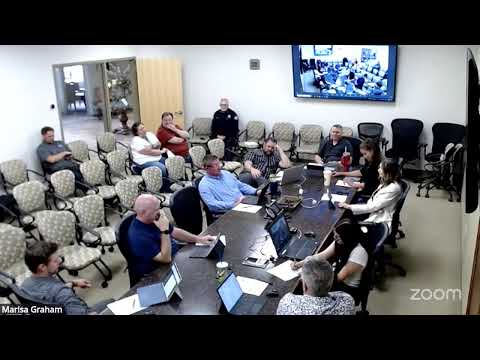
Syracuse City Council work session reviewed planning-commission recommendations to amend municipal code for accessory dwelling units, focusing on parking counts, basement apartment limits and minimum lot size; staff and council members raised winter parking and enforcement concerns and agreed to return the item to a future agenda.
Syracuse City Council discussed proposed amendments to the city municipal code related to accessory dwelling units, including parking requirements and minimum lot-size standards.
Planning staff reported that the Planning Commission recommended changing the local rules so that on-street parking could not be counted as a required stall when an accessory dwelling unit has two or more bedrooms. Staff also told the council that state law limits local requirements for basement apartments to a single assigned parking stall even when a basement unit contains two bedrooms. "Planning commission discussed it. They added their own recommendation concerning parking," city planning staff Noah said during the work session. "State law prohibits us from requiring more than one parking stall for a basement apartment."
The change would align the city rules with state limits and make the minimum lot-size requirement consistent with state allowances. Planning staff said the proposed minimum lot size would be increased to 6,000 square feet "to match what the state law allows." Councilmembers expressed concern about winter-plowing impacts if accessory units rely on on-street parking. One councilmember said, "I support their parking course... I'm seeing it happening" where multiple vehicles and trailers occupy private lots and streets in winter, making plowing and safe access difficult.
Discussion points included: whether required parking for detached backyard units could differ from basement units (staff said detached units may still be subject to different local requirements), how to ensure independent parking stalls rather than tandem arrangements, and the practical enforcement and safety consequences during winter months.
The council directed staff to advance the Planning Commission recommendations for further consideration at the next regular meeting rather than adopting the amendments that night. The item will return to a future agenda with refined language to reflect the state limitation on basement apartments and the Planning Commission parking recommendation.
The conversation was limited to the code amendment language and implementation detail; no ordinance was adopted during the work session.