Get Full Government Meeting Transcripts, Videos, & Alerts Forever!
Get email alerts on the Transportation Infrastructure topic
No spam. Unsubscribe anytime.
Taylor County begins RESTORE Act-funded feasibility study for Keaton Beach and Steinhatchee boat-ramps and bypass options
Summary
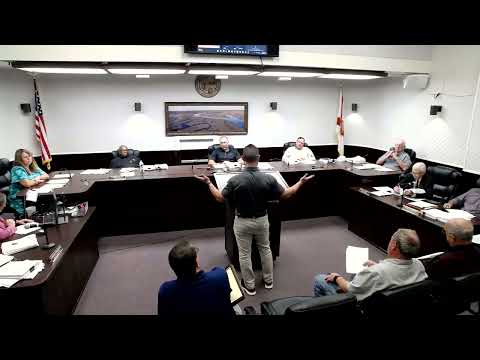
Taylor County commissioners on Tuesday opened public input on a RESTORE Act-funded feasibility study to address traffic and boat‑ramp access at Keaton Beach and Steinhatchee.
Taylor County commissioners on Tuesday opened public input on a RESTORE Act-funded feasibility study to address traffic and boat‑ramp access at Keaton Beach and Steinhatchee.
The study, funded by RESTORE Act grant money and carried out by a competitively selected consultant, is intended to be a planning-level evaluation only and does not authorize construction, county staff and consultants said. The consultant said it will collect traffic counts (including peak July 4 counts), geotechnical and right‑of‑way data, and environmental information to develop multiple design options and a “no‑build” baseline.
The county is pursuing the study after a board‑directed grant application. County staff told the board the work is fully grant funded; consultants emphasized the study phase alone will not result in eminent‑domain acquisition.
John Combs, the project contact from the consultant team, said: “We're actually really excited about this project, the the Schenhatchy And Keaton Beach boat ramp feasibility study.” Clint Plesser, introduced as the consultant firm’s associate vice president for transportation, told the board the team had “no preconceived notions” and wanted local feedback to shape alternatives. The presentation noted special environmental sensitivity in the coastal wetlands around both sites and that the consultant will use a worst‑case holiday weekend traffic count (around the Fourth of July) as a design basis.
Residents and commissioners focused on three recurring questions: whether the study could recommend purchase or use of privately or county‑owned parcels (including one parcel purchased with an FCT grant and zoned conservation), how the consultant will treat seasonality in traffic (scallop season creates three months of high congestion, but speakers disputed whether that period is three months or shorter), and whether the study could recommend a “no‑build” outcome. The consultant said a no‑build option is a standard baseline: “The no build will will be compared to all the smart criteria,” the presenter said.
Public commenters suggested alternatives and raised concerns about timing and priorities: some argued that, after recent storm losses and lower rental inventories, current visitor numbers may be depressed and a study now might not reflect typical conditions; others said improving emergency response and safety justified exploring options. One commenter urged the county to consider dredging other access points or fund a new boat ramp instead of a bypass. Another asked whether the county could use county‑owned property; consultants said they would research zoning and permitting implications.
County staff said the grant application and selection process were complete and the consultant contract is in place. The consultant said the next major data step is July Fourth traffic counts and that environmental, geotechnical and right‑of‑way surveys are already underway. The consultant estimated the study contract in the low hundreds of thousands of dollars and participants in the public comment cited a figure around $300,000–$350,000 discussed at the meeting; county staff confirmed that the grant covers study costs and that later construction, if recommended, would require a separate funding phase and additional grant or application steps.
The consultant asked commissioners and residents to send specific property or access concerns to county staff so those locations can be incorporated into the alternatives analysis; county staff said they will hold additional stakeholder meetings and return with draft options for public review. No final decision on construction was made at the meeting, and consultants reiterated that the study will produce recommendations for the board to consider.
The board did not take a construction action at the meeting; commissioners approved no additional binding directive during the presentation.
Next steps: the consultant will complete data collection (including July 4 counts), produce alternative layouts for both sites, and return to the board and public with findings and recommendations. The county has identified class 3 funding that could be redirected if the board chooses a different coastal project instead of construction stemming from this study.