Get Full Government Meeting Transcripts, Videos, & Alerts Forever!
Get email alerts on the Economic Development Rda Report topic
No spam. Unsubscribe anytime.
Economic development report: Sandy sees business growth but firms flag permitting and licensing as top hurdles
Summary
Sandy City’s economic-development team reported record new-business counts and strong taxable sales, while its business survey and visitation program identified permitting, licensing and signage rules as the most frequent obstacles to local business expansion.
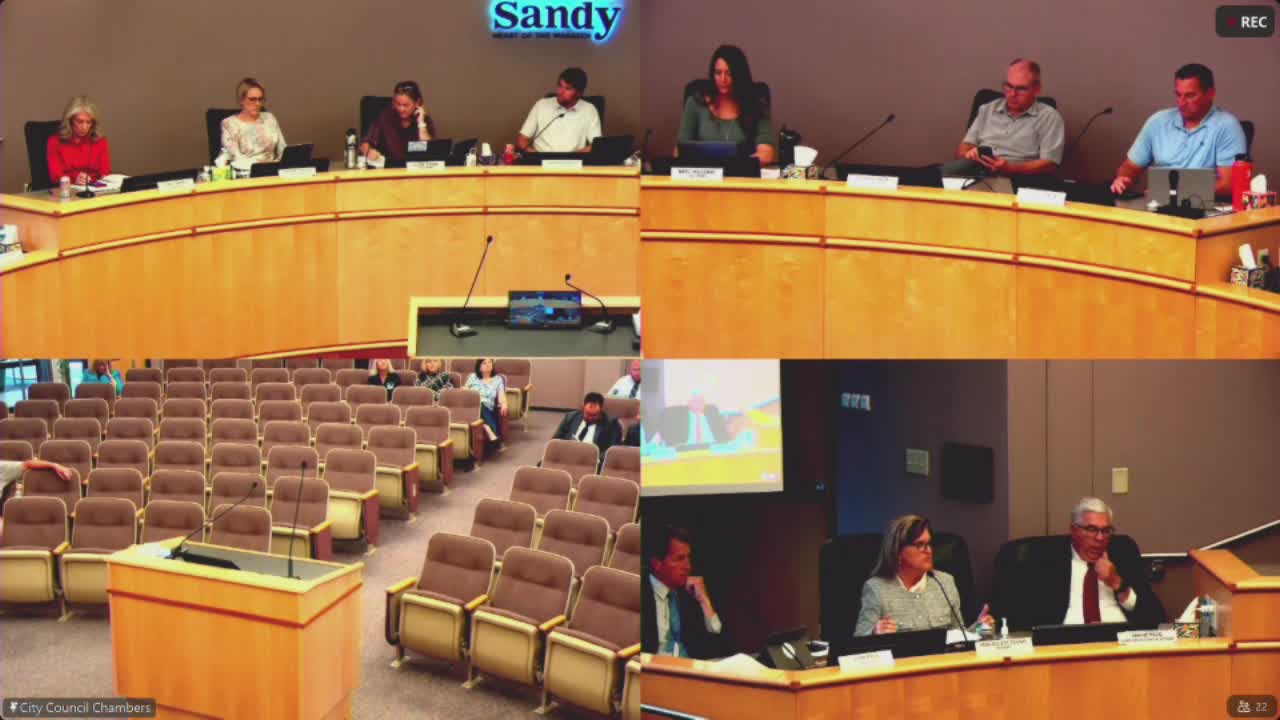
Sandy — Economic development staff told the Sandy Redevelopment Agency and City Council on June 24 that the city recorded robust business activity over the past year but that local firms consistently cite licensing, permitting and sign rules as barriers to growth.
The presentation, led by Economic Development Director Casey Dunleavy, summarized the department’s business survey, a business-visitation/highlight program, and RDA project-area performance.
Key findings
- Business growth: The city has more than 5,400 business licenses on file and recorded roughly 793 new business openings during the most recent reporting period. Taxable sales in the city were about $3.3 billion, and the local unemployment rate held near 3%.
- Business sentiment: Staff reported about 130 survey responses and a rising “net promoter” score for businesses — a metric that tracks whether businesses would recommend Sandy as a place to locate. Dunleavy said the score improved substantially from the prior survey cycle.
- Reported hurdles: When asked “How can Sandy help my business?,” respondents prioritized business promotion and grant/loan support, but licensing and permitting processes and signage rules were the most frequently cited operational obstacles.
City actions and programs
Economic development staff described efforts to respond: the department has increased business outreach through a “highlight” visitation program (40 businesses visited in the past year), sponsored business‑training sessions with the South Valley Chamber, and expanded Shop & Stroll and other promotion events to drive foot traffic to neighborhood businesses.
Dunleavy said the department will pursue a more formal economic development strategic plan in the coming year and is working to align city processes to reduce permitting friction. He and staff said they will coordinate with Community Development and licensing staff to identify specific procedural improvements and to offer clearer pre‑application information for prospective business owners.
RDA project areas and office-parcel concern
The presentation reviewed six active RDA project areas and current tax‑increment balances. Civic Center North (the area around Southtowne and nearby development) and the Sandy TOD were singled out as high-growth areas; Civic Center South is nearing project-area expiration and staff warned the board to expect reduced future tax increment from that area.
Dunleavy and RDA staff also noted one parcel in the TOD that Hamilton Partners must start as an office project within the agreement’s remaining timeframe (two years) to retain full county tax-increment participation. Staff said they are in ongoing conversations with the parcel owner and exploring whether alternative uses could be negotiated with the county if office development proves infeasible.
Why it matters
Business counts and taxable sales underpin the city’s revenue base and redevelopment funding. At the same time, the survey and visitation feedback point to operational steps the city can take to help small businesses: clearer pre-application guidance, possible grant/loan programs targeted to early-stage firms, and streamlined sign and permitting processes.
Next steps
Economic development staff plan to: - Bring options for a small-business grant/loan program and describe eligibility and potential partnership criteria (for example, preferential consideration for businesses that complete training or business-assistance programs); - Continue business visitations and return with specific procedural recommendations to streamline licensing and permitting; and - Proceed with the HTRZ (High Transit Route Zone) application submission to state agencies to enable additional financing tools for targeted redevelopment.
Ending
Board members encouraged staff to prioritize cross-departmental workshops that include licensing and community development so the council and RDA can evaluate policy changes to reduce barriers for local businesses.