Get Full Government Meeting Transcripts, Videos, & Alerts Forever!
Get email alerts on the Park Board Trustees topic
No spam. Unsubscribe anytime.
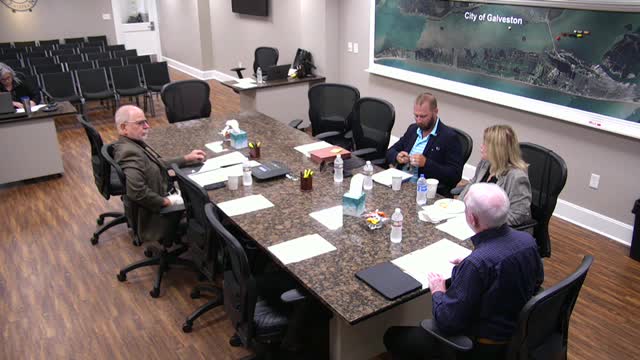
Galveston council interviews 13 Park Board candidates amid disputes over transparency, beach safety and hotel-tax spending
Summary
City council interviewed 13 applicants for Park Board trustee seats and set June 26 for appointments while candidates and council members pressed issues including transparency, lifeguards and how hotel-occupancy tax is spent.
The Galveston City Council interviewed 13 candidates for Park Board trustee seats during a morning session and said it will appoint trustees at its June 26 meeting; council staff asked members to submit ranked candidate lists by the Thursday before the appointment meeting. The interviews focused less on individual biographies than on ongoing disputes over Park Board transparency, the use of hotel-occupancy tax revenue and beach safety, including lifeguard staffing and litter enforcement.
The interviews mattered because the Park Board manages beach maintenance, lifeguard operations, tourism marketing and distribution of hotel-occupancy tax dollars — all central to Galveston’s economy and to residents’ quality of life. Several candidates and council members urged clearer financial controls and closer cooperation between the Park Board and city government before the board approves budgets or lobbying efforts.
Gerald Wilson, a current Park Board vice chairman and one of the applicants, told council he is seeking reappointment and emphasized continuity while acknowledging problems between the board and council. “I feel there’s work that needs to be done that’s not finished,” Wilson said, adding that “transparency, sharing of information” is necessary to prevent future conflicts that he called “unfortunate.” He listed priority items for the board as selecting an interim or permanent CEO, finishing an interlocal agreement, finalizing the Park Board budget for presentation to council in mid‑July, and managing a planned transfer of revenue parks to city control on Oct. 1.
Several applicants and council members pressed candidates on recent Park Board actions that drew scrutiny, including legislation reportedly taken to the state and the board’s use of hotel-occupancy tax dollars. One applicant identified only as Frank (applicant) urged close financial oversight and criticized what he characterized as misuse of beach-maintenance funds, saying an audit should root out problems. Frank also raised safety concerns about lifeguard coverage and beach access, saying lifeguard towers were sometimes not staffed until late morning and describing a ramp and access issues near Nineteenth Street that, in his view, increase drowning risk.
Multiple applicants endorsed a new shore‑cleaning proposal introduced during the session, an initiative candidates and councilmembers referred to as “Only Footprints” (or similar names), intended to reduce beach litter by increasing signage, visitor outreach and enforcement. Jan Hughes, a former Park Board trustee applicant, called the campaign “a huge role” for the Park Board and suggested branded receptacles and social‑media outreach to change visitor behavior.
Candidates described the kind of interim CEO they would like the board to recruit: an experienced manager willing to listen, rebuild trust and, in some views, act as a transitional “fixer” to restore organizational stability. Several applicants said the Park Board needs someone who will engage with current staff and trustees, assess roles and costs, and strengthen day‑to‑day operations before a permanent hire.
Council staff member Janelle informed the panel that 13 candidates had applied and that four Park Board positions were open for reappointment: three current trustees had declined to seek reappointment and one had opted to seek reappointment, leaving three vacancies and one potential reappointment. Council business staff set a deadline for members to submit ranked candidate lists the Thursday before the evening appointment meeting at 4:00 p.m. Council chairing officials repeated the June 26 appointment date during the session.
Beyond personnel questions, candidates and council members frequently returned to the tension between promoting tourism and protecting residents’ quality of life. Candidates noted that the island receives roughly 8.9 million visitors annually (a Park Board figure discussed during the session) but that only about 2.9 million of those overnighted in hotels or short‑term rentals; speakers argued for strategies to convert day visitors into overnight stays and for investing in off‑season events to stabilize year‑round employment. Several candidates also suggested adjusting how hotel‑occupancy tax dollars are allocated to ensure funds support services that both attract visitors and protect residents, such as beach maintenance, lifeguards and infrastructure.
The session included repeated calls for better communication and for the Park Board to coordinate with the City on budgets and any lobbying activities. At least one applicant said he would not support approval of any Park Board budget item that used hotel‑occupancy tax dollars for lobbying without prior City Council approval. Several candidates and trustees said a clearer interlocal agreement between the City and Park Board and stronger financial controls — including the limits on discretionary spending that council members referenced — would reduce friction.
The council closed the interviews with administrative instructions: members will submit ranked lists by the appointed deadline and the council will make formal appointments at its June 26 meeting. No formal votes on appointments were taken during the interview session itself.
What’s next: Councilmembers will send ranked candidate lists to city staff by the stated deadline, and the council will make trustee appointments at the June 26 meeting. The Park Board’s interim CEO search, the budget presentation to council in mid‑July and the Oct. 1 revenue‑parks transition were flagged repeatedly as items requiring follow‑up and coordination between the two bodies.