Get Full Government Meeting Transcripts, Videos, & Alerts Forever!
Get email alerts on the Student Supports topic
No spam. Unsubscribe anytime.
Board hears proposal for RISE behavior curriculum and restorative supports; action planned next meeting
Summary
Administrators presented the RISE curriculum, a three-year behavior-support program for elementary students placed at Oak Lawn as an alternative to expulsion; initial implementation cost is about $55,600 and three-year projected cost with support days is about $97,225.
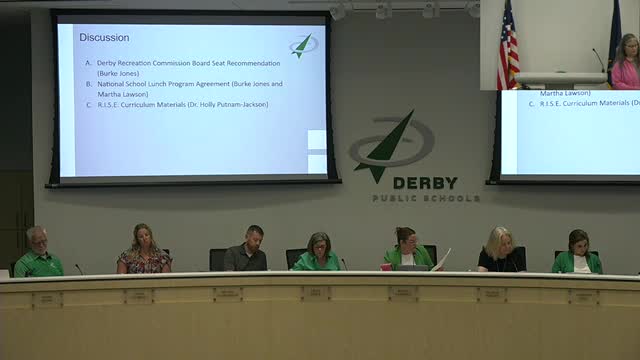
District administrators presented the RISE curriculum on June 23, a behavior-support program intended to keep elementary students in a school setting while they receive instruction and restorative interventions instead of being expelled.
Dr. Holly Putnam Jackson, assistant superintendent of teaching and learning, described RISE (Relationships, Instruction, Safety, Emotional well‑being) as a program that pairs a staffed classroom at Oak Lawn with training, restorative circles and on-site coaching from a regional support team (SDAC). She said the program is aimed at students who need intensive reteaching of self-management and interpersonal skills so they can return to their regular classrooms.
Dr. Putnam Jackson said the curriculum materials and initial training cost about $3,600 per site for baseline implementation; a three-year implementation plan that includes training and expected on-site support days was estimated at $55,600 before billed support days and about $97,225 when projected additional support days are included. Administrators emphasized the model builds local capacity so the district can reduce dependence on external support over time.
Board members asked questions about how academics are maintained while students are in the RISE room and how the program would avoid teacher burnout. Dr. Putnam Jackson and administrators said assignments from the students’ classroom teachers will be transferred to the RISE setting so students do not fall behind academically; more intensive behavior teaching is provided at the lower RISE levels, and academic work is emphasized farther along in the level progression. Administrators also said counselors and social workers would participate in restorative practices and that SDAC could provide up to five days of on-site assistance per student when needed.
The board did not take an action vote on RISE at the June 23 meeting; staff said the curriculum will return for action at the next board meeting with final cost and implementation details.