Get Full Government Meeting Transcripts, Videos, & Alerts Forever!
Get email alerts on the Afghanistan Un Engagement topic
No spam. Unsubscribe anytime.
UN outlines structured pathway to reintegrate Afghanistan, warns of rights and humanitarian shortfalls
Summary
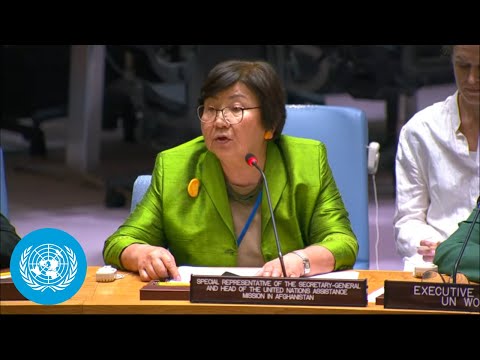
In a council briefing, Rosa Otonbaeva described a United Nations "comprehensive approach" to work with Afghanistan's de facto authorities on issues from counter‑narcotics and private‑sector engagement to human rights, mine action and humanitarian funding, and urged lifting the ban on girls' education.
Rosa Otonbaeva, speaking for the United Nations, told the council that the UN has proposed a "comprehensive approach" to create a clearer, more structured pathway for Afghanistan to be reintegrated into the international community and to meet its international obligations.
The approach, Otonbaeva said, does not seek to normalize the status quo but to put "multiple key issues of concern, in particular upholding the country's international obligations, at the core of engagement efforts." She said the plan brings working groups and stakeholders together to build confidence and remove obstacles to cooperation; in a few days in Doha the United Nations will convene meetings of two working groups on counter‑narcotics and the private sector established after a 2024 meeting of special envoys.
Why this matters: Otonbaeva warned that progress on reintegration is linked to persistent rights and humanitarian problems inside Afghanistan. She said the de facto authorities have provided relative stability, modest economic growth and resumed some infrastructure projects and regional diplomatic ties, but continue to implement "highly restrictive and discriminatory policies" that harm women, minorities, businesses and media operations.
Otonbaeva singled out the law on the propagation of virtue and prevention of vice, promulgated last August, saying UN reporting found it has broad effects on women, minorities, humanitarian operations and the economy and "hinders Afghanistan's eventual reintegration into the international system." She reported that the UN remains "extremely concerned that engagement has not improved the unacceptable situation of Afghan women and girls, promoted inclusive governance, or prevented a marked deterioration in human rights." An Afghan women interlocutor quoted by the UN described the situation as an "invisible war of attrition," saying, "survival itself is an act of rebellion."
On detention and prisons, Otonbaeva said UN teams have secured commitments from the de facto office of prison administration for continued access to male and female detainees and described limited improvements, including vocational training sessions, some mental health support and food assistance in some facilities. She welcomed those commitments while noting the UN mandate's delivery is complex and sometimes dangerous.
Security and staff safety: Otonbaeva reported that in May dozens of female national staff working with UNAMA and other UN agencies received explicit death threats, prompting internal protective measures. She said the de facto authorities denied responsibility but that armed individuals appeared to be operating with impunity in the capital.
Terrorism and regional risk: The briefing noted a recent lull in ISIL‑K operations—"the longest hiatus since the Taliban takeover in August 2021"—but cautioned the threat persists. Otonbaeva said member states remain concerned about the presence of foreign fighters and that the sanctions monitoring team has raised alarms.
Humanitarian funding, mine action and returns: Otonbaeva warned that critical mine‑action funding to UN partners expires this July; without it, data management and coordination for clearance would halt, and quality assurance and prioritization work would stop. She said the number of mine‑action teams active in the field has nearly halved compared with a year earlier and that mines and unexploded ordnance have killed "hundreds of people this year," most of them children.
She also said the Afghanistan humanitarian needs and response plan was about 19% funded midway through the year and that recent donor cuts have compounded shortfalls. Otonbaeva reported more than 600,000 Afghans have returned from Pakistan and the Islamic Republic of Iran this year, and that returns from Iran in recent days have exceeded 10,000 per day, straining local absorption capacities and prompting UN agencies to prepare for cross‑border movements.
Regional context: Echoing the UN secretary‑general, Otonbaeva called for immediate de‑escalation in the conflict between Israel and Iran and warned that regional instability is already disrupting trade, raising prices for basic goods and fuel, and contributing to population movements that worsen Afghanistan's humanitarian needs.
Ending: Otonbaeva framed the Doha working‑group meetings on counter‑narcotics and private‑sector engagement as an immediate step to maintain momentum for multilateral engagement, build confidence and create space for possible progress across the UN's mandate areas in Afghanistan.