
Pittsburgh school board debates restructuring plan, preparing to open public hearings on proposed consolidations
Get AI-powered insights, summaries, and transcripts
Subscribe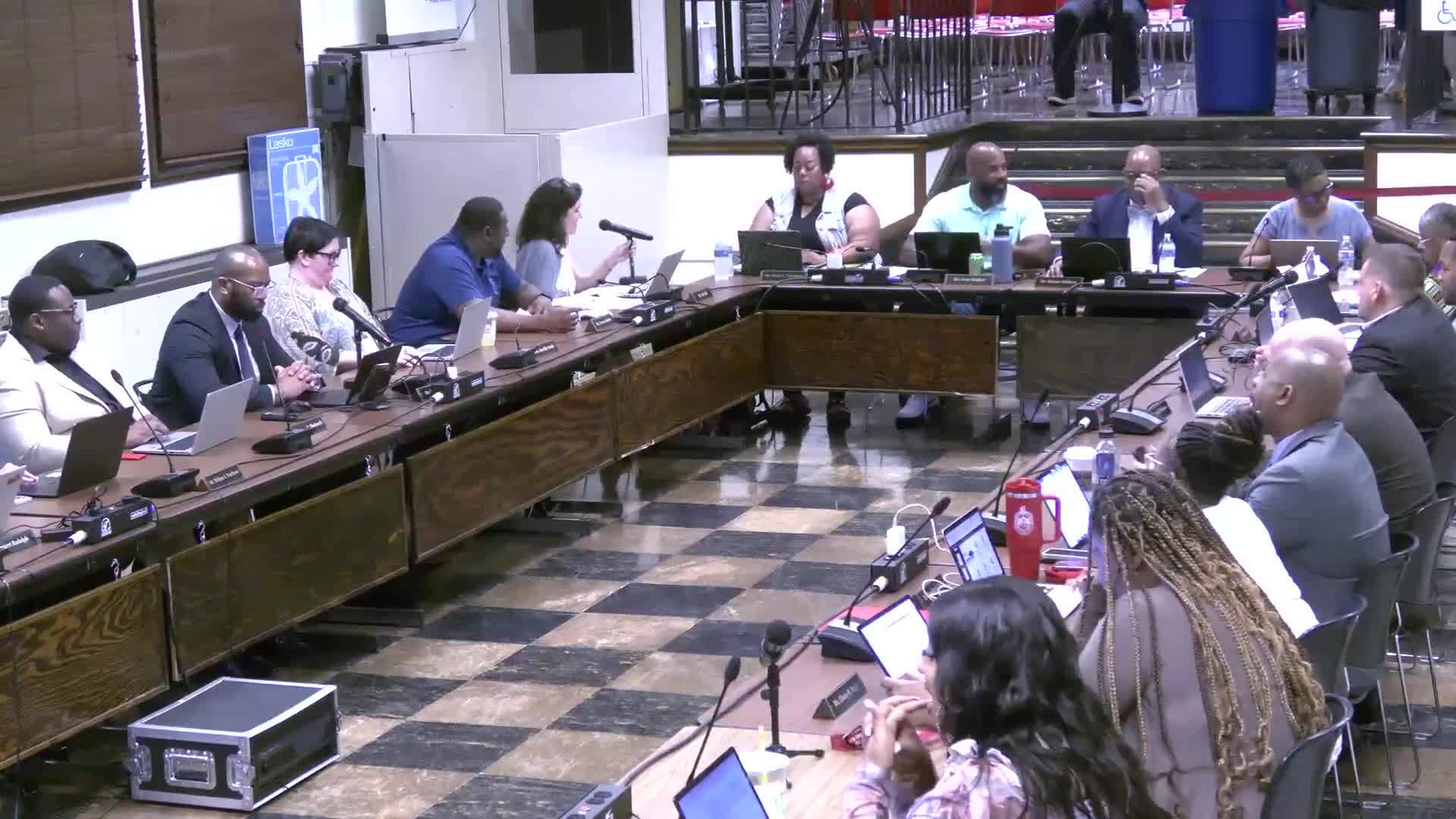
Summary
The Pittsburgh Public Schools Board discussed whether to begin the public‑hearing process on a district facilities utilization plan that would consolidate and reconfigure schools, potentially changing attendance zones and program locations, at an agenda review meeting on June 18.
The Pittsburgh Public Schools Board discussed whether to begin the public-hearing process on a district facilities utilization plan that proposes consolidations, reconfigurations and changes to magnet and special-education placements at an agenda review meeting on June 18.
Board members spent more than two hours questioning district administrators about timelines, special-education safeguards, magnet and CTE program continuity, and the level of detail the board will require before voting to close or reconfigure buildings.
The proposed plan would phase projects across three years, rely largely on room reconfigurations rather than major new construction, and include a 10% budget contingency for construction projects, district staff said. "All construction projects include a 10% budget contingency to account for unforeseen conditions and potential change orders," Director Silk read from prepared responses supplied by district staff. Silk also summarized that larger projects are intended to be phased to reduce disruption.
District officials told the board that changes affecting students with disabilities must be coordinated with the Pennsylvania Department of Education's Bureau of Special Education (PDE BSE). "PDE must grant approval prior to PPS enacting any reconfigurations and those plans must be submitted to PDE BSE by July 31 to be effective for the coming school year," Silk read, citing the legal-office response included in the packet. The district said it will use the SPRN process (special education plan revision notice) when classroom locations or program placements change.
Board members pressed for clarity on how students would be phased and what choices would remain in place for families. The administration described specific transition rules for magnet and career-and-technical-education (CTE) students: current magnet students are to retain magnet status within newly designated grade-span structures; students enrolled in CTE who change feeder schools would generally be expected to remain at their CTE site to preserve program continuity. "High school students whose feeder patterns change for the 2026–27 school year may choose to remain in their current school," Silk read from the administration's answers.
Board members repeatedly requested a detailed transition plan with financial and operational specifics. Director Dave proposed language (to be submitted in writing) that would require the administration to deliver a transition plan for board consideration by Sept. 1, 2025, covering items including: financial implications (transportation costs, maintenance of closed buildings, capital improvement needs by school), updated transportation projections, proposed alternative uses for closed buildings, and supports for student subgroups such as students with exceptionalities, Black students and English-language learners. That amendment was discussed but not adopted at the meeting.
Solicitor Weiss summarized the legal mechanics of a vote to begin hearings: a favorable board vote would only commence the statutorily required public hearing process, which carries a 15‑day notice requirement for each hearing and a minimum three‑month period before the board may vote on closing a building. "The vote on this resolution is to commence a public hearing process as mandated by the school code before the board can later vote on closing school buildings," Weiss said. He added that hearings may be grouped on the same days but each building requires notice.
Board members voiced competing views on pace and procedure. Several members urged prompt action to relieve operational strain on staff and to avoid further enrollment and staffing losses, while others said more detailed, bounded plans and clearer public communication are prerequisites before any closures proceed. Director Wilson cautioned against additional layers of process that could delay decisions, saying, "I think we need to make a decision and then move forward." Director Silk and others emphasized continued transparency and a requirement for more explicit transition details prior to closure votes.
District staff provided several quantitative clarifications in response to board questions: the district reported 85 early-childhood preschool classrooms and six Early Head Start infant-toddler classrooms housed across 39 buildings; the majority of early-childhood centers were not slated for change under the proposed plan, and grant requirements mean the number of funded classrooms would remain the same even if physical locations change. The district also said some magnet programs would relocate into neighborhood schools and that students living outside a new attendance zone would be expected to transition to their designated feeder school but could pursue other magnet or CTE options available to Pittsburgh residents.
The board set a timetable for further public input: members were told a vote to open hearings could occur next week, and the board chair announced an extra public-hearing day tentatively scheduled to accommodate higher-than-usual turnout. The board did not take a formal vote on opening hearings during the meeting.
Speakers and staff committed to continue refining details and responding to written questions from the public. Next steps include a likely board vote to commence hearings, a schedule of hearings with required notice, and further district-provided transition documentation in the months before any vote on actual closures.