Get Full Government Meeting Transcripts, Videos, & Alerts Forever!
Get email alerts on the Budget topic
No spam. Unsubscribe anytime.
Humble ISD adopts balanced 2025–26 budget, approves compensation plan
Summary
The Humble Independent School District Board of Trustees on Tuesday approved a balanced 2025–26 operating budget that leans on new state allotments for teacher pay and includes a districtwide compensation plan and several one‑time expenditures.
The Humble Independent School District Board of Trustees voted to adopt a balanced 2025–26 operating budget and to approve a districtwide compensation plan at a special public meeting.
The adopted budget incorporates an estimated $52 million in new statewide school finance funding over the two‑year biennium from House Bill 2, including about $26 million expected in the first year that the district incorporated into the 2025–26 budget. The board also approved a compensation package that includes the state-directed classroom teacher allotments (roughly $2,500 or $5,000 depending on years of experience) and a recommended 3% average increase for other employee groups, plus targeted equity adjustments for under‑market roles.
The budget presentation noted that the $26 million of new funding in 2025–26 is the first‑year portion of the two‑year increase; district staff said the additional funding is already committed to recurring obligations in the first year. Billy Beatty, who led the budget presentation, told trustees, “we are not bringing you a deficit budget,” and said the recommended budget leaves a small operating surplus while preserving assigned fund balance for cashflow and contingencies.
Why it matters: district officials said the new state allotments allowed Humble ISD to increase starting teacher pay (projected to lift the starting salary to about $66,000 under the recommended plan), to provide a meaningful boost to classroom teacher pay, and to include a 3% increase for non‑classroom staff. Officials framed the package as a multi‑year start, noting that some funding and program changes depend on continued state support.
Key elements and numbers cited by staff: - New state funding: about $26 million in 2025–26 and $52 million over the biennium (district estimate). - Teacher incentive allotment: state guidance provides roughly $2,500 for some classroom teachers and $5,000 for others depending on experience; district staff said the allotment is already allocated in the first year of the biennium budget. - Support staff retention: roughly $1.75 million attributed to the support staff retention allotment, equating to an approximate 3% raise for affected staff. - Child Nutrition fund: district staff recommended a one‑year planned deficit in the National School Breakfast and Lunch Program Fund to spend federal carryover on equipment and line upgrades; the presentation said the child nutrition plan would spend about $7 million more than projected revenue in 2025–26 while using fund balance. - Fund balance: staff projected roughly $55 million in assigned fund balance at year end before proposed one‑time uses and said the district would remain well above minimum unassigned reserves.
Budget workshop and next steps: the budget was built on a flat tax rate assumption and the district said the formal tax rate decision will return to the board in September after county appraisal updates. If the board adopts the budget tonight, salary changes for July contracted employees would begin with the July 15 payroll (other contract tiers noted August/September payroll dates).
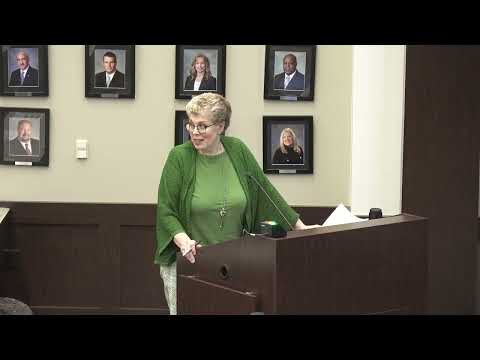
Public comments and staff follow‑up: speakers during the required budget public hearing urged the board to consider pay for librarians and other non‑classroom educators. Larissa Powell criticized the board’s overall fiscal stewardship and legal spending; George May and Elm Grove librarian Tonya Anahosa May urged pay equity for librarians, saying librarians teach every student and asking the district to find room in the budget to retain literacy specialists. Billy Beatty and board members responded during discussion that some state allotments apply specifically to classroom teachers but that other available allotments and internal budget choices could be used to address additional personnel categories.
Votes at a glance (board action taken at this meeting): - Adopt 2025–26 budgets (General Fund, National School Breakfast and Lunch Program Fund, Debt Service Fund): motion approved (tally reported by presiding officer as 7–0). - Approve proposed 2025–26 compensation plan: motion approved (tally reported as 7–0). - Approve year‑end budgetary transfers and changes in functional categories for districtwide year‑end expenses: motion approved unanimously.
What officials said about constraints and priorities: representatives from the state and district emphasized the need to sustain gains in future years. State Representative Charles Cunningham, who addressed the board earlier in the meeting, described the new appropriations as “a start” and urged local districts to use new allotments to protect teachers, special education, and school‑safety funding.
Board and staff next steps: staff said they will load the adopted 2025–26 budget effective July 1, begin implementing salary changes per the payroll schedule described above, finalize any one‑time expenditures from assigned fund balance, and return in September with tax‑rate adoption once county appraisal information is available.