Get Full Government Meeting Transcripts, Videos, & Alerts Forever!
Get email alerts on the Historic Preservation topic
No spam. Unsubscribe anytime.
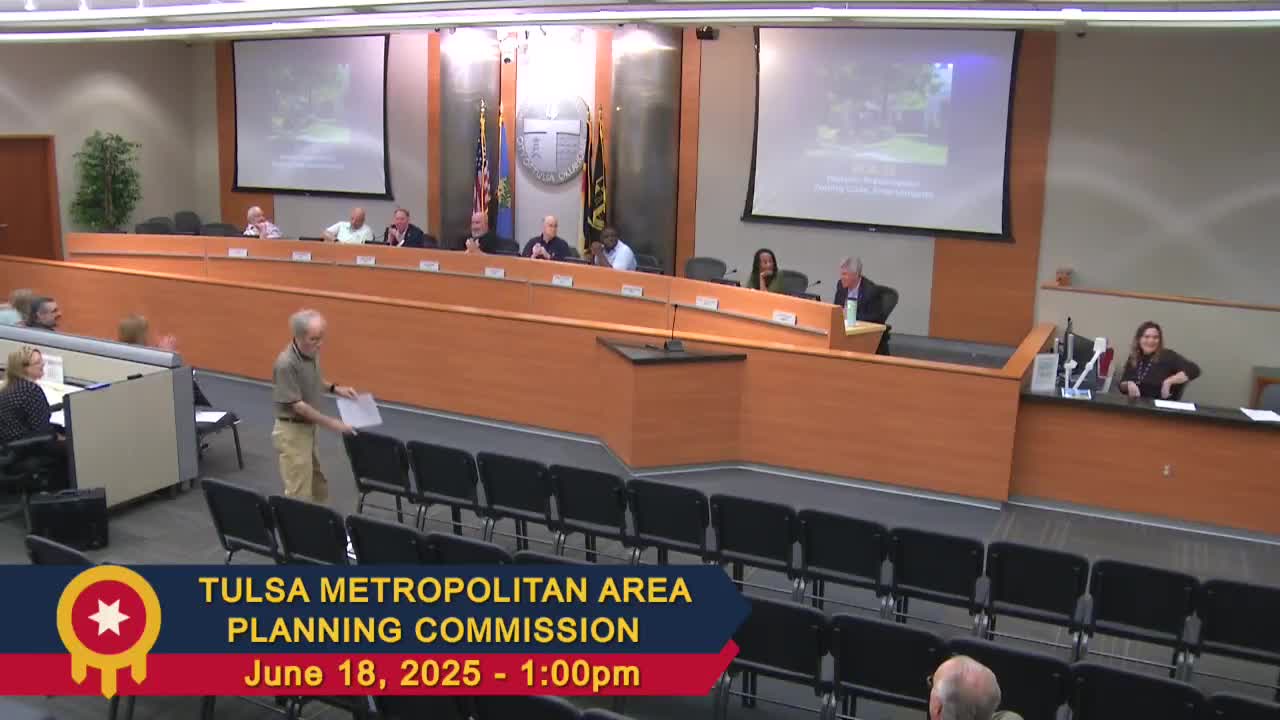
Commission approves some historic-preservation code changes but rejects broader accessory-structure review; neighbors voice strong objections
Summary
The commission approved changes to historic preservation permit timing and certain exemptions but rejected a proposed expansion of preservation review for detached accessory structures (garages/ADUs) visible from the street after residents and preservation critics urged keeping the existing exemptions.
The Tulsa Planning Commission considered zoning code amendments (CCA 33) proposed by the Historic Preservation Commission that would change how accessory structures in historic preservation overlays are reviewed and would modify the time limits for preservation-permit decisions.
Felicity Goode of the Planning Office said the amendments respond to concerns about the scale of new accessory dwelling units (ADUs) and detached accessory structures in historic districts. The draft would have removed an exemption that currently excludes detached accessory structures located outside the street yard from preservation-commission review. After outreach and neighborhood meetings, staff revised the draft so it would require review only for accessory structures that are either in the street yard or over 8 feet in height and visible from the street; the draft also exempts temporary landscape features.
Staff also proposed changing the preservation-permit review timeline from 30 calendar days to 30 business days and adding authority to continue items when applicants fail to appear. Staff said that change was intended to avoid denying cases simply because additional information or applicant attendance was needed.
Several neighborhood speakers urged the commission to reject or narrow the proposed rules. Brian Whitehurst said objections at neighborhood meetings were "very strong," arguing that extending review timeframes could significantly lengthen permitting and that stricter review of garages could discourage property owners from repairing structures. Tracy Hall and others said they did not object to a timeline adjustment but cautioned against placing new burdens on homeowners who need simple repairs.
Commission action was mixed. The commission approved an added clarification to the exemptions list (adding a numbered exemption for temporary landscape features and related clarifications) and approved the change to the meeting-and-final-decision provision that provides for more flexibility in scheduling (the motion to adopt the staff-recommended revision to the timeline passed). However, commissioners rejected the staff-proposed change that would have broadened preservation commission review to cover the previously-exempt detached accessory structures (the motion to retain the existing exemption language prevailed). Staff confirmed that routine repair and replacement-in-kind of historic features will remain eligible for expedited staff approval, and the office said staff approvals carry no fee.
Votes and procedural notes: the record shows the commission adopted exemptions clarifications and the adjusted 30-business-day timeline (with provisions to continue items if applicants fail to appear) but voted not to adopt the proposed expansion of review for accessory structures located outside the street yard. Several residents urged the commission to preserve current, less-burdensome pathways for garage repairs and minor work.
The planning office said it provides annual notice to property owners in HP overlays and that staff-level approvals for repairs are free and typically turnaround within days.
Commissioners instructed staff to implement the approved language and to continue outreach on the issues where neighbors raised concerns.