Get Full Government Meeting Transcripts, Videos, & Alerts Forever!
Get email alerts on the Public Safety Emergency Services topic
No spam. Unsubscribe anytime.
Firefighting commission rules cleared despite member objections over removal of CPR requirement from incentive criteria
Summary
The Firefighting Commission's revised certification and education-incentive rules cleared the joint committee despite objections from some lawmakers who said removing a CPR-card requirement from the incentive criteria weakens basic life‑saving expectations.
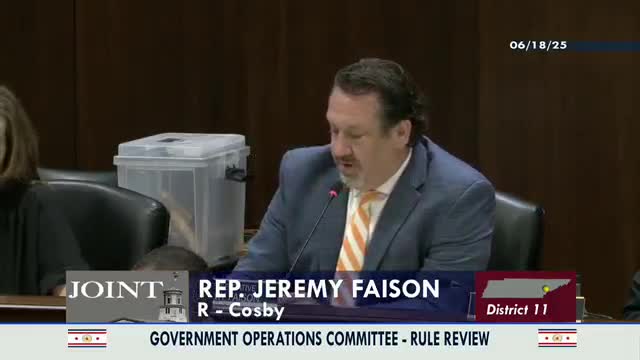
The Joint Government Operations Committee approved a rules packet from the Tennessee Firefighting Commission that rewrites certification and incentive standards to reflect modern industry practice and to simplify participation in the education incentive pay program for firefighters.
Commission staff said the packet rewrites the program language, aligns standards and makes it easier for volunteer firefighters to meet the 30‑hour training requirements tied to the state education incentive. Heather Zimmerman, executive director for the Firefighting Commission, told lawmakers the CPR requirement was removed from the education-incentive eligibility because many rural volunteer departments lack easy access to formal CPR certification and the commission did not want to exclude volunteers from the $600 incentive for completing training.
Several lawmakers, including Representative Parkinson and Representative Clem, objected publicly. Representative Parkinson, a retired firefighter, said CPR is a foundational life‑saving skill and urged the commission to reconsider. Representative Clem suggested coordinating with local medical facilities to increase CPR access in rural areas. Supporters argued the change removes an administrative barrier to volunteers participating in the incentive program and does not alter department-level standard operating procedures that many departments continue to require.
The committee recorded positive recommendations in both chambers and moved the rules forward. The commission said departments that already require CPR will continue to do so; the change applies specifically to the eligibility criteria for the state education-incentive pay.