Get Full Government Meeting Transcripts, Videos, & Alerts Forever!
Get email alerts on the Gaming Regulation topic
No spam. Unsubscribe anytime.
Sports wagering regulator updates rules on geolocation, responsible gaming and operator standards
Summary
Tennessee's Sports Wagering Council revised rules to tighten know-your-customer checks, strengthen geolocation and responsible-gaming measures, adjust certain banking and advertising provisions and clarified procedures; committee gave the packet a positive recommendation.
The Tennessee Sports Wagering Council presented rule revisions aimed at reorganizing and modernizing the state’s online-sports-wagering regulations. The rules focus on three categories: cleaning up and reorganizing duplicative text, strengthening know-your-customer (KYC) and geolocation standards to ensure bettors are within Tennessee borders and over 21, and tightening operator cooperation on suspicious activity reporting.
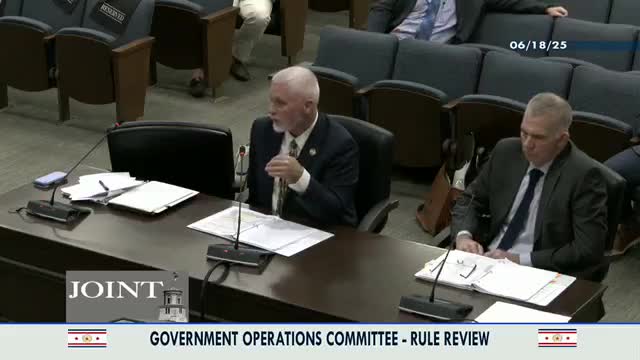
Stephanie Maxwell, deputy director and general counsel for the Sports Wagering Council, told the committee the changes are intended to reduce duplication, reflect the industry's technology focus, and improve protections. The council plans to consolidate responsible-gaming advertising language and allow a nationally recognized helpline number (+1-800) on ads that will route callers to Tennessee resources.
On financial flows, the council described the privileged tax as a handle tax administered by the treasurer: 80 percent to education (recently adjusted by special session legislation), 15 percent to local governments for infrastructure and emergency services, and 5 percent to Department of Mental Health for problem-gambling resources. The council said its own operating budget is funded separately through licensing and vendor registration fees, not the privileged tax.
Committee members asked detailed questions about self-exclusion, the use of algorithms and AI to identify problem gambling, and how integrity monitoring providers report suspicious activity. The council said it will maintain a statewide self-exclusion list and distribute it to operators so excluded individuals cannot wager or receive marketing. On integrity monitoring, the council said private providers detect possible match-fixing and unusual wagering patterns and report to operators and regulators; the council said those entities are private and currently not required to register with the council.
The committee moved the rule packet with a positive recommendation.