Get Full Government Meeting Transcripts, Videos, & Alerts Forever!
Get email alerts on the Nominations topic
No spam. Unsubscribe anytime.
House Government Commission holds hearing on Luisa Colón García nomination to independent special‑prosecutor panel
Summary
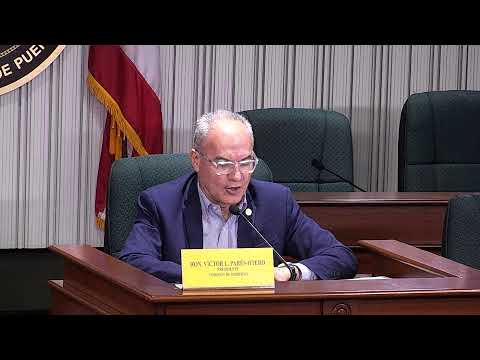
On June 20, 2025, the House of Representatives' Government Commission held a public hearing on the nomination of Luisa Colón García to serve as an alternate member of the Panel of Independent Special Prosecutors (Panel de Fiscal Especial Independiente).
SAN JUAN — On June 20, 2025, the House of Representatives' Government Commission held a public hearing on the nomination of Luisa Colón García to serve as an alternate member of the Panel of Independent Special Prosecutors (Panel de Fiscal Especial Independiente). Commissioners and representatives questioned Colón García about her judicial and public‑sector record, how she would protect the panel’s independence and what procedural changes she favors to make investigations faster and evidence preservation more reliable.
Colón García, a retired judge who said she has “dedicado más de 30 años de mi vida al servicio público,” outlined a career that included municipal, superior and appellate judgeships, work in the Justice and Health departments and a period as vice‑mayor and acting mayor of Guaynabo. She told the commission she currently serves as a special commissioner for the Supreme Court of Puerto Rico on matters of attorney discipline.
The nomination drew sustained questioning about the panel’s public image and past, high‑profile controversies. Representatives repeatedly raised concerns that the panel’s reputation has suffered and asked how Colón García would help restore public confidence. “En la medida que se me presente a mi atención un expediente que no esté completo, estaré instruyendo para que se complete ese expediente y pueda tomar una decisión completamente informada,” she said, describing her approach of demanding complete files before recommending action.
Colón García proposed procedural and administrative steps to shorten investigation timelines and protect evidence. Asked specifically about timeliness, she said, “El término de la investigación puede ser reducido… Quizás no necesariamente legislativamente. Pero por eso entiendo que es una herramienta que se puede hacer mucho más ágil, mucho más rápido.” She and several representatives emphasized that delays can cause loss of evidence and weaken cases.
Members cited past cases and controversies during the hearing, including the arrest and later conviction tied to former Guaynabo mayor Ángel Pérez and the dismissal of charges in the case of former representative Mariana Nogales, as examples used by critics of the panel to argue for reform. Colón García said her judicial experience did not show “fabricación de casos” and that differences in legal judgment can exist without fabrication; she reiterated the need for thorough, timely investigations.
Multiple representatives offered praise for Colón García’s record. Representative Luis Junior Pérez Ortiz described her return to public service after a long career as a service to Puerto Rico; other members, including Lourdes Ramos Rivera and Wanda del Valle Correa, said they were inclined to support her nomination but reiterated the need for stronger procedures and transparency.
The commission did not vote on the nomination at the public hearing. At the close of the session, the chair said the commission will hold an executive session next Monday to vote on the committee’s report, which will contain the commission’s recommendation to the full House. The hearing record will be used to prepare that report.
Background: The Panel of Independent Special Prosecutors was created to investigate and, when warranted, prosecute alleged public‑office misconduct. During the hearing, members and the nominee discussed the limits of the panel’s procedures, the relationship with the Supreme Court’s criminal‑procedure rules and the potential for internal, administrative changes to speed evidence collection and processing.