Get Full Government Meeting Transcripts, Videos, & Alerts Forever!
Get email alerts on the Wildfire Response topic
No spam. Unsubscribe anytime.
Douglas County officials describe AI detection, helitack and recent 3‑acre Bear Creek response
Summary
County staff described a multi‑tool wildfire response including AI smoke detection, the county’s helitack helicopter and a recent 3‑acre Bear Creek fire that was located after an alert. Officials urged residents to sign up for CodeRED and reduce vegetation around homes.
Douglas County staff described Tuesday how the county uses automated smoke detection, artificial intelligence and a dedicated helitack team to respond to wildfires and urged residents to take preparedness steps after a small Bear Creek fire was contained.
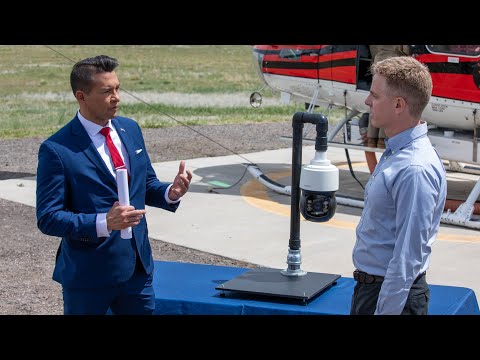
County staff said the county’s systems "scan the horizon every few seconds, automatically detect the first signs of smoke, and deliver precise coordinates." Speaker 1, a staff member, added, "Fighting wildfires in Douglas County means being tip of the spear. ... Whether it's artificial intelligence or having the only dedicated helitack team and helicopter of any county in the state of Colorado, we're fighting wildfires hard, heavy, and fast." Speaker 3, a staff member, said the U.S. Forest Service responded to the Bear Creek fire and that the county’s helitack located the fire "about 30" after receiving a Pano AI alert; the fire was "fully contained at just 3 acres."
The officials placed those actions in a broader risk context. "Colorado and California are ground 0. The brightest, hottest red zones in the nation are right here," Speaker 1 said. Another staff member noted the county fought 34 wildfires in the past year, nine of which were outside county boundaries, and said the county is reimbursed for out‑of‑county responses.
Officials highlighted the county’s helitack capability and early detection systems as key tools. According to staff comments, the county has "the only dedicated helitack team and helicopter of any county in the state of Colorado," and AI alerts are used to direct responses. Speaker 1 summarized local preparedness messaging: "We're ready for wildfires. Are you?" and urged residents to sign up for CodeRED and to mitigate densely wooded areas around their properties.
Officials also emphasized the local exposure: one speaker said 66% of Douglas County residents "are living within the wildland urban fire interface," and that "more people are in harm's way than ever before." Staff framed the county’s request as seeking partnership: they asked "our metro area partners, other counties throughout the Denver Metro Area, to partner with Douglas County to prevent this potential danger because wildfires know no boundaries," a remark attributed to Speaker 1.
No formal actions, motions or votes were recorded in the transcript excerpt provided. The statements in the meeting were descriptions of operational capabilities, recent incident response and public preparedness recommendations rather than new policy adoptions.
Douglas County staff encouraged residents to sign up for CodeRED alerts and to reduce dense vegetation near homes to lower wildfire risk. The county noted reimbursement for out‑of‑county responses but did not provide additional budget or policy details in the remarks excerpt.