Get Full Government Meeting Transcripts, Videos, & Alerts Forever!
Get email alerts on the Animal Services Funding topic
No spam. Unsubscribe anytime.
Caldwell residents press city leaders for solutions as West Valley shelter seeks large contract increase
Summary
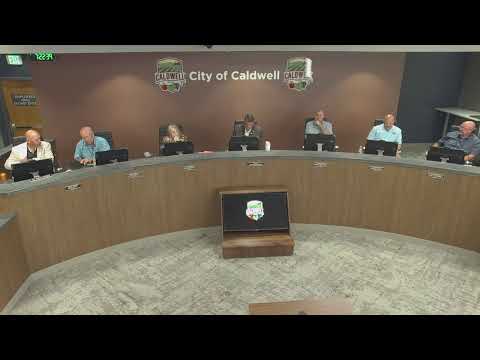
Caldwell City Council held a public town hall meeting to hear residents— views on a proposed increase in the city—s funding for West Valley Humane Society, the nonprofit that shelters animals picked up by Caldwell animal control.
Caldwell City Council held a public town hall meeting to hear residents— views on a proposed increase in the city—s funding for West Valley Humane Society, the nonprofit that shelters animals picked up by Caldwell animal control. Finance Director Raylyn North told the audience she first learned last fall that West Valley might request a contract increase and that she recommended the organization meet with council after the board declined a preliminary internal budget increase.
Police Chief Rex Ingram opened the factual briefing, saying his animal-control staff respond to roughly 3,000 calls a year and that 350 animals were admitted to the shelter last year. "Out of the 350 animals that were admitted to the shelter from 2024 to to this week, 173 of those animals were stray animals," Ingram said, adding that 111 were recorded as animals at large, two were classified as vicious, and none were the result of a dog bite. Ingram asked the public to consider the public-safety implications of the requested funding: "What does this have to do directly to public safety?"
The proposed contract increase—described by speakers as rising from roughly $68,000 a year to $540,000—prompted repeated questions about cost, oversight and alternatives. City staff said the city currently pays about $1,900 per animal under the existing arrangement; Chief Ingram calculated that, if admissions stayed at last year—s level, the $540,000 figure would equate to roughly $16,000 per admitted animal. Finance Director North explained limits on how much the city can raise property-tax revenue in a given year, saying the annual levy-cap formula combines three components (inflation, new construction and annexation) and that the overall maximum levy-change the city can seek in a budget cycle is constrained to about 8 percent.
Speakers from across the region urged the council to pair any near-term funding decisions with longer-term fixes. Julie Yamamoto, a longtime donor and volunteer, told the council "I—m willing to pay taxes, and I—m willing to do the hard work," and offered to lead a citizen task force to develop regional solutions. Multiple speakers pressed for increased spay-and-neuter capacity and high-volume low-cost clinics as the primary way to reduce shelter intake over time. Mary Wilson, president of Operation Community CATS, described her group's trap-neuter-return (TNR) work and said their clinic schedule so far this year has already sterilized many cats; she added that spaying a significant number of females prevents large numbers of kittens in the next year.
Other proposals included requiring microchipping and city tags at adoption or return, stricter enforcement and higher fines for repeated loose animals and hot-car abandonment, inmate work-release or community-service crews to handle unskilled kennel labor, and stronger nonprofit governance measures such as regular public financial reports, independent audits and whistleblower protections. Several speakers representing rescue organizations and shelters (including Pet Haven Cat Adoption Center and the Idaho Humane Society) said cat overpopulation is the main driver of long-term costs and urged the cities and county to fund targeted sterilization efforts.
Multiple residents also raised governance and transparency concerns about the shelter—s management and finances; several urged the council to obtain and publish monthly or quarterly budget reports from West Valley. Council members said the city requested and recently received financial information from West Valley following the town hall.
Counselors and staff described the council—s constraints. Councilor Stottick and others emphasized the need for audited expense detail before committing major new general-fund dollars, noting that the animal-control contract is currently paid from the general fund (the police line). Councilor Bridger said the city does not directly run the shelter and suggested a regional task force to coordinate cities, county and rescue groups. Bridger nominated Julie Yamamoto to chair a community task force to develop alternatives.
Officials also clarified some logistics: Canyon County owns and maintains the shelter facility and leases it to the shelter operator; the current contract with West Valley runs through fiscal year 2026 (city staff said the contract is active through the fiscal year ending in October 2026). Several council members said that fact reduces—but does not eliminate—the cost of building new municipal shelter capacity should the group choose a different operator.
No formal council action was taken at the meeting. Council members said they will continue to collect information, consider short-term assistance options and pursue collaborative solutions with Nampa and Canyon County. The council also scheduled a follow-up town hall for Monday, June 30 at 6 p.m., and several council members asked residents and stakeholders to submit written proposals and detailed suggestions to staff so the city can evaluate options before the contract term ends.
The town hall focused overwhelmingly on operational fixes (spay/neuter, TNR, microchipping, enforcement, governance and volunteer coordination) rather than only direct funding. Councilors and staff repeatedly framed the choice as balancing animal-welfare goals against constrained general-fund resources for police and other services.