Get Full Government Meeting Transcripts, Videos, & Alerts Forever!
Get email alerts on the Fire Protection topic
No spam. Unsubscribe anytime.
Planning board flags conflicts between 3 Forks Volunteer Fire District rules and Broadwater subdivision regulations
Summary
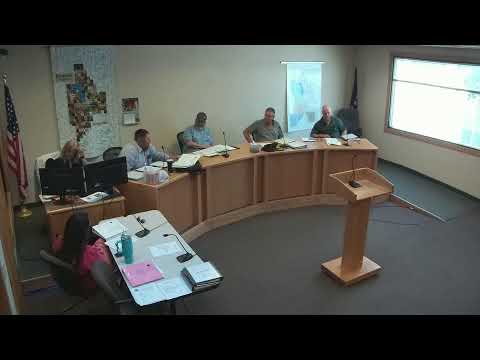
Broadwater County Planning Board members spent much of a recent meeting reviewing the 3 Forks Volunteer Fire District's newly adopted fire regulations and discussing how those rules could conflict with the county's subdivision requirements.
Broadwater County Planning Board members spent much of their meeting reviewing recent regulations adopted by the 3 Forks Volunteer Fire District and discussing how those local rules could clash with the county's subdivision regulations.
County planning staff said the 3 Forks rules have specific technical requirements'including a 1,000 gallon-per-minute design flow cited in the packet and minimum on-site water-storage measures'that apply to new development in a narrow area of Broadwater County along Road 101. Planning staff also told the board the fire district's regulations require sprinkler systems for commercial or combination-use structures but do not require the same for private residences, a difference that has raised questions among board members about consistency and public-safety outcomes.
Those differences matter because county subdivision review and the volunteer fire boards both affect what developers must provide before building. Nicole, planning staff, told the board that the county does not need to adopt the 3 Forks rules to be enforceable: "No, mister chairman. We do not need to accept it because they've already adopted it," she said, describing the fire district and Broadwater County Rural as separate, elected governmental entities that can apply their own rules. The planning board's discussion focused on how to avoid conflicting requirements when both the county and a fire district review the same subdivision.
Board members pressed several technical points. Fire Chief Ed (Broadwater County) noted how national standards inform local expectations, saying, "The NFPA is what the rural usually ends up following. That's where the thousand gallons ... comes from." Board members discussed differences between underground tanks and open ponds for water storage in drought conditions, with one member saying tanks have become far more expensive since the last cycle and another urging tanks as preferable to ponds in dry years.
Staff and board members also debated whether the planning board should leave fire-protection requirements to the subject-matter experts (the volunteer fire boards) or continue to keep fire rules inside the county's subdivision regulations. Nicole summarized the county's recent approach: county regulations previously directed developers to work with the appropriate fire board; in 2024 the county reinserted specific fire requirements into the subdivision regulations, but staff and several members said that approach has produced cost-prohibitive requirements for small subdivisions and can create mismatches when the fire boards adopt different rules.
The planning board and staff discussed specific measures to improve coordination: making fire-board approval a clear element in preliminary-plat or element-complete checklists, requiring an approved fire plan before an application is deemed complete, or directing developers to obtain written concurrence from the fire board before final plat approval. Staff noted the county already requires developers to provide a name of the fire district before final plat approval, but the planning board discussed strengthening that requirement so fire plans are settled earlier in the review process.
County staff also raised procedural fixes unrelated to the substance of fire protection: the application materials currently in use mix items labeled "Supplement 4" and "Supplement 5," and planners said the checklists and table-of-contents do not match, which contributes to late or disordered submissions.
Board members asked for follow-up steps. Staff proposed working with the volunteer fire districts to develop compatible language and recommended inviting legal counsel from the Montana Association of Counties to present legislative updates and best practices later this summer. Planning staff also said any changes must account for statutory limitations in the Montana Code Annotated and existing DEQ review requirements for wells and wastewater.
The meeting produced no formal county adoption of the 3 Forks rules; staff told the board the rules already are adopted by the 3 Forks board and that Broadwater County does not need to accept them for them to be applied by that fire district. The planning board agreed to factor the fire regulations into forthcoming subdivision-regulation amendments and to plan a working session to resolve numbering and review-process issues.
For now, the key outcome is a direction to coordinate: planning staff will draft proposed regulatory language and options for the board to consider, and staff will also work to schedule a separate working meeting and a possible presentation by MAKO counsel on legislative changes affecting subdivision review.