Lifetime Citizen Portal Access — AI Briefings, Alerts & Unlimited Follows
Public Life Foundation unveils 'Checkmarks' early‑learning initiative in Owensboro
Loading...
Summary
Public Life Foundation presented 'Checkmarks,' a family‑engagement program aimed at improving kindergarten readiness by placing learning prompts and materials in parks, libraries and other community sites. Foundation and partners cited local readiness and third‑grade reading gaps as motivation.
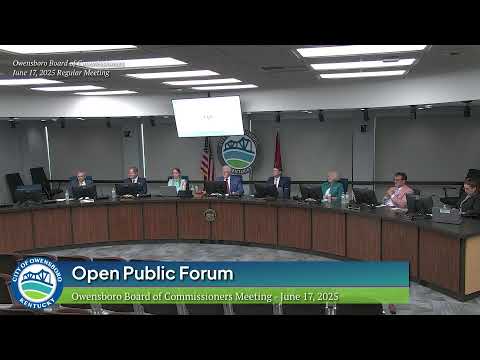
The Public Life Foundation on June 17 told the Owensboro City Commission it has launched Checkmarks, a grassroots family‑engagement program meant to improve kindergarten readiness by embedding low‑barrier learning activities in parks, libraries and other community spaces.
The program, presented by Joe Berry, executive director of the Public Life Foundation, and Emmy Looseley, Checkmates program coordinator, aims to give parents simple activities and tools to foster early learning from birth through age 5 and to encourage community partners to integrate the materials into existing services and sites.
"If we can improve kindergarten readiness outcomes, we know that children are gonna perform better, throughout their schoolwork and, and ultimately become more, better citizens, better members of the workforce," Joe Berry said. He told the commission the foundation developed the initiative with partners across business, education and social services and is emphasizing sites with universal access such as parks.
Looseley described current and planned elements: a text‑message service called Parent Powered with three texts per week (tips, facts and small growth challenges), a storybook walk, expanded baby book bundles at library and satellite sites, activity signs on park walking routes, and an "I‑spy" mural and sign at the Moreland Park tennis wall designed to prompt caregivers to ask questions and practice sight words with children.
"We currently have 250 families in our community that signed up for that," Looseley said of the Parent Powered texts, which the presentation said are available in multiple languages keyed to local needs identified with the International Center.
Speakers and staff framed the work as responding to local learning gaps. The presentation cited two statistics discussed to the commission: about half of Owensboro students arrive at kindergarten unprepared, and roughly 47 percent of Owensboro students had not reached expected third‑grade reading levels. Commissioner Sanford asked why Owensboro lags; Berry answered that the causes are multiple but pointed to limited access to high‑quality childcare slots, high out‑of‑pocket childcare costs and workforce and funding imbalances. "The system itself has some some real structural imbalances, in terms of costs and in terms of attracting the quality workforce," he said.
The presenters said the foundation is emphasizing partnerships rather than building standalone programs: the library provided a model for the storybook walk; the parks department agreed to host murals and activity trails; and other community partners will help expand home‑book bundles and outreach. No funding request to the commission was made during the presentation.
The commission did not take formal action on Checkmarks during the meeting. Berry and Looseley thanked city staff and the parks department for their assistance and said they will continue community outreach and partner expansion.
Why it matters: Early‑learning measures such as kindergarten readiness and third‑grade reading are commonly used by educators and policymakers as predictors of long‑term academic outcomes. The presenters tied Checkmarks to both education and workforce goals, saying improved early learning can support future labor participation and local competitiveness.
For follow up: Public Life Foundation materials and partnerships with the Davis County Public Library and Owensboro parks were noted by the presenters; the program's web link was made available via a QR code during the presentation.