Get Full Government Meeting Transcripts, Videos, & Alerts Forever!
Get email alerts on the Pavement Maintenance topic
No spam. Unsubscribe anytime.
Douglas County staff asks commissioners to raise pavement maintenance budget to address backlog
Summary
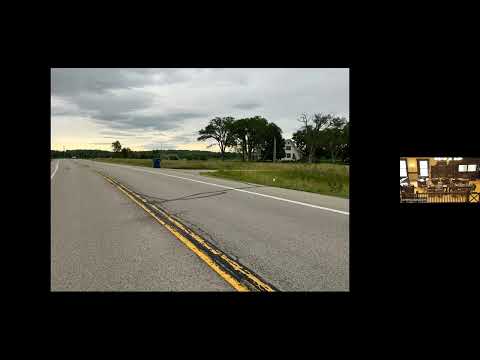
Douglas County Public Works presented a multi-year analysis of pavement maintenance Thursday and proposed raising the contracted pavement-maintenance line from $1.2 million to $1.7 million plus a $500,000 CIP supplement to better follow the county's 2010 pavement-management plan.
Douglas County Public Works presented commissioners with a multi-year analysis of road maintenance Thursday and recommended increasing the contracted pavement-maintenance budget from $1,200,000 to $1,700,000, plus a $500,000 supplement from the county's Capital Improvement Program (CIP), to move closer to a maintenance cycle adopted in 2010.
The presentation, given by Chad of Douglas County Public Works during the 4:00 p.m. work session, laid out the department's analysis of past mill-and-overlay and chip-seal work, material cost trends and a proposed annual funding target of roughly $2.6 million to fully meet the 2010 plan. "So today we wanna talk about funding for pavement maintenance, and this would lead into our 2026 budget discussion coming up this summer," Chad said.
Why it matters: County staff said the current $1.2 million baseline, which has been held since 2020, is insufficient to maintain pavement on the schedule the county adopted in 2010. That plan envisioned new asphalt kept in service for 7 to 10 years, followed by periodic chip seals and periodic mill-and-overlay cycles. Public Works' analysis shows the county has completed one full cycle since 2010 and that material-price trends and reduced annual spending have left the county "falling behind," the presenter said.
Most important facts - Public Works reported $1,100,000 in contracted mill-and-overlay spending in 2024 and said the county's baseline contracted pavement-maintenance line has been $1,200,000 since 2020. - The department's 15-year totals: about $17,000,000 spent on mill-and-overlay, $5,000,000 on chip seal, for roughly $22,000,000 total, according to the presentation. - Staff calculated that fully following the 2010 pavement-management cycle at 2025 costs would require roughly $2,600,000 per year; the department proposed increasing the contracted line to $1,700,000 and supplementing with $500,000 from CIP. - Under the proposed funding level, staff hopes to perform roughly 7.5 miles of mill-and-overlay and 15 miles of chip seal per year on average; next year's targeted mill-and-overlay project is about 10.25 miles around Clinton Lake from Lone Star to Stull.
What commissioners asked and what staff said Commissioner Kelly asked about the disparity between historical average miles of work and the proposed targets and requested a clearer line on the charts showing budget authorizations vs. estimated needs. "I just want to make sure the reason when I when we look at the average number of miles ... is a lot less," Commissioner Kelly said. Chad acknowledged the county has been "lagging" and said the team held the $1.2 million line for several years while doing an analysis to justify any increase.
Commissioners also asked about scope and whether the maintenance program covered conversions of rock (gravel) roads to paved roads. Chad said converting rock roads to pavement is a separate, large capital decision (typically funded from CIP) and is not part of the maintenance program. "Not with this. No. This is a maintenance program," he said.
Technical and program details Public Works described two primary treatments: mill-and-overlay (removing and replacing a portion of the asphalt surface) and chip seal (a tack oil covered by an aggregate, offered as a lower-cost sealing option). The department noted it does not own full-size milling machines and contracts that work; the county performs smaller-scale patching with in-house crews and maintains an asphalt-material budget for that crew.
Staff presented condition and construction-history details used in planning, including examples where older rock roads received chip seal before asphalt overlays and newer reconstructions that used thicker engineered bases and up to nine inches of asphalt. The presentation also included a 2025 chip-seal material stockpile valued at about $307,000.
Limitations and next steps No formal vote or directive was taken at the work session. Commissioners were given the data and told staff will bring formal budget requests through the regular 2026 budget and CIP processes. Chad summarized the request as a supplemental budget ask: increase the contracted pavement-maintenance line from $1,200,000 to $1,700,000 and request roughly $500,000 from CIP to achieve next-year projects and better align with the 2010 plan.
Ending note Commissioners thanked staff for the analysis and said the memo and slides would inform upcoming budget and CIP conversations later this year. "We look forward to talking to you more about it later," the meeting chair said at adjournment.