
Council clears five freeway‑facing digital billboards; companies to remove 35 static faces citywide
Get AI-powered insights, summaries, and transcripts
Sign Up Free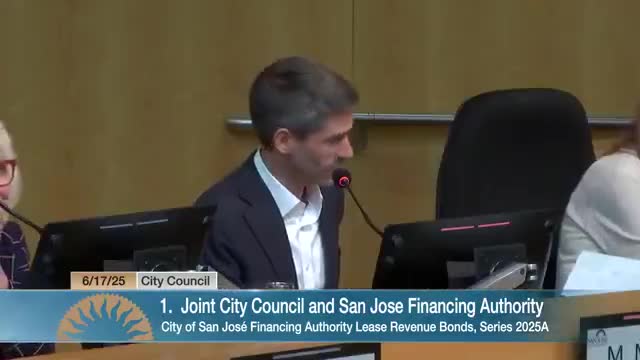
Summary
The City Council authorized three lease agreements and certified environmental documents for freeway‑facing digital signs, accepting higher city message time and a takedown program for older static billboards.
San Jose City Council on June 17 approved staff recommendations to negotiate and execute leases for three freeway‑facing digital signs on city property and certified the associated environmental reviews. The action includes an expanded takedown requirement for existing static billboards and greater city messaging time on the new signs.
The specifics: Two leases with Clear Channel Outdoor (one two‑faced sign at US‑101/Mayberry Road and one single face at SR‑87/West Mission) and one lease with Outfront Foster Interstate (double face at SR‑87/Willow Street) were authorized. Council approved the related mitigated negative declarations for the projects. As part of the agreements, Clear Channel will pay 45% of gross revenues and Outfront will pay 40% of gross revenues to the city (with minimum guarantees); the city will receive 12.5% of display time for public messaging on the signs.
Takedown and city use: The companies proposed removing a total of 35 static billboard faces across the city (the council policy required a 6:1 removal ratio; staff said the proposed takedowns exceed the requirement). The city’s share of displayed time increased from the RFP’s 10% to 12.5%, and signage content prohibitions were enumerated (no alcohol, tobacco, cannabis, guns, profane or pornographic material, political or religious advocacy or adverse city content without consent).
Why this mattered: Supporters including business groups and the sign vendors said the leases will generate revenue for city services, amplify emergency messaging and support major events. Opponents — including scientists, environmental groups and local residents — raised concerns about light pollution, health‑risk studies on blue‑rich LED lighting, wildlife impacts near riparian areas, and potential litigation or spillover pressure to allow digital signs on private property.
Council discussion: Deputy Director Blagaszilowicz and staff described project‑level CEQA work and the public comment record. David Keon (planning) and Kevin Eyst (real estate) outlined lease terms and revenue projections. Environmental and astronomy experts warned of “light trespass” and long‑term health risks; Clear Channel defended its design and noted that modern LEDs are more directional and will use San Jose Clean Energy’s 100% renewable power supply.
Vote and conditions: The council voted to authorize negotiation and execution of the leases and to certify the environmental documents; one council member recused (Mulcahy) because of a reported conflict. Staff emphasized that the vendors must remove the identified static faces before the new digital signs are activated. Council also secured emergency control rights for the city to use sign time and to take control in an emergency.
Ending note: Proponents argued the sites will bring recurring revenue and allow city messaging; opponents warned about potential health and ecological impacts, and legal challenges remain a possibility. Councilmembers said they want to see takedowns and strict operational controls enforced before new signs go live.