Get Full Government Meeting Transcripts, Videos, & Alerts Forever!
Get email alerts on the Mtss Data Systems topic
No spam. Unsubscribe anytime.
Fairport rolls out Panorama, expands MTSS teams after universal-screening gains
Summary
District leaders presented NWEA/AIMSweb screening gains and described steps to expand MTSS fidelity: new teaming structures (EWI/SST), Panorama rollout for classroom and intervention data, and staffing to extend intervention reach.
Fairport Central School District leaders told the board they are expanding multi-tiered systems of support (MTSS), rolling out the Panorama student-data platform and structuring early-warning and student-success teams after recent universal-screening gains in math and English-language arts.
Tanya, a staff member who presented the universal-screening results, said the district’s k–8 NWEA math and AIMSweb ELA screeners show growth from fall to spring in most grades. She noted that kindergarten through fifth-grade ELA screening moved materially — for example, one presenter highlighted first-grade ELA growth “from 56 in the fall to 75” in spring — and said that when tier‑1 instruction is solid, it becomes easier to move students out of intervention.
The district is implementing Panorama to centralize assessments, universal-screening data, interventions and early-warning indicators (attendance, grades, behavior). Lisa, a staff member who described the Panorama rollout, said the platform aggregates SchoolTool, NWEA and AIMSweb data so teams can filter by indicators (for example, attendance-only or math-only) and rapidly identify students who need short-term interventions.
Why it matters: Panorama is intended to reduce time spent assembling spreadsheets and allow teams to act more quickly. Staff said the tool supports weekly Early Warning Indicator (EWI) meetings to identify students who are disengaged, and Student Success Team (SST) meetings for deeper interventions when brief strategies do not work.
How teams will use data
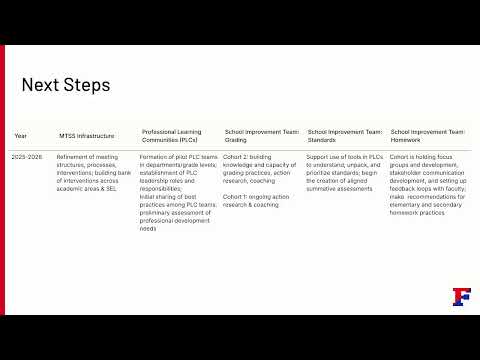
Staff described a three-level teaming flow: classroom/PLC level work to strengthen tier‑1 instruction; weekly EWI teams that handle short-term, targeted responses; and SSTs for students needing a formal, documented intervention pathway. Presenters emphasized limits on keeping students in low‑intensity interventions (they recommended six to eight weeks) before escalation to SST for a deeper review.
Privacy and access
Panorama will provide role-based access. Lisa said teachers can see current and historical performance for their rostered students and that Panorama retains intervention plans and documents; she stressed training on data stewardship and asked staff to consider what is appropriate to record as a cumulative note. A district leader clarified that meal-status data (free/reduced lunch) remains restricted — not viewable by all staff — and that district controls will be set to protect sensitive information.
Intervention staffing and scale
Brett and other administrators described staffing changes that allow the district to extend intervention services farther down the distribution of need: this year the district targeted students down to roughly the 15th percentile for additional services; with staffing adjustments they expect to reach students to about the 20th percentile in the next year for both math and ELA. Presenters said models differ in middle school and elementary grades but that supports will cover k–8 and extend into the secondary models.
Classroom practice and PLCs
Presenters said the district will keep work on guaranteed and viable curriculum, common assessments and professional learning communities (PLC) to strengthen tier‑1 instruction. They described pilots of collegial circles and said next year’s work will scale PLC‑plus practices that emphasize clear goals, frequent checks on progress and norms for team meetings.
Ending
Board members praised the data work and the Panorama rollout but asked that staff continue training, guard privacy and continue norming referral and response protocols (including consistent referral reasons and admin responses). Staff said they will continue to refine the system, bring back further examples from pilot schools, and align MTSS work to budget planning for the coming year.