Get Full Government Meeting Transcripts, Videos, & Alerts Forever!
Get email alerts on the Evidence Admissibility 412 403 topic
No spam. Unsubscribe anytime.
Utah Court of Appeals Hears Argument Over Admissibility of Pubic-hair Evidence in State v. Hernandez Rivera
Summary
At oral argument, attorneys disputed whether the trial court properly excluded evidence under Utah Rule of Evidence 412 and whether the trial court misapplied the Rule 403 balancing when the state relied on a pubic hair collected in 2005 to support its case.
SALT LAKE CITY — The Utah Court of Appeals heard oral argument Monday in State v. Hernandez Rivera over whether a trial court properly limited the defense from presenting evidence that another man might have been the source of pubic hair a victim turned over to police in February 2005.
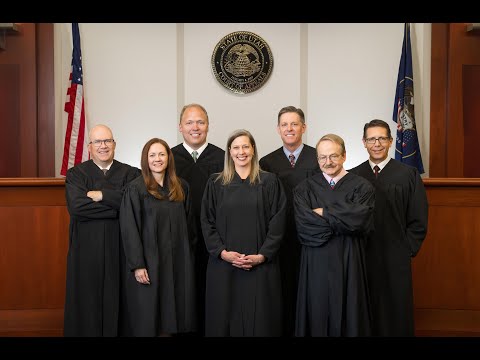
During the 90-minute session, three judges and counsel focused on the interplay between Utah Rule of Evidence 412 (the rape‑shield rule), Rule 403’s unfair‑prejudice balancing, and whether the trial court’s weighing of probative value and prejudice was supported by the record. After argument, the court said it would take the matter under advisement and issue a decision later.
The question at the center of argument was whether the trial court improperly prevented the defense from introducing evidence that an earlier assault or investigation involving a different man (identified in the record as “Edmundo”) could explain the origin of a pubic hair the victim brought to police. Douglas Thompson, defense counsel for Felipe Hernandez Rivera, told the court the exclusion deprived the defendant of the ability to rebut the state’s use of the inconclusive DNA evidence and that the trial court “fused” the Rule 412 and Rule 403 analyses in a way that prejudiced the defense.
Daniel Boyer, representing the state, said the trial court acted within its discretion and that any attempt to introduce evidence about another man was speculative under the record the trial court had. Boyer relied on the Utah Supreme Court’s State v. Beverly (2018) and other authorities to argue that evidence governed by Rule 412 is presumptively inadmissible and that the trial court properly concluded that any minimal probative value was substantially outweighed by unfair prejudice to the victim.
Thompson emphasized several trial-level facts he said supported admitting the evidence: the hair was collected and provided to police in February 2005; the alleged offense at issue occurred nearly two decades before trial; and the defense sought to show a different source for the hair to rebut the prosecutor’s closing inference that the hair ‘had to belong to somebody’ and therefore pointed only to Hernandez Rivera. ‘‘That is the quintessential use of the shield as a sword,’’ Thompson argued, quoting the transcript, to describe the prosecution’s closing‑argument strategy.
Boyer answered that the trial court had reviewed a Brigham City police report indicating the alternative‑source theory was “remote and speculative,” and he told the appeals court that the report the trial court relied on is not in the appellate record, limiting the ability to review the trial court’s factual findings on appeal. Boyer also noted other evidence the state introduced at trial — including admissions the defendant made and testimony describing the defendant’s conduct — and argued those factors made any additional evidence about an alternate source unlikely to change the outcome. He told the panel the sentence at issue is a 10‑to‑life term and that the state’s case was supported by corroborating testimony and admissions.
Panel questioning ranged over several issues: whether the rape‑shield rule’s exceptions open the door to a straight Rule 403 balancing, whether privacy or embarrassment to the victim may be considered under Rule 403 in Rule 412 cases, how appellate review should treat a discretionary trial‑court balancing, and whether trial counsel’s conduct raised a preserved or alternative ineffective‑assistance claim.
The parties also disputed preservation and record completeness. Thompson argued defense objections were repeatedly renewed during trial and preserved; Boyer argued key materials the trial court relied on were not in the appellate record and that, therefore, the defense has not shown reversible error.
The court made no ruling at argument. Judge Oliver closed by saying the court would take the matter under advisement. "We will take this matter under advisement and issue a decision as soon as we are able to," the judge told counsel. The appeals court will issue a written opinion after deliberation.
Background: The arguments focused on evidentiary rules rather than retrial‑level factfinding. Utah Rule of Evidence 412 generally bars evidence offered to prove a victim’s sexual behavior or predisposition, with limited exceptions; Rule 403 allows exclusion of relevant evidence when its probative value is substantially outweighed by risks such as unfair prejudice or confusion. Counsel and the panel cited Utah appellate and Supreme Court decisions (including Boyd, State v. Beverly (2018), Eddington, and State v. Bravo (2015)) while debating how those precedents affect the standard for admitting alternative‑source evidence in child sexual‑assault prosecutions.
No scheduling or further directions were made on the record; the court’s written opinion will capture the panel’s disposition and reasoning.