Get Full Government Meeting Transcripts, Videos, & Alerts Forever!
Get email alerts on the Vehicular Homelessness topic
No spam. Unsubscribe anytime.
S.F. board approves large-vehicle refuge permit after weeks of debate, public opposition
Summary
The SFMTA board approved a large-vehicle refuge permit program that would exempt eligible vehicles from a proposed citywide two-hour parking limit while occupants engage with outreach and housing offers. The vote (6–1) followed months of interagency planning and more than two hours of public comment opposing the plan.
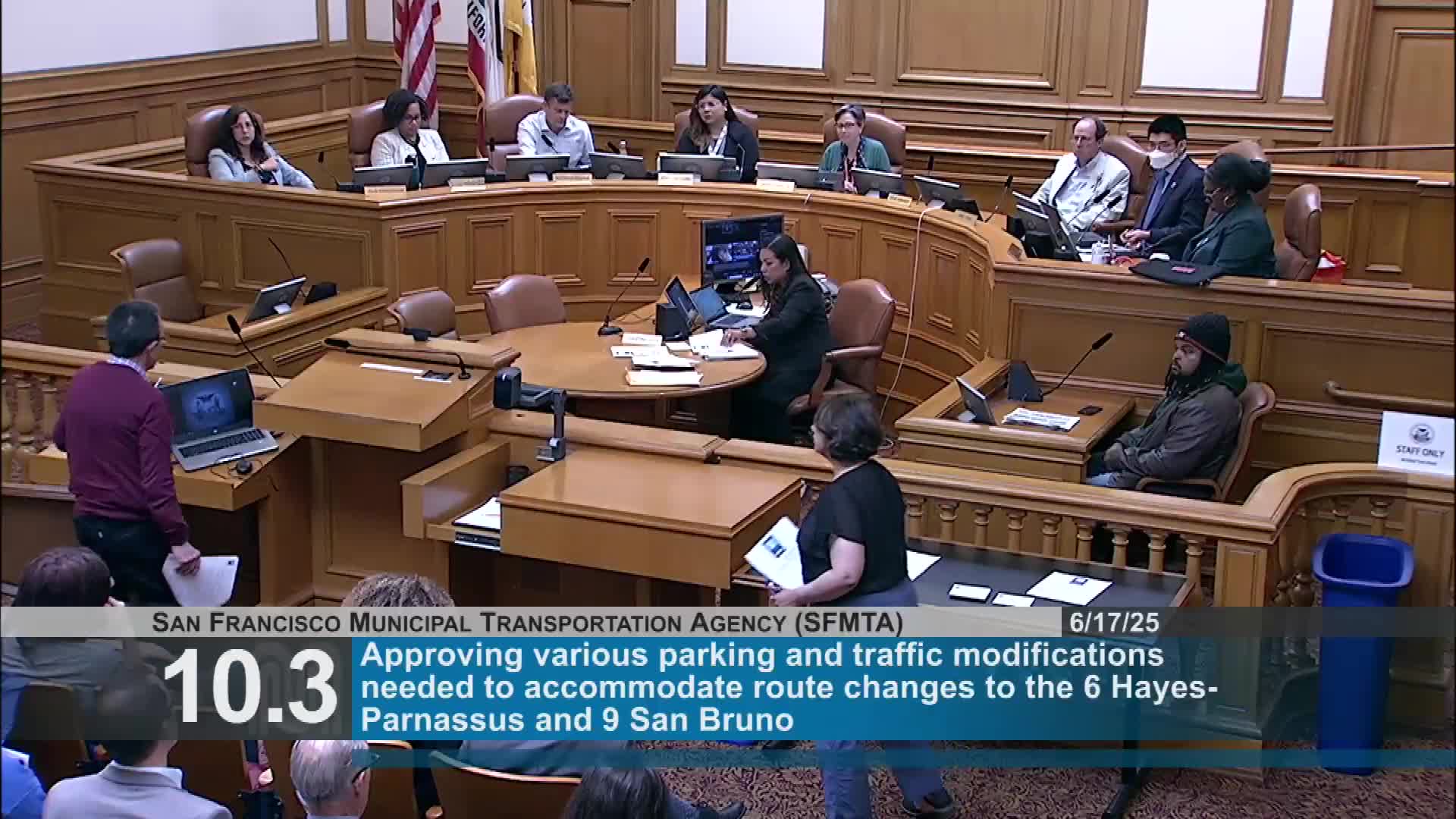
The San Francisco Municipal Transportation Agency board voted 6–1 on June 17 to approve a program allowing certain large vehicles used for habitation to remain parked while occupants engage with city outreach and housing offers.
The program creates a “large vehicle refuge” permit that exempts qualified vehicles from a proposed citywide two-hour parking limit while a household is working with the Department of Homelessness and Supportive Housing (HSH) to pursue housing. The board added amendments requiring the agency to evaluate reasonable accommodation requests from people with disabilities and to prepare a permanent-signage plan before enforcement begins. The measure passed with Director Kahina voting no.
The board and city staff said the permit is intended as a bridge while outreach teams connect vehicle residents to services, rapid-rehousing subsidies, noncongregate interim housing and other supports. Kunal Modi, chief of health, homelessness and family services in the mayor’s office, told the board: “In May 2025, our Healthy Streets Operations Center identified 501 large vehicles across San Francisco, with 437 being used for habitation.”
Marian Sanders, chief deputy director at the Department of Homelessness and Supportive Housing, described the program’s service elements — dedicated peer-based outreach, a vehicle buyback program, housing offers that try to preserve autonomy, and rapid rehousing and rental-subsidy assistance. “Our goal is to offer housing alternatives that reflect the autonomy, safety and privacy of current living situations,” Sanders said.
Board members asked for operational detail and safeguards. Director Chen offered language to lengthen and clarify permit duration: an initial six-month term with one automatic six-month extension unless HSH certifies that the city has made an offer of noncongregate interim or permanent housing to the permittee; additional extensions would be discretionary. The board also added a requirement that SFMTA make “reasonable efforts” to provide 72 hours’ notice prior to revocation.
City staff said permits will be issued only after outreach and an eligibility determination; the May vehicle count will form the baseline eligibility list, and HSH will provide an appeal pathway for people who believe they were missed — documentation options could include San Francisco vehicle registration or a signed affidavit. SFMTA staff said the permit will use a visible sticker rather than rely solely on plates, because some vehicles lack plates.
The administration proposed a set of resources to support the program. Staff said the mayor’s office proposed funding that includes 65 new rapid-rehousing subsidies dedicated to this effort and a pool of additional rapid-rehousing slots and noncongregate beds to be allocated as leases turn over. The presentation to the board said outreach and housing-placement services would be expanded and that a vehicle buyback program under discussion could offer several thousand dollars per vehicle in exchange for voluntary relinquishment; staff cited other cities’ experience with buybacks in the range of $3,000–$7,000 per vehicle. SFMTA said the mayor’s proposed budget would also include $3 million toward signage, coordinated outreach and enforcement.
Public testimony was extensive and overwhelmingly opposed. Dozens of residents, service providers and people living in vehicles urged the board to delay or reject the policy, saying the city lacks the housing stock and outreach capacity to avoid displacing families and immigrants. “Please do not make it worse. First, do no harm,” said Dion Jones, a retired nurse and long-time Mission resident. La Raza Community Resource Center, GLIDE and multiple homeless-services groups told the board the plan risks pushing people into greater instability and urged creation of safe parking sites and a larger subsidy pool instead of an enforcement-led approach.
Board chair Janet Tarloff and other members stressed the board’s limited authority: the SFMTA’s action creates the permit and operational rules under Division 2 of the transportation code; a separate but companion change to Division 1 (the two-hour citywide restriction and other commercial-vehicle rules) is going to the Board of Supervisors. Staff said SFMTA will not begin enforcement until outreach, permit issuance and appeals are complete and the city has the signage and interagency neighborhood teams in place.
The approved motion—passed after two amendments—directs SFMTA to implement the permit program, to work with HSH for outreach, to coordinate with the mayor’s large-vehicle task force and to return with operational details as the program is implemented. The board’s vote followed more than two hours of public comment and multiple staff presentations.
The permit’s timeline and ultimate effectiveness depend on the city’s budget and on HSH’s ability to place households into housing. Opponents warned that limited housing offers and tight timelines could still result in displacement; supporters said the permit offers a humane alternative to immediate towing while the city brings resources to bear.
The board’s action is part of a larger, citywide response that staff said will continue to evolve through the summer and fall as outreach, sign posting, appeals and housing placement timelines are finalized.