Get Full Government Meeting Transcripts, Videos, & Alerts Forever!
Get email alerts on the Solid Waste topic
No spam. Unsubscribe anytime.
Private operator pitches reopening three Guadalupe County collection stations; commissioners seek formal process
Summary
Next Waste proposed operating three county drop-off transfer stations on a limited-day schedule and offering residential collection, prompting commissioner questions about fees, contracts and use of taxpayer funds.
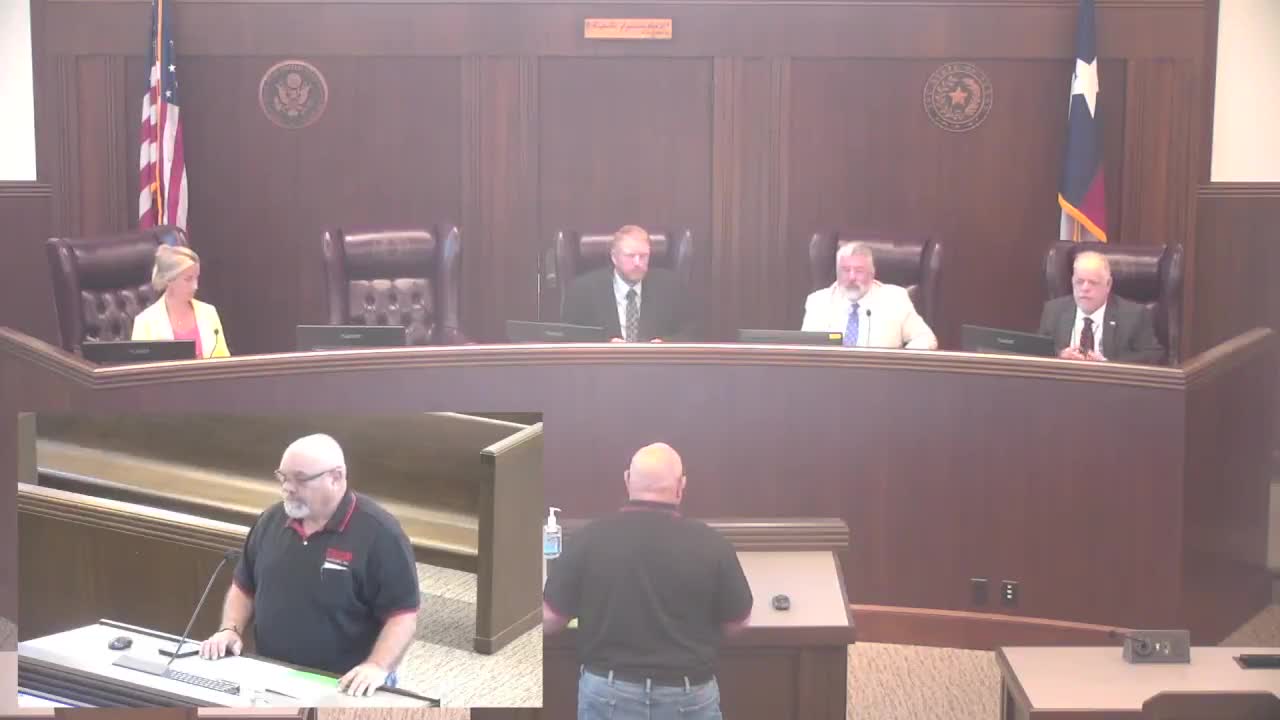
Robbie Cornelius of Next Waste presented a proposal on June 17 to operate three previously popular Guadalupe County residential drop‑off collection stations on a limited-day schedule, and to offer residential collection services in unincorporated areas. The court heard questions about fee levels, contract terms, local hiring and the potential for county subsidy.
Cornelius said Next Waste (based in Austin/Llano County) would staff and operate three county sites — Marion, Kingsbury and a south‑of‑Seguin location — on an initial schedule of two days per site per week. The company proposes to manage access for Guadalupe County residents for a fee (example cited $5 per bag) and accept items such as tires and mattresses. Cornelius said Next Waste would provide monthly reports to the county showing counts and tonnage of materials and would carry certificates of insurance naming the county as appropriate. He described the county sites as a way to reduce roadside dumping and as a marketing path to grow the firm’s residential services in non‑franchised areas.
Commissioners and staff pressed the presenter on several points: whether the sites can be financially self‑sustaining without county subsidy; how citizen fees would compare with existing residential pickup prices; whether Next Waste’s business model would use county-owned assets to build the company’s commercial book; and whether the company would pay the county to lease the sites. Cornelius said Next Waste does not expect the three sites alone to be profitable but plans to use the sites to build community trust and residential customers; he said the company would cover insurance and provide benefits for any local employees it hired to run the stations.
Commissioners also raised operational and liability concerns: the county has historically used Road & Bridge personnel to staff collection days, which diverts staff from road work and raises worker-safety questions, and previous contracted operators stopped providing desirable services as disposal markets changed. One commissioner said there have been multiple past vendors and unsuccessful procurement cycles and urged a formal competitive process if the court decides to pursue a vendor-run model. Another commissioner suggested any private operator should pay to lease county sites rather than receive taxpayer subsidies while scaling its business.
No action was taken; commissioners asked to continue discussions and to meet individually with the vendor to explore details and procurement options.