Get Full Government Meeting Transcripts, Videos, & Alerts Forever!
Get email alerts on the Fence Setback Exception topic
No spam. Unsubscribe anytime.
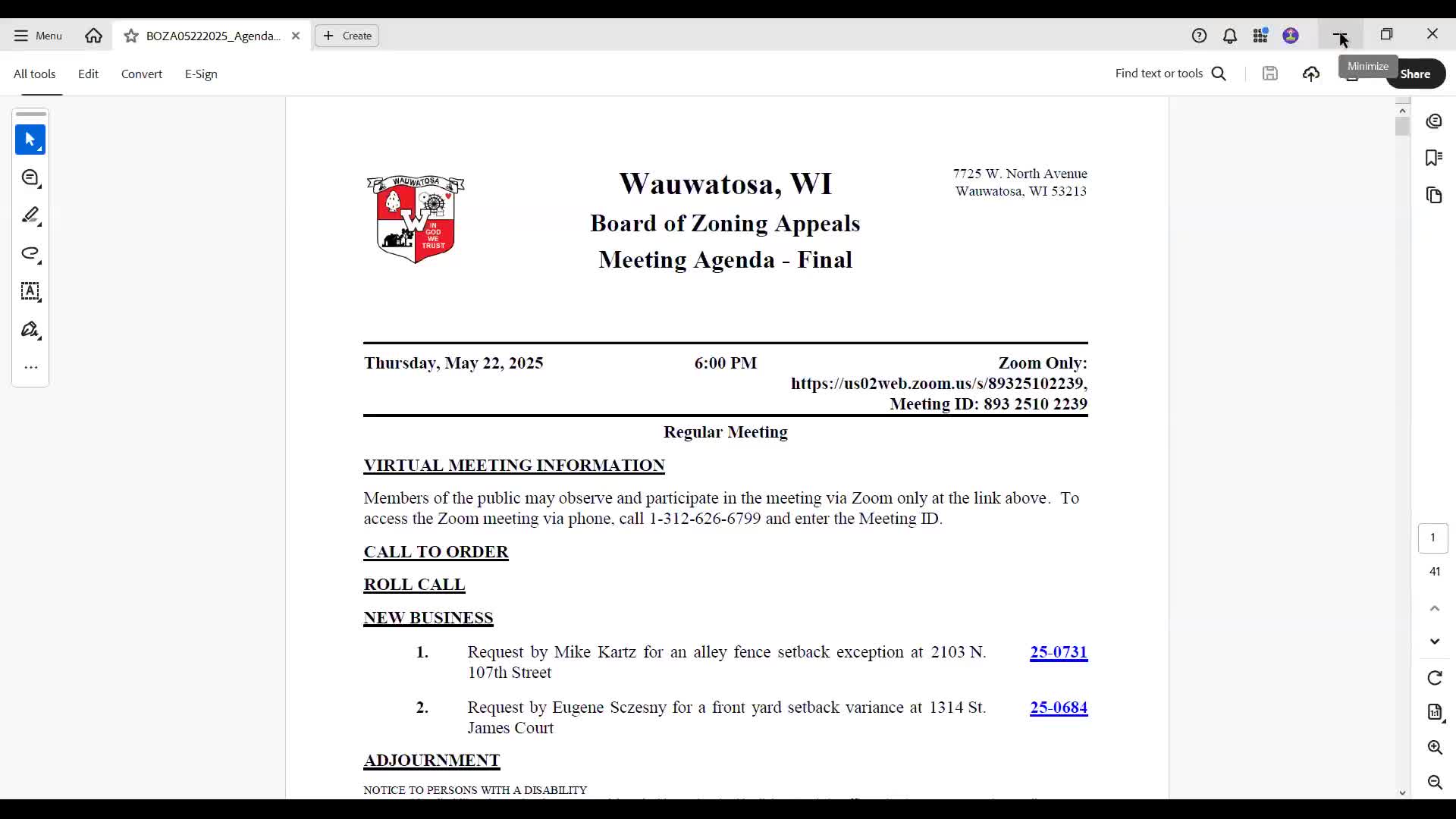
Wauwatosa BZA denies alley fence setback exception at 2103 N. 107th St.
Summary
The Wauwatosa Board of Zoning Appeals unanimously denied a request by homeowner Mike Kartz for an exception to the alley setback after finding no unique hardship; the fence had been installed with a 4‑inch setback though city code requires an 18‑inch alley setback.
The Wauwatosa Board of Zoning Appeals on a unanimous vote denied an exception request from homeowner Mike Kartz to retain a fence installed 4 inches from the property line along the alley at 2103 North 107th Street.
The board said the city fence code requires fences adjacent to an alley to be set back a minimum of 18 inches from the lot line; the applicant’s contractor built a replacement fence in the same location as a prior fence and a permit had been applied for but was not issued because required drawings were incomplete. ‘‘The constructed fence along the alley has a 4 inch setback from the property line for a length of approximately 21 feet,’’ City code enforcement officer Andy Krause told the board.
The denial followed the three criteria the board applies for fence exceptions: whether strict application of the code would create a hardship, whether any hardship was caused by unique conditions of the lot, and whether approval would be consistent with the ordinance and not impair public safety. Chair Art (name on record) told the applicant the first two criteria were not met and that the board lacked information showing public‑safety or ordinance intent would be impaired by denying the request.
Kartz, who said he paid a contractor to replace an existing fence two years earlier, told the board the fence replaced a previous fence in the same location and that nearby properties had similar fences. ‘‘They said yes [the permit was in order], so we proceeded,’’ Kartz told the panel, adding that moving the fence now would be expensive and would require removing a backyard shed. Krause said the permit application had been marked for resubmittal because the drawings and information provided were incomplete and therefore a permit had not been issued prior to construction.
Board members pressed that nearly all aspects of the exception criteria pointed against approval. The board noted that repairing up to 50 percent of a fence could be done without triggering current standards, but replacing more than 50 percent requires a permit and compliance with current setback rules. Several board members also said the property owner ‘‘stands in the shoes’’ of his contractor when work is performed by a hired firm and that expense alone does not create the legal hardship required for an exception. Richard Brunner moved to deny the exception and the motion was seconded and then approved unanimously.
The formal vote was recorded as 4‑0 to deny. The board and staff advised Kartz he could work with city staff on remediation to bring the fence into compliance and that he may pursue civil recourse against the contractor that performed the work; Kartz said he intended to follow up with the contractor. The board did not direct any other official action.
The denial leaves the property owner responsible for bringing the fence into compliance with the 18‑inch alley setback or pursuing any private legal remedies against the contractor.