Get Full Government Meeting Transcripts, Videos, & Alerts Forever!
Get email alerts on the Water Infrastructure Audit topic
No spam. Unsubscribe anytime.
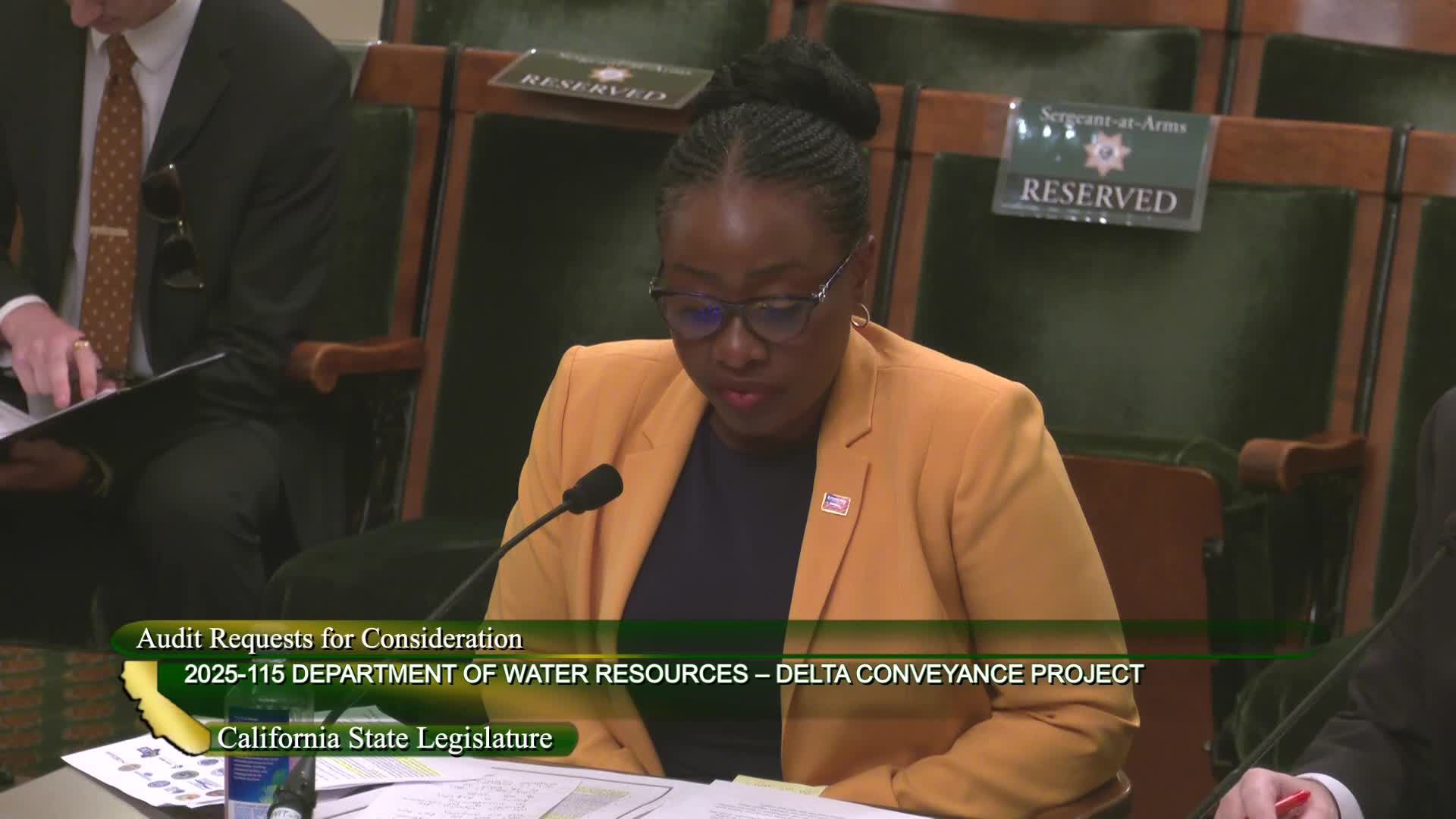
Assemblymember Ransom seeks audit of Delta Conveyance Project; committee debate highlights cost, transparency and timing
Summary
Assemblymember Rebecca Ransom requested an audit of the Department of Water Resources' Delta Conveyance Project to clarify expenditures, funding sources and cost assumptions; the committee heard extensive testimony from supporters and DWR and contractors but did not finalize a vote during the hearing.
Assemblymember Rebecca Ransom asked the Joint Legislative Audit Committee to authorize an audit of the Department of Water Resources (DWR) Delta Conveyance Project (DCP) to account for planning and administrative expenditures, funding sources and whether construction cost estimates remain realistic amid inflation and supply‑chain pressures.
Why it matters: The DCP is a large state infrastructure proposal intended to modernize a segment of the State Water Project’s Delta conveyance. Supporters said hundreds of millions have already been spent on planning and environmental review and that ratepayers and taxpayers deserve a clear accounting before any construction or bond validation proceeds. Opponents and project proponents cautioned the committee about duplicative oversight and pointed to existing audits and review processes.
Scope the author requested: Ransom asked auditors to identify expenditures and funding sources for the project from July 2022 through June 2025, to determine unspent balances, assess whether contractors such as Metropolitan Water District have modeled rate impacts, and to evaluate whether DWR has secured the environmental analyses and tribal and community consultations required under the Delta Reform Act and related statutes. The author also asked auditors to examine how cost estimates account for recent construction input inflation.
Testimony: Supporters including attorneys and local water agencies argued an audit is needed because DWR’s previous validation and audit work does not answer ratepayer questions about projected costs, funding commitments and whether costs could be shifted onto non‑consenting contractors or property owners. Opponents, including DWR Director Carla Nemeth and Metropolitan Water District representatives, argued the department has been transparent, that extensive board‑level oversight and independent audits already exist, and that an additional state audit could duplicate existing review and divert auditor resources.
Committee exchange and timing concerns: Several members expressed skepticism about immediate audit value because the project is at early design stages (under 20% design in testimony) and funding and construction milestones have not been set; others said the scale of early spending and long‑term risks to ratepayers and taxpayers warranted legislative oversight. Some committee members who opposed an immediate audit cited the state’s budget deficit and the audit’s estimated cost. The matter did not reach a final recorded vote during the session.
Next steps: The sponsor asked for committee support and said an audit—if authorized—should quantify spending, identify funding sources, assess exposures to ratepayers, and review statutory consultation obligations. DWR provided written materials to the committee and emphasized the department’s commitment to transparency. The committee did not finalize authorization and further deliberation or a formal motion would be required at a later meeting.
Quote: "This audit is about responsible governance," Assemblymember Ransom said, asking the committee to “ensure that a multibillion‑dollar project advancing now has accountability and transparency.”