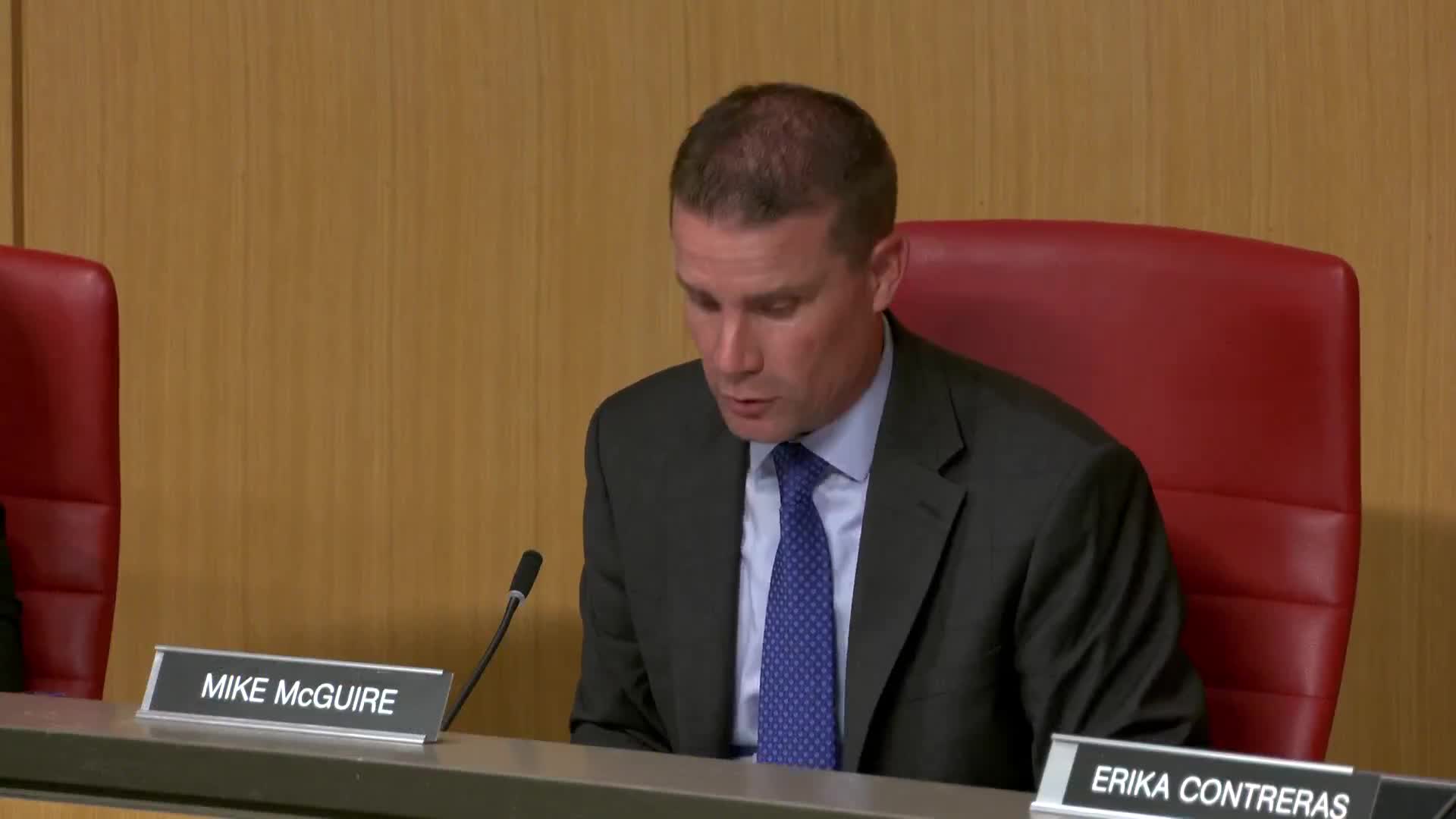
Senate committee advances CDCR director and associate director nominees after extended questioning on prison safety and women's facilities
Loading...
Summary
The Senate committee voted 5-0 to advance Governor Newsom’s nominees for director of the Division of Adult Institutions and an associate director, after lengthy questioning about prison closures, rising violence and safety at women’s facilities.
The California State Senate committee voted 5-0 June 18 to advance two senior nominations at the California Department of Corrections and Rehabilitation (CDCR) — Gina Jones, nominee for director of the Division of Adult Institutions, and Brian Phillips, nominee for associate director for Region 3 — sending both to the full Senate for consideration.
Both nominees described long careers in corrections and emphasized safety, rehabilitation and staff support as priorities. Jones, who identified herself as representing the director and described decades of CDCR experience, told the committee she is “deeply committed to the mission of CDCR, ensuring to provide a safe environment for all while giving opportunities for rehabilitation and self growth.” Phillips said his goal is “for staff and incarcerated persons to be safe and to get a positive experience out of their journeys as employees and incarcerated people.”
Senators pressed the nominees on several operational issues. Questions centered on how the department plans for facility closures and staff transitions, the causes of a recent surge in violence and contraband at multiple institutions, restrictions on visitation and phone privileges, and specific safety problems at women’s prisons including Chinchilla (Central California Women’s Facility).
On proposed facility closures, Jones said the department is evaluating needs and infrastructure and seeks to place staff in other positions rather than lay them off. She described communications with staff and use of peer support and employee assistance programs during transitions. She added that population declines have led to closing wings of institutions rather than entire facilities in past actions.
Regarding an uptick in violence and contraband, including overdoses tied to synthetic cannabinoids (referred to in testimony as “spice”), Jones said modified program status and temporary restrictions allow the department to conduct thorough searches and remove weapons and contraband. She called the level of violence “out of control” in some institutions and said the department is prioritizing searches and measures to protect staff and incarcerated people.
Committee members raised repeated concerns about safety at women’s prisons, including reports of staff misconduct and sexual violence. Jones said the department is focused on providing confidential reporting channels and using body-worn cameras and audio-visual surveillance (AVSS) where available to gather evidence and protect both staff and incarcerated people. She noted CDCR works with outside advocates and organizations — including Sister Warriors and the ombudsman’s office — to expand safe reporting options.
Senators also asked about a recent pair of murders of visitors at one institution and whether policy changes or additional safeguards are needed for family visiting. Jones said the department reviewed the file and did not find policy violations by staff in the approvals that allowed those visits; the murders are under investigation by the district attorney’s office. She said perpetrators were moved to restricted housing pending further investigation and that criminal prosecution and administrative sanctions are possible.
Public testimony at the hearing included more than two dozen supporters of Jones and Phillips, many from the Anti-Recidivism Coalition and other rehabilitative program partners. Supporters described the nominees as hands-on leaders who had supported rehabilitation programs and community partnerships.
The committee recorded a roll-call vote of 5-0 (McGuire, Grove, Caballero, Jones, Laird) to forward the nominations to the Senate floor.