Get Full Government Meeting Transcripts, Videos, & Alerts Forever!
Get email alerts on the Corrections Healthcare topic
No spam. Unsubscribe anytime.
AB 393 would require cost analysis before contracting out physician jobs in prisons and state hospitals
Summary
AB 393 would direct the California Department of Corrections and Rehabilitation and the Department of State Hospitals to conduct cost comparisons before using contractors for physician roles that civil‑service employees could fill, with sponsors saying it would save money and improve continuity of care.
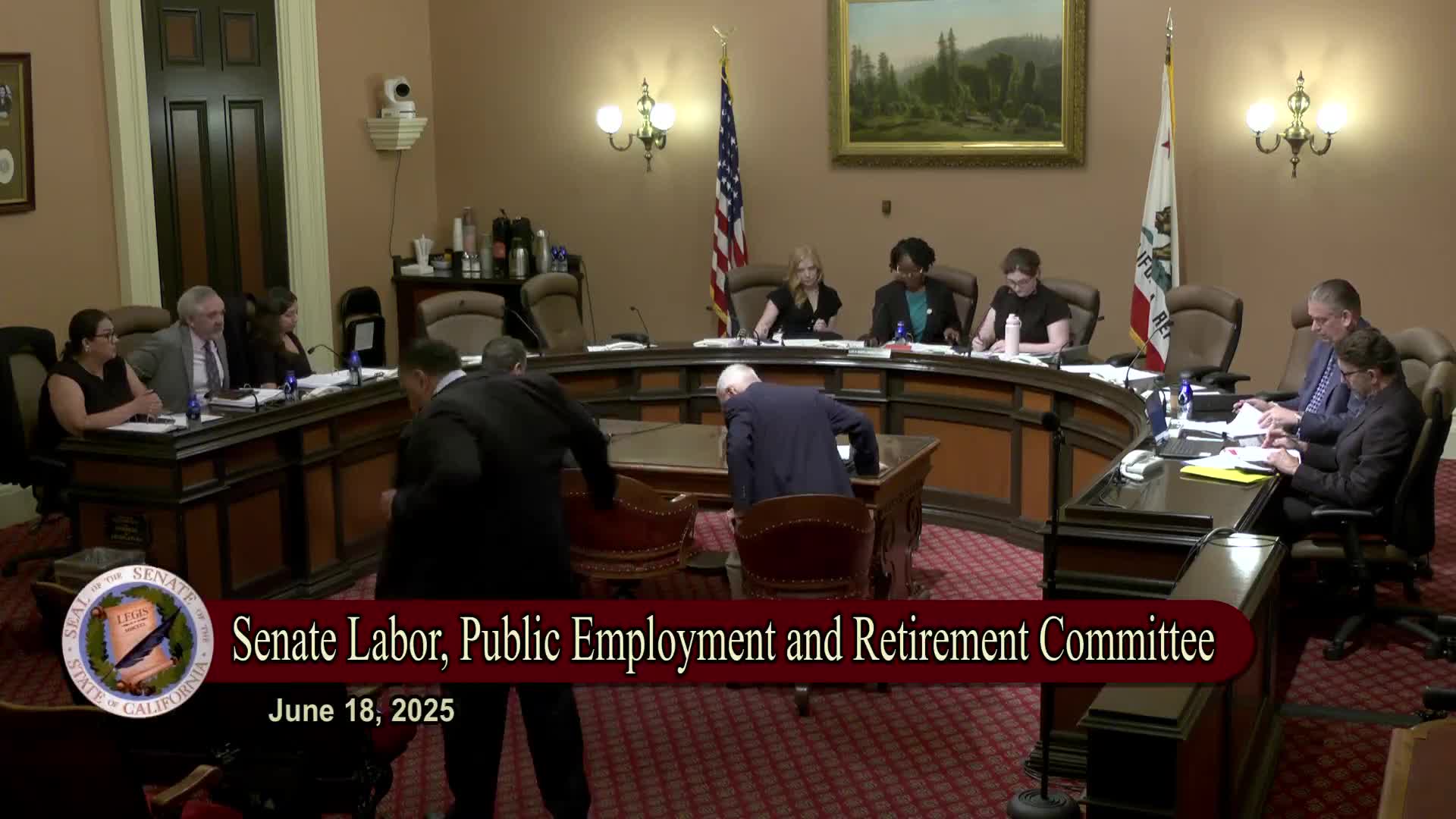
Assemblymember Connolly presented AB 393 to require the California Department of Corrections and Rehabilitation (CDCR) and the Department of State Hospitals (DSH) to conduct a cost analysis before contracting out positions that civil‑service physicians could perform.
Connolly and union witnesses said contracting for doctors has led to higher hourly rates — sometimes two to three times civil‑service pay — and undermined continuity of care, particularly in psychiatry. They cited a 2020 State Personnel Board ruling that found CCHCS (California Correctional Health Care Services) had not justified several contracts and had violated prohibitions on contracting out work civil‑service employees could do.
Doug Chiappetta, CEO of the Union of American Physicians and Dentists (UAPD), said outsourcing to contractors is a morale and continuity problem; psychiatrists working as contractors, he said, create a “rotating door” that impedes patient trust. George Osborne, also with UAPD, said the measure is straightforward and has the potential to save California “millions of dollars a year” while improving care.
Proponents said AB 393 would require a report from CDCR and DSH that lists completed cost analyses, the number of contractors employed, and civil‑service staff counts and overtime/extra-shift usage. The author said an amendment would clarify inclusion of psychologists represented by bargaining unit 19.
No opposition was reported at the hearing, and the author asked for an aye vote. The committee indicated it would take up the bill when members returned.
Ending: Supporters said the bill targets potentially wasteful contracting that raises costs and harms continuity of care for incarcerated patients; the committee moved the item for further consideration.