Get Full Government Meeting Transcripts, Videos, & Alerts Forever!
Get email alerts on the Transit Finance topic
No spam. Unsubscribe anytime.
Joint committee approves audit of East Bay transit agencies to examine coordination, finances and ridership
Summary
Senator Ruh Wahab's request for a performance audit of six East Bay transit agencies won committee approval. The audit will examine governance, duplicative services, ridership trends, financing and potential effects of consolidation on service and paratransit.
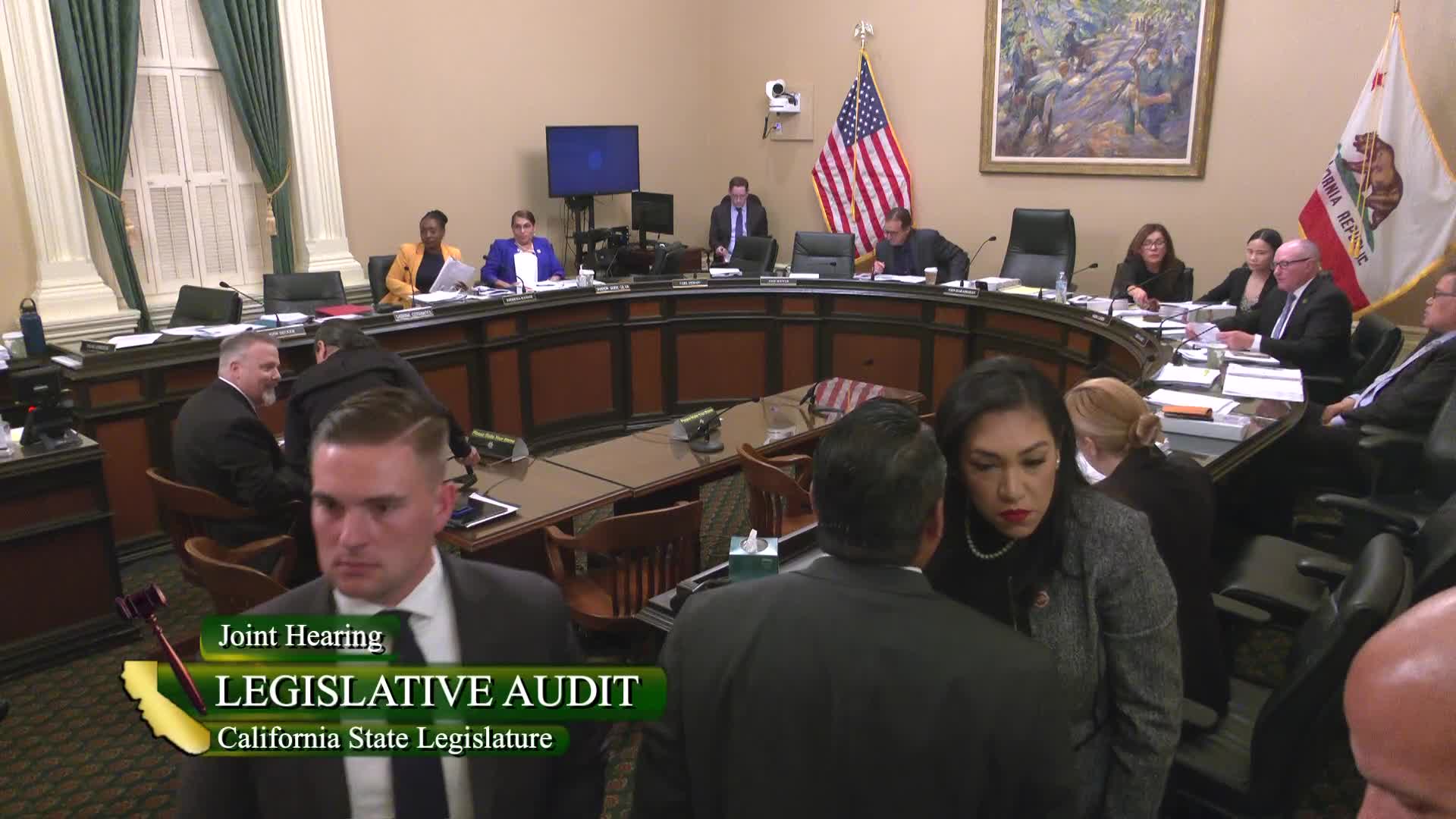
The Joint Legislative Audit Committee on June 24 approved an audit of six East Bay transit agencies after testimony from transit operators and riders about service patterns, interagency coordination and fiscal stress. Senator Ruh Wahab asked the committee to review Alameda and Contra Costa County bus operators to identify inefficiencies, overlapping routes and opportunities for consolidation or better coordination.
Why it matters: The Bay Area operates a fragmented transit system with many local agencies; several committee members and the bill sponsor argued that limited state and regional funds and declining ridership warrant a neutral review of whether agencies can coordinate route planning, fare payment and service delivery more effectively.
Scope and objectives: State Auditor Parks summarized the audit objectives: review each agency’s autonomy to plan routes and project spending, analyze a sample of cross‑boundary routes for duplicative service or gaps, review pre‑ and post‑COVID ridership and strategies to boost riders, and evaluate the agencies’ financial condition including reserve levels and reliance on nonoperating revenues. The audit will also examine Metropolitan Transportation Commission (MTC) coordination and model the financial implications of consolidating bus services in an Alameda and a Contra Costa county configuration. The auditor estimated around 4,000 hours of work.
Support and opposition: Several agencies—including AC Transit, County Connection, Tri‑Delta, WestCAT, Livermore Amador Valley Transit Authority (LAVTA/“WHEELS”) and Union City Transit—testified before the committee. Transit officials emphasized the role of local service and paratransit and warned that consolidation without new funding or harmonized labor contracts could reduce service and harm riders; LAVTA said consolidation of the smaller agencies into a single large operator could cut nearly half of service under current cost assumptions. Metropolitan Transportation Commission told the committee it had no formal position but noted ongoing regional coordination efforts.
Public testimony and labor groups: The California Transit Association and several labor groups urged the committee to allow the statutory tasks already required by recent legislation and MTC’s Transit Transformation Task Force to complete before launching a separate audit; they argued the task force will produce recommendations due to the Legislature in October 2025. Advocates said the task force and reporting requirements already established by statute and funding agreements cover many of the audit topics.
Committee action: The committee approved the audit by roll call. Supporters said the audit would provide an independent, public accounting of costs, ridership trends and potential savings from coordination; supporters emphasized the audit’s focus on fiscal impacts for ratepayers and riders and called it “good governance.”
Next steps: The auditor will scope the work and begin the audit on a staggered schedule subject to available audit supervisor capacity. Committee members requested the audit consider labor and service implications for paratransit and low‑income riders.
Quote: "Consolidating transit agencies might be worth exploring if we overlap or duplicate one another," said Christy Wagoner of LAVTA, but she warned consolidation could reduce service without additional funding.