Get Full Government Meeting Transcripts, Videos, & Alerts Forever!
Get email alerts on the Labor Relations topic
No spam. Unsubscribe anytime.
AB 288 aims to let California protect workers’ organizing rights when federal enforcement is stalled
Summary
AB 288 would authorize state enforcement to remedy alleged violations of workers’ rights to organize and bargain when the National Labor Relations Board lacks a quorum or cannot act, proponents say; the bill drew extensive union and worker testimony in support and a business-law opposition note from the state chamber.
Assemblymember McKenna presented AB 288 as a response to perceived federal enforcement gaps, saying the National Labor Relations Board’s incapacity has left workers without timely remedies when employers delay bargaining or commit unfair labor practices.
McKenna said state action is needed to protect workers’ First Amendment rights of free speech and association and to ensure timely remedies when federal institutions are unable to act. “AB 288 is carefully designed to fit within that window,” the author said.
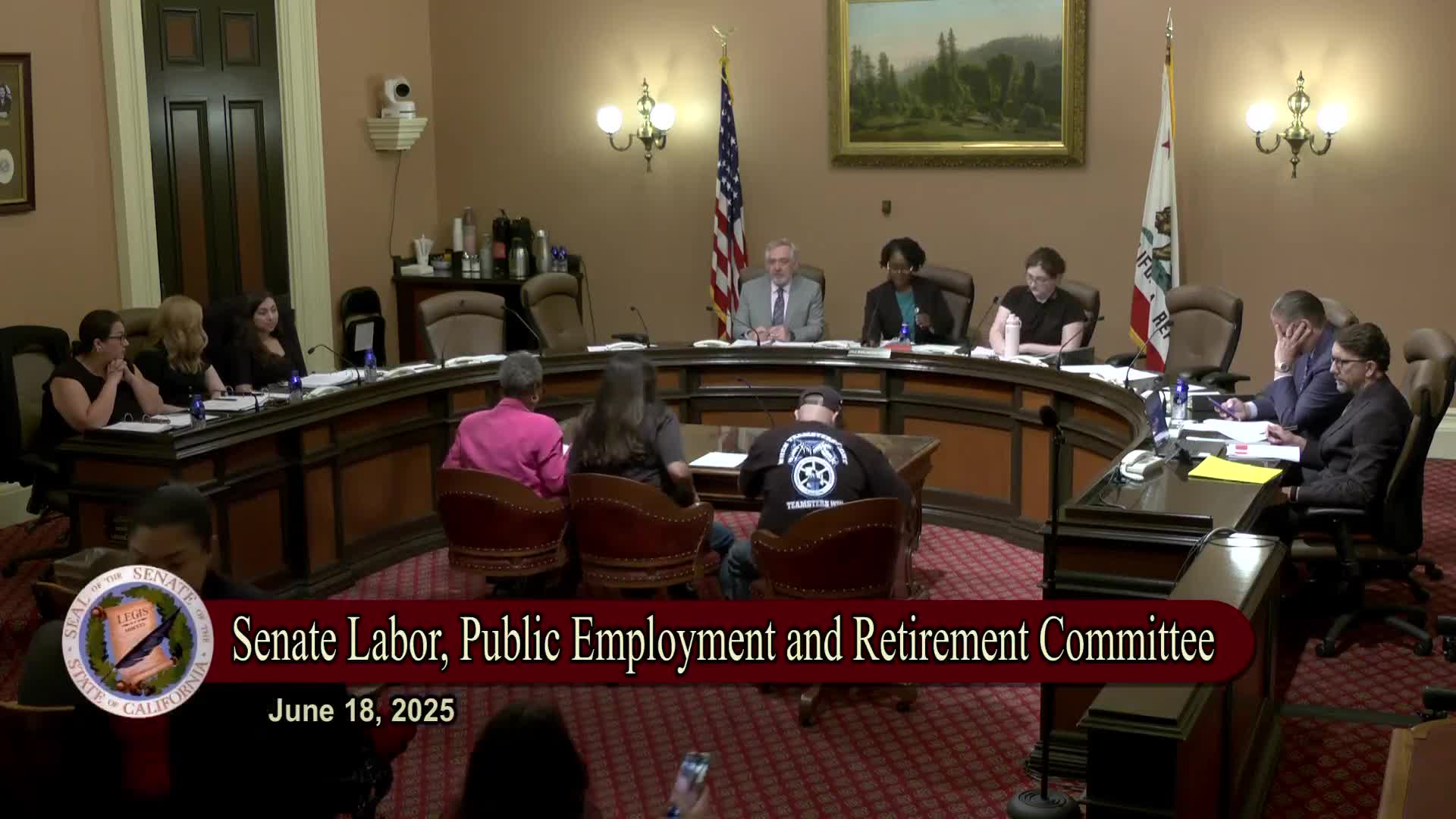
Workers and union representatives delivered a string of first‑hand accounts. Maggie Perez, who said she works on ramp loading at Amazon’s San Bernardino air hub, described safety risks on the job and alleged company interference with organizing; she said a judge already found Amazon had violated rights but the case remained unresolved. “We believe it’s time that you, our state representatives, stand up to these corporate bullies,” Perez testified.
Bridal Munoz, a Teamsters member and veteran who drives for Amazon, said drivers face grueling routes and that company conduct and anti‑union tactics deter workers from asserting rights. Dozens of labor organizations, Teamsters locals, boilermakers and other unions testified in support; the California Labor Federation was a sponsor.
The California Chamber of Commerce’s witness, Ashley Hoffman, told the committee the chamber views the bill as potentially preempted by federal labor law under the Garment (Garmon) doctrine, raised concerns about permitting a state body to deviate from established NLRB precedent, and warned that one provision’s “strict scrutiny” standard could be vague and problematic.
Supporters argued that courts have recognized state space to act when federal appointments stall, and the author said AB 288 would permit California to investigate and remedy alleged wrongful firings and other violations when federal enforcement is unavailable.
Ending: Committee members expressed support for the bill and noted ongoing work with opponents on technical issues; the committee voted to move the bill forward when members returned.