Get Full Government Meeting Transcripts, Videos, & Alerts Forever!
Get email alerts on the Water Insurance topic
No spam. Unsubscribe anytime.
Panel advances bill letting water companies join JPAs for pooled insurance to lower premiums
Summary
AB 428 would permit investor-owned water corporations to join joint powers authorities (JPAs) for pooled insurance, subject to reinsurance and liability protections and a showing that membership reduces rates or improves service. Supporters cited steep premium increases for small water utilities.
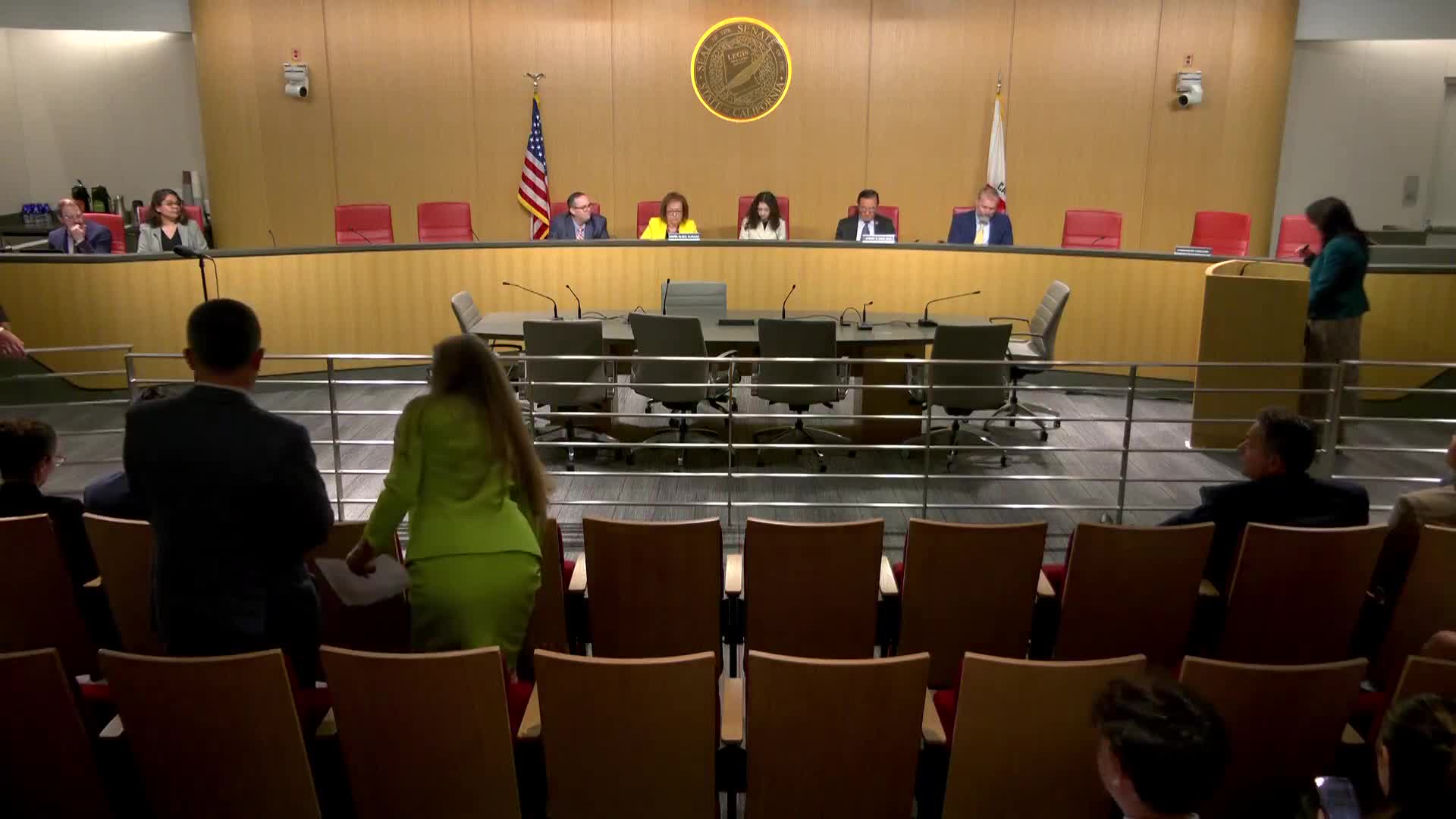
Assemblymember Rubio presented AB 428, a bill to allow water corporations to participate in joint-powers authorities (JPAs) for pooled insurance, subject to reinsurance and liability coverage requirements and a requirement that JPA membership benefit customers by reducing rates or improving service.
Rubio said the bill is a reintroduction that responds to concerns raised in the governor’s veto message last year. The updated language requires reinsurance and demonstration that JPA membership will reduce costs or improve service for customers.
Small water providers and industry groups testified in support. Jennifer Lukens, owner of Lukens Brothers Water Company in South Lake Tahoe, said her firm’s property insurance rose from about $43,000 in 2020 to more than $360,000 in the current market, with corresponding rate impacts for customers. “In 2021, our insurance went to $141,000 for just property insurance… In 2024, they rose again to $279,000. And now, they are over $360,000 per year for just property insurance,” Lukens said.
Susan Allen, chief executive officer of CalMutuals JPRIMA, described the JPA model and urged support for small systems, noting that CalMutuals JPRIMA already serves numerous small suppliers and reinvests premiums into risk reduction for members. Labor and utility employee groups also testified in support.
Senator Choi asked about the drivers of the premium increases; Lukens said the changes are primarily a market response to wildfire risk and a reduction in insurance carriers willing to underwrite in California, forcing many systems into the surplus market.
The committee voted to advance AB 428 to the Committee on Energy, Utilities and Communications.