Get Full Government Meeting Transcripts, Videos, & Alerts Forever!
Get email alerts on the K 12 Finance Audit topic
No spam. Unsubscribe anytime.
Assemblymember Gonzales seeks state audit of Coachella Valley Unified over $60 million shortfall
Summary
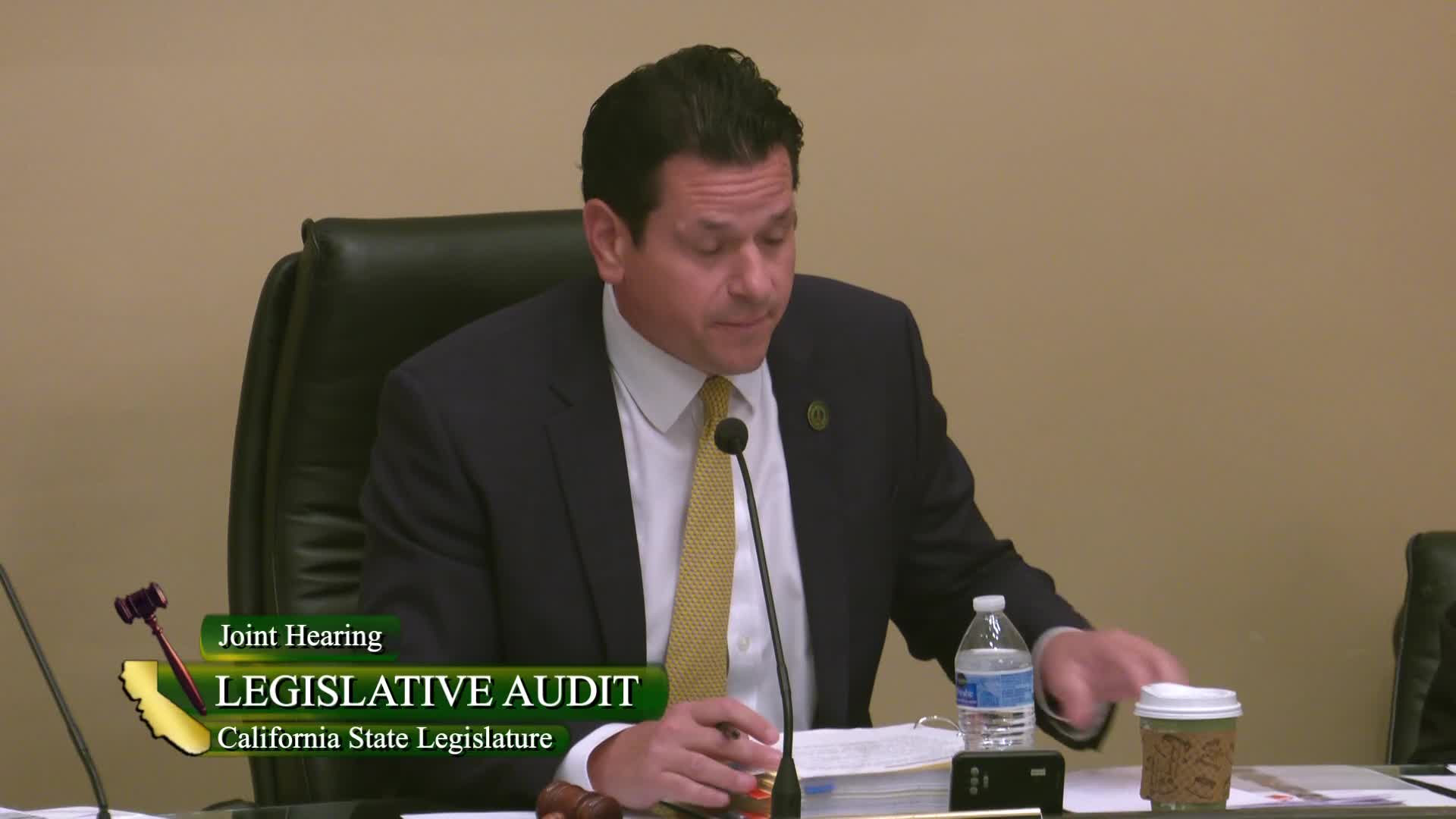
Assemblymember Eduardo Gonzales asked the Joint Legislative Audit Committee on June 24 to approve a state audit of Coachella Valley Unified School District, citing a projected $60 million shortfall, alleged contracting irregularities and years of governance failures.
Assemblymember Eduardo Gonzales asked the Joint Legislative Audit Committee on June 24 to approve a state audit of the Coachella Valley Unified School District (CVUSD), saying the district faces a projected $60 million budget shortfall and “chronically failed mismanagement” that threatens students and staff. Gonzales told the committee the problems date back to at least 2016 and urged an independent audit to restore public trust and “protect taxpayer dollars.”
Why it matters: Gonzales and several witnesses described repeated governance failures, late or incomplete internal reviews, allegations of contracting irregularities, and the district’s use of one-time federal funds that masked longer-term structural problems. Students, staff and community members testified that decisions made after voter-approved Measure O and other funding have left families and educators searching for transparency about how funds were spent.
Key testimony and specifics: Assemblymember Gonzales summarized documented concerns including misuse of district fuel cards by a former superintendent, missing superintendent evaluations, and a 2019 FCMAT (Fiscal Crisis and Management Assistance Team) report that rated the district high risk. He said the district’s fiscal condition had deteriorated from a previously announced $44 million shortfall to about $60 million, producing layoffs affecting hundreds of employees.
Carissa Carrera, president of the Coachella Valley Teachers Association and a 24‑year CVUSD employee, urged a state audit and said the district “receives more funding per student than other districts in our area, yet our students are provided fewer services.” She said nearly 40 administrators had left in the past two years and questioned local oversight by the Riverside County Office of Education (RCOE).
Retired superintendent Dr. Luis Valentino, who said he served CVUSD from July 2021 to March 2024, supported a state audit and said the district had long been subject to FCMAT oversight and experienced high turnover in leadership. Dr. Valentino said, “the financial concerns did not appear overnight but traced back at least a decade.”
District response and oversight: CVUSD Superintendent Dr. Frances Esparza, who said she had been in the job 11 months, told the committee the district is pursuing a fiscal stabilization plan, working with RCOE and has a county fiscal adviser. She said less than $2 million had been spent so far on analysis of a proposed STEM Center project (separate agenda item) and that the district had submitted required audits and undergone recent federal program monitoring with no findings for categorical programs.
County office role: Jeff Baca of Riverside County Superintendent of Schools told the committee RCOE has been actively engaged with CVUSD, attending board meetings, assisting with a fiscal stabilization plan, and providing hands-on fiscal monitoring. He said the county’s role is to act to prevent insolvency.
What the proposed audit would cover: State Auditor Parks described objectives to review CVUSD’s 10‑year financial condition, contract and procurement practices (including competitive bidding and repetitive awards to single contractors), the use and handling of donated funds through the district foundation, the district’s handling of employee settlements, and how expanded learning opportunity program funds were spent. The auditor estimated roughly 3,400 staff hours to complete the audit.
Vote and next steps: A motion to approve the audit was made on the floor. The initial roll call produced six votes but fell short of the committee rule requiring four affirmative votes in each house; committee leaders placed the audit request “on call.” Later in the hearing the record shows the audit did not receive sufficient votes to proceed and was marked as failed/on call. The committee did not finalize a staged start date.
Voices and unresolved issues: Community testimony included written letters with redacted names and statements from former district officials alleging retaliation and governance lapses. Community members and teachers requested independent, impartial review; district officials said they are pursuing stabilization and compliance steps. The committee’s action status left the request unresolved at the hearing.
Context and significance: CVUSD serves a predominantly Latino and high‑need student population. Stakeholders said persistent management challenges, if left unexamined, risk further staff layoffs and reduced student services. The request underscores tensions between local oversight (RCOE and FCMAT) and calls for independent state review.
Looking ahead: If reintroduced or added to a future audit slate, the auditor would need access to district financial records, contract files, partnership agreements, and foundation accounting to complete the objectives described. The committee’s final disposition—whether the request returns for reconsideration—was not settled during the hearing.