Get Full Government Meeting Transcripts, Videos, & Alerts Forever!
Get email alerts on the Foster Youth Rights topic
No spam. Unsubscribe anytime.
Committee advances bill to let 18–21-year-old foster youth direct their appointed counsel
Summary
AB 373 clarifies that attorneys appointed for non-minor dependents (18–21) in dependency proceedings must advocate for their clients' expressed wishes unless the court determines otherwise; supporters called the change an empowerment step, while some senators warned about developmental decision-making capacities.
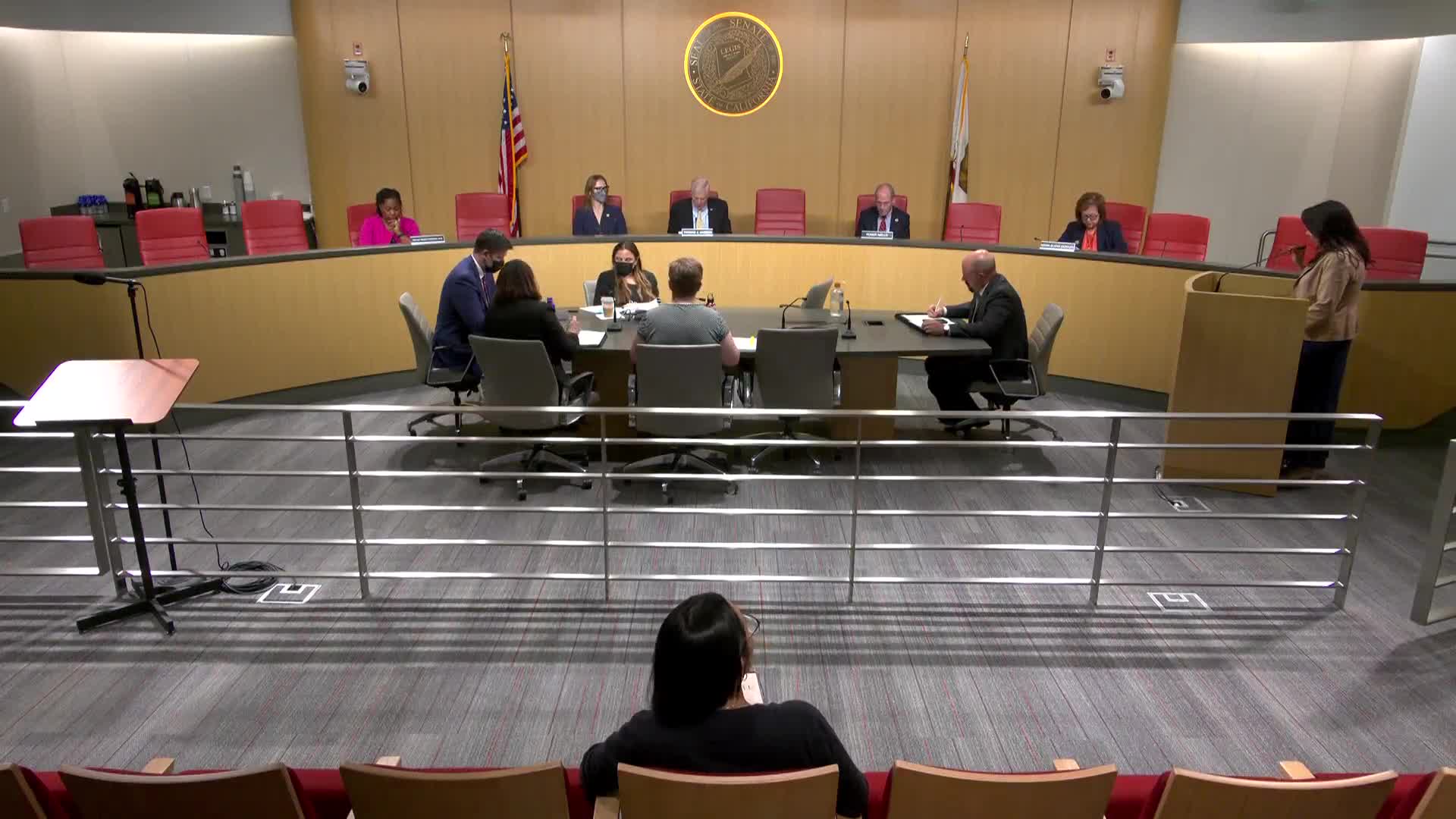
The Senate Judiciary Committee approved AB 373, a bill clarifying that attorneys appointed for non-minor dependents — foster youth aged 18 through 21 participating in extended foster care — must represent the expressed wishes of their clients rather than substitute the attorney’s own judgment.
Assemblymember Rubio presented the measure as restoring legal rights to non-minor dependents by aligning appointed counsel duties with the individuals’ adult legal status. The bill explicitly references extended foster care under Welfare and Institutions Code Section 303(d) and seeks to ensure that court-appointed attorneys respect the decisions of young adults in dependency proceedings.
Laura (Laura) Kurtz, staff attorney with the Children’s Law Center of California, said appointed counsel often substitute judgment for young adults and that AB 373 simply requires attorneys to advocate for what their clients want. Mercedes Parker of California Youth Connection, a youth-led advocacy group, testified in strong support, saying the change shifts “protection to empowerment” and helps young people build self-sufficiency.
Senators exchanged views on the balance between autonomy and the need for supports. Senator Niello and others cautioned that brain development continues into the mid-20s and that many youth aging out of foster care lack the family support systems that help other young adults make decisions. Supporters responded that the bill preserves the judge’s ultimate decision-making role and keeps social workers and other team members involved.
Committee debate included examples of how foster youth often lack consistent adult supports and that attorneys can be the primary adult voice in court. Proponents said AB 373 encourages conversation with the youth and ensures their stated preferences are presented to the court.
After discussion, the committee moved the bill forward. A roll-call vote reported during the hearing recorded a final committee tally with the majority in favor; the bill will proceed to the Senate Human Services Committee for further consideration.